
Learn How To Play Wolf In Golf: Rules & Strategy Guide
Wolf golf is a popular golf game for 4 players. It adds fun and strategy to your round. This guide will explain Wolf golf rules, how to score, and tips for beginners. It’s a game where one player, the “Wolf,” tries to beat the others alone or with a partner. It is a great way to make your golf rounds more exciting and competitive, even for players with different skill levels. If you want to learn how to play Wolf golf, this guide gives you all the steps you need.
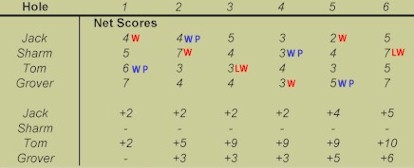
Image Source: www.myscorecard.com
Deciphering Wolf Golf: The Core Mechanics
Wolf golf is a game of skill and smart choices. It centers on a rotating “Wolf” player. This player decides to either take on all other players alone or team up with one partner. Points are earned based on who wins the hole. This simple idea makes the game exciting. Let’s break down the rules and how it works.
Grasping the Basics: Setting Up Your Game
Playing Wolf golf starts with getting a few things ready. The game works best with four players. This lets the game flow well. If you have only three players, you can still play. We will talk about that later.
Number of Players
* Four Players: This is the best number for Wolf golf. It creates two teams of two, or one Wolf against three players.
* Three Players: You can still play Wolf with three players. The Wolf will always play alone against the other two. We call this “Lone Wolf” every time. The points might need a small change to keep it fair.
Starting the Wolf: The First Hole
At the start of the game, you need to pick the first Wolf. The easiest way is to decide based on who tees off last. Or, you can just pick one player to be the Wolf for the first hole. After the first hole, the Wolf role moves to the next player in the group. This rotation usually goes around the foursome. For example, if Player A is the Wolf on hole 1, Player B is the Wolf on hole 2, Player C on hole 3, and Player D on hole 4. Then Player A is the Wolf again on hole 5. This makes sure everyone gets a turn as the Wolf.
Order of Teeing Off
On each hole, the Wolf for that hole hits their tee shot last. This is important. It gives the Wolf an advantage. They get to see how everyone else hits their ball. This helps the Wolf decide if they want to play alone or pick a partner. The other players hit in any order they like, often based on who is ready.
How to Declare Wolf in Golf: Picking Your Path
After everyone except the Wolf hits their tee shot, the Wolf faces a big choice. This is “How to declare Wolf in golf.” They must decide to play alone or with a partner. This choice happens after seeing the drives of the other players.
The Moment of Decision
* After Each Drive: As each player hits their tee shot, the Wolf watches.
* Declaring “Lone Wolf”: The Wolf can choose to play alone. They must shout “Wolf!” or “Lone Wolf!” right after hitting their own ball. This means they are very confident in their shot and their game for that hole. If they declare “Lone Wolf” before hitting their ball, they cannot pick a partner later. They commit to playing alone.
* Picking a Partner: If the Wolf does not declare “Lone Wolf” right after their own shot, they can pick a partner. They must choose from the players who have already hit their tee shot. They pick the player whose ball is in the best spot or who they think will play the hole best. They must say “I pick [Player’s Name]” to make it clear.
* No Declaration: If the Wolf does not declare “Lone Wolf” and does not pick a partner before they hit their own tee shot, they are then forced to play “Lone Wolf.” This is because they lose the chance to pick a partner.
This decision is key to your “Lone Wolf strategy.” Think about your skill and the layout of the hole. Also, look at how well your friends hit their balls.
Picking Partners Wolf Golf: Strategic Choices
Choosing a partner is a very important part of the game. The Wolf picks a partner after seeing the drives of the other players. This happens before the Wolf hits their own tee shot.
How the Wolf Chooses
1. Watch the Drives: The Wolf carefully watches each player’s tee shot.
2. Pick the Best Ball: The Wolf picks the player whose ball is in the best position. This might be the longest drive, or the one in the best spot on the fairway.
3. Announce the Partner: The Wolf must say loudly who they pick. For example, “I pick John!”
4. No Changes: Once the partner is picked, the team is set for that hole. The Wolf cannot change their mind.
Rules for Partner Selection
* Before Your Own Shot: The Wolf must pick a partner before hitting their own tee shot. If the Wolf hits their ball and has not picked a partner, they must play as a “Lone Wolf.” They lose the chance to have a partner.
* Any Player: The Wolf can pick any of the three other players as a partner.
* No Teaming Up Beforehand: Players cannot agree to be partners before the hole starts. The Wolf must pick the partner based on their tee shot for that hole.
This rule makes picking partners Wolf golf a smart move. You want to pick the person who will give you the best chance to win the hole.
Playing Each Hole: The Flow of the Game
Once the Wolf makes their choice (Lone Wolf or partner), the hole is played. The game changes depending on the Wolf’s decision.
If the Wolf Plays Alone (Lone Wolf)
* The Wolf plays against the other three players.
* The Wolf tries to get the lowest score on the hole by themselves.
* The other three players play as a team. They use the best score among them.
* Example: If the Wolf scores a 4, and the other three score a 5, 6, and 4, the Wolf wins because their 4 is lower than the other team’s best score (which is a 4, so it’s a tie, but the other three are a team of 3 playing best score against 1). Let’s make it clear: if the Wolf scores 4, and the other three scores are 5, 6, 7. The lowest score from the other three is 5. So, the Wolf’s 4 beats the 5. The Wolf wins.
* If the Wolf scores 4, and one of the other players also scores 4. Then it’s a tie. The Wolf does not win.
If the Wolf Plays with a Partner
* The Wolf and their chosen partner form a team of two.
* These two players play against the other two players.
* Both teams use the best score between their two players. This is like a “best ball” format for each team.
* Example: Wolf and Partner Team: Wolf scores 5, Partner scores 4. Their team score is 4. Other Team: Player 3 scores 6, Player 4 scores 5. Their team score is 5.
* In this example, the Wolf and Partner team (score 4) beats the Other Team (score 5). So the Wolf and Partner win the hole.
The game is about comparing the best score of the Wolf’s side versus the best score of the other side. This makes every shot important.
Scoring Wolf Golf: Keeping Track of Points
Scoring Wolf golf is key to knowing who wins. Points are given out after each hole. The number of points depends on how the Wolf played and who won the hole. There are many ways to score. Here is a common and easy way:
Common Point System (2-4-6 Points)
| Outcome | Wolf & Partner (Each) | Opponents (Each) | Lone Wolf (Wolf) | Opponents (Each) |
|---|---|---|---|---|
| Wolf’s Side Wins Hole | 2 points | 0 points | 4 points | 0 points |
| Wolf’s Side Loses Hole | -2 points | 2 points | -4 points | 2 points |
| Wolf’s Side Ties Hole | 0 points | 0 points | 0 points | 0 points |
Let’s break this table down with examples:
- Scenario 1: Wolf Picks a Partner and Wins
- Wolf and Partner score 4. Opponents score 5.
- Wolf gets 2 points. Partner gets 2 points.
- The two Opponents get 0 points each.
- Scenario 2: Wolf Picks a Partner and Loses
- Wolf and Partner score 5. Opponents score 4.
- Wolf gets -2 points. Partner gets -2 points.
- The two Opponents get 2 points each.
- Scenario 3: Lone Wolf Wins
- Wolf scores 4. The other three players score 5, 6, 7. The best opponent score is 5.
- Wolf gets 4 points.
- The three Opponents get 0 points each.
- Scenario 4: Lone Wolf Loses
- Wolf scores 5. The other three players score 4, 6, 7. The best opponent score is 4.
- Wolf gets -4 points.
- The three Opponents get 2 points each.
- Scenario 5: Any Tie
- If the Wolf’s side score equals the opponent’s side score, no points are given out. Everyone gets 0 points.
Why different points?
The “Lone Wolf” option gives more points for a win because it’s harder to beat three other players by yourself. It’s a higher risk, higher reward play. Losing as a Lone Wolf also costs more points. This makes the choice of going “Lone Wolf” very exciting.
Keep a scorecard handy. Each player should have their own column for points. Add up the points after each hole. The player with the most points at the end of the round wins.
Wolf Golf Variations: Adding New Twists
One great thing about Wolf golf is that you can change the rules. These “Wolf golf variations” keep the game fresh and fun. You can make it harder or easier.
-
Blind Wolf:
- Rule: The Wolf must declare “Lone Wolf” before anyone hits their tee shot. This means the Wolf cannot see any drives.
- Points: Often, the points for a Blind Wolf win are higher (e.g., 6 points instead of 4). Losing might also cost more.
- Why Play: This is for the very brave or very skilled Wolf. It’s a huge risk but can pay off big.
-
Hunter Wolf:
- Rule: A player can choose to become the “Hunter.” They declare this after the Wolf chooses a partner (or goes Lone Wolf). The Hunter’s goal is to beat the Wolf’s team.
- Points: This variation has more complex scoring. It often makes the game a three-way fight.
- Why Play: It adds more layers of strategy and turns the game into a constant chase.
-
Defender Wolf:
- Rule: If the Wolf goes Lone Wolf, one of the other three players can declare “Defender.” This player teams up with the Wolf to play against the other two.
- Points: Points are shared between the Wolf and the Defender if they win.
- Why Play: It gives the Wolf a chance to get help even after trying to go alone. It also gives another player a chance to get points.
-
Scramble Wolf:
- Rule: Instead of each player playing their own ball, the game becomes a scramble. The Wolf’s side (Lone Wolf or team) plays a scramble against the other side’s scramble.
- Why Play: Great for groups where some players are much better than others. It evens out the playing field and focuses on teamwork.
-
Different Point Structures:
- 1-2-3 Points:
- Wolf + Partner Win: 1 point each.
- Lone Wolf Win: 2 points.
- Opponent Win (against Wolf + Partner): 1 point each.
- Opponent Win (against Lone Wolf): 1 point each.
- Losing Wolf and Partner lose 1 point each. Losing Lone Wolf loses 2 points.
- This makes the game less about huge swings and more about steady play.
- Fixed Bets: Instead of points, you can agree on a dollar amount per point or per hole.
- Why Play: You can adjust the risk and reward to fit your group’s style.
- 1-2-3 Points:
These variations keep Wolf golf exciting. Talk with your group before you start to agree on any changes to the basic rules.
Lone Wolf Strategy: Playing Smart
Playing “Lone Wolf” is one of the most exciting parts of the game. It can bring great rewards. But it also comes with high risk. You need to make smart choices.
When to Go Lone Wolf
* Your Drive is Great: If you hit a perfect tee shot, long and straight down the middle, it’s a good time to think about going alone. You have a big advantage.
* Hole Suits Your Game: Some holes might be better for you. Maybe it’s a short par 3 where you often get a birdie. Or a par 5 where you can reach in two shots.
* Others’ Drives Are Bad: If the other three players hit bad tee shots (into the woods, in a bunker, very short), this gives you a strong reason to go Lone Wolf. Their bad shots make your win more likely.
* You’re Playing Well: If you are having a great day, making putts and hitting fairways, you might feel confident enough to take on everyone.
* Early in the Round (or Late): Some players like to go Lone Wolf early to try and get a big lead. Others save it for the last few holes if they need a lot of points to win.
Assessing Your Own Game
Before you declare Lone Wolf, think about your own game.
* Are you putting well today? A great putt can win a hole.
* Are you chipping well? If you miss the green, can you get up and down for par?
* Do you feel focused?
Never go Lone Wolf just because you feel lucky. Do it because you genuinely believe you can win the hole by yourself.
Assessing the Opponents’ Game
* Who is Struggling? Look at the other players. Is anyone having a bad day? Are they missing easy putts? This can make your Lone Wolf attempt safer.
* Who is Playing Great? If one of your friends is hitting great shots, they might be the one you need to beat. If their ball is in a great spot, think twice before going Lone Wolf. They might be your best choice for a partner.
Your “Lone Wolf strategy” should be based on real facts from the golf course, not just a feeling.
Tips for Playing Wolf Golf: Improving Your Game
Playing Wolf golf well means more than just hitting good shots. It’s also about thinking smart. These “tips for playing Wolf golf” will help you play better.
Deciding Your Partner
- Pick the Best Ball: This seems simple. But “best ball” doesn’t just mean longest. It means the ball in the best spot to make a good score. A short, straight shot in the middle of the fairway is often better than a long shot in the rough.
- Consider Strengths: If one player is great at putting, and another hits long drives, think about what you need for that specific hole. If you need a good approach shot, pick the player who hits good irons.
- Look for a Birdie Chance: If someone’s ball gives you a real chance for a birdie, they are a strong partner choice.
- Communication: Once you pick a partner, talk to them. “Let’s make a birdie!” or “We need to get this par.” Work together.
Course Knowledge
- Know the Hard Holes: On very tough holes, it might be safer to pick a partner. Don’t go Lone Wolf on a hole you always struggle with.
- Know the Easy Holes: On holes you usually play well, or where you can hit a great drive, these are good spots to think about going Lone Wolf.
Risk vs. Reward
- Don’t Be Too Greedy: Going Lone Wolf all the time might seem fun, but it can cost you many points. Pick your spots.
- Play Safe When Needed: If you are the Wolf and the first two players hit bad drives, and the third player hits a great drive, it might be smart to pick the third player as your partner. This is safer than trying to win alone.
Pace of Play
- Be Ready: When it’s your turn to hit, be ready. Wolf golf needs quick decisions. Don’t hold up the game.
- Keep Track of Points: Have one person write down the scores after each hole. This makes sure everyone knows where they stand.
Staying Calm
- Bad Shots Happen: Don’t let one bad shot ruin your game. If you hit a bad drive as the Wolf, just pick a partner and try to save the hole.
- Have Fun: Remember, Wolf golf is supposed to be fun. Don’t get too angry if you lose a hole. Enjoy the competition.
Golf Betting Games Wolf: Raising the Stakes
Many groups like to add a friendly wager to their Wolf golf game. This makes the “golf betting games Wolf” even more exciting. It is important to set the rules and the amount of money before you start playing. This keeps everyone happy and avoids arguments.
Simple Betting Methods
-
Points Per Hole: This is the easiest way. You agree on a set amount for each point. For example, if you agree on $1 per point:
- Wolf and Partner win: Wolf gets $2, Partner gets $2. Opponents pay $2 each.
- Lone Wolf wins: Wolf gets $4. Opponents pay $2 each.
- Wolf and Partner lose: Wolf pays $2, Partner pays $2. Opponents get $2 each.
- Lone Wolf loses: Wolf pays $4. Opponents get $2 each.
- At the end of the round, everyone settles up based on their total points. If you have +5 points, you get $5. If you have -3 points, you pay $3.
-
Per Hole Winner: You can also just have a set amount paid to the winning side on each hole.
- For example, the winning team on a hole gets $1 from each losing player.
- If Wolf and Partner win, they each get $1 from the two opponents. So, the Wolf and partner get $2 each, and the opponents pay $2 each.
- If Lone Wolf wins, the Wolf gets $1 from each of the three opponents. So, the Wolf gets $3, and the opponents pay $1 each.
- This is a simpler way to keep track of money during the game.
-
Overall Winner Bet: This is the most straightforward. You agree on a prize for the player with the most points at the end of the 18 holes.
- For example, everyone puts $5 into a pot. The player with the most points wins the pot.
- You can also have prizes for second and third place.
Keeping it Friendly
* Agree Beforehand: Always make sure everyone agrees on the betting rules and amounts before the first tee shot.
* Keep it Small: For friendly games, keep the stakes low. Wolf golf is fun even without big money.
* No Arguments: If there is a rule question, talk it out. If you can’t agree, play the hole over without points, or just move on. The goal is to have a good time.
Wolf Golf for Beginners: Getting Started Easily
If you are new to Wolf golf, don’t worry! It’s easy to learn. These “Wolf golf for beginners” tips will help you get started.
- Start with Simple Rules: Don’t use too many variations at first. Just learn the basic 2-4-6 point system. Focus on the core game: picking a Wolf, deciding alone or with a partner, and scoring.
- Focus on Fun: Remember, golf is a game. The main goal is to have fun with your friends. Don’t stress too much about winning every point.
- Don’t Be Afraid to Ask Questions: If you are unsure about a rule, ask. Your playing partners will be happy to explain. It’s better to ask than to guess.
- Practice Your Tee Shots: Since the Wolf decision is based on tee shots, hitting good drives is helpful. Practice hitting the ball straight.
- Observe and Learn: Watch how other players act as the Wolf. See when they go alone and when they pick a partner. This will help you learn the strategy.
- Keep Scores Clearly: Assign one person to write down all the points. This helps avoid confusion later.
Wolf golf adds a fun twist to your regular golf game. With a little practice, you’ll be declaring “Wolf!” and winning points like a pro.
Frequently Asked Questions (FAQ)
Q: Can you play Wolf with 3 players?
A: Yes, you can play Wolf with 3 players. The rules change a little. The Wolf will always play alone against the other two players on every hole. The scoring usually remains the same, where the Lone Wolf can win 4 points and the opponents can win 2 points each if they beat the Wolf.
Q: What happens if no one declares Wolf?
A: This usually means the current Wolf either forgot to declare “Lone Wolf” after their shot or did not pick a partner before their shot. In this case, the Wolf is forced to play “Lone Wolf.” They lose the chance to pick a partner. Some groups might agree to let the Wolf declare “Lone Wolf” after the ball stops, but this is less common and should be agreed upon beforehand.
Q: Is Wolf golf played with handicaps?
A: Wolf golf can be played with handicaps, but it needs careful thought.
* Simple Way: You can just use gross scores (actual scores) and let the better players win more often.
* Handicap Adjustment: If you use handicaps, you might give strokes on certain holes based on handicap difference. For example, if Player A is a 10 handicap and Player B is an 18 handicap, Player B gets 8 strokes. These strokes are used on the hardest 8 holes. This makes the game fairer. Make sure everyone knows how handicaps will be used before starting.
Q: What if a player quits during the game?
A: If a player quits, the game of Wolf usually ends. It is very hard to play Wolf with only three players if the game started with four, especially if the scoring was set for four. If you know a player might leave, you might want to pick a different game for that day.
Q: How long does a game of Wolf take?
A: A game of Wolf usually takes the same amount of time as a normal round of golf for your group (18 holes). The decisions and scoring might add a few minutes, but it should not slow down the pace of play too much if everyone is ready to hit when it’s their turn.