
Hitting a fat shot in golf means digging the club too deep into the ground before the ball. This heavy contact golf, also known as chunking golf shots, is a common problem for amateurs. So, what causes fat shots? They often happen because of issues like poor weight transfer, a steep swing plane, or mistakes at impact. But don’t worry, you can learn how to fix these golf swing faults and fixes and start avoiding chunking in golf. This guide will help you understand why it happens and give you simple ways to stop hitting them.
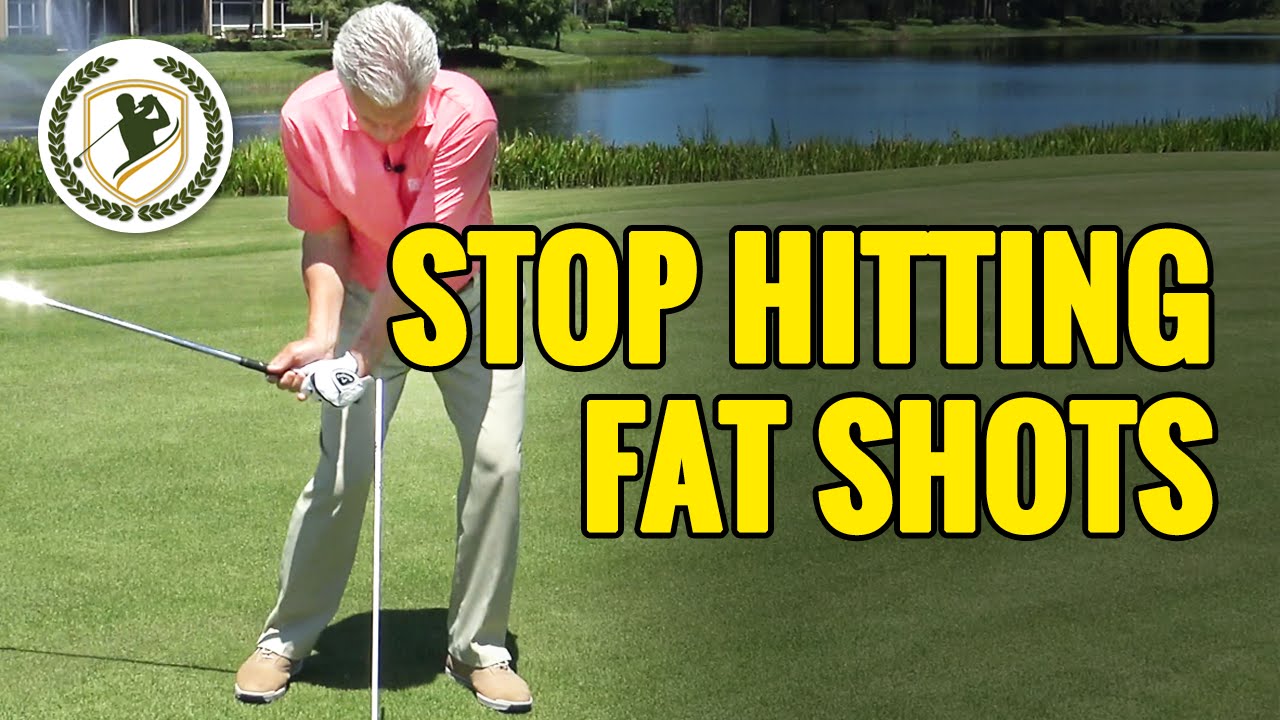
Image Source: i.ytimg.com
Grasping What Goes Wrong: Why Fat Shots Happen
Hitting the ground first is frustrating. It robs you of distance and makes your shot go nowhere or poorly. It’s a sign that something in your swing isn’t lining up right at the moment you hit the ball. Heavy contact golf usually comes from mistakes in your swing motion or setup.
Let’s look at the main reasons why you might be chunking golf shots. Pinpointing the exact causes of fat shots for you is the first step to fixing them.
Common Reasons for Hitting It Fat
- Weight Transfer Issues: This is a big one. If your weight stays too far back on your trail foot during the downswing and impact, your swing’s low point happens behind the ball. This leads to digging into the turf first. Proper weight transfer golf swing is crucial for hitting the ball cleanly.
- Steep Swing Plane: If your club comes down too steeply into the ball, it’s much more likely to dig. Instead of sweeping or hitting slightly down on the ball (which creates a divot after the ball), a steep swing forces the club head into the ground too soon. Fixing golf swing plane is vital.
- Improper Impact Position: Your hands should be slightly ahead of the ball at impact. If they are behind the ball, this adds loft and drops the club head early, leading to a fat shot. Getting the correct golf impact position is key.
- Trying to Lift the Ball: Many amateurs try to help the ball up into the air. This often involves leaning back (which shifts weight backward) and scooping the club. This motion drops the club head behind the ball.
- Poor Setup: Ball position, stance width, or how you stand over the ball can all encourage fat shots. If the ball is too far forward in your stance for the club you are using, you might hit behind it.
- Casting or Early Release: This is when you lose the angle between your lead arm and the club shaft too early in the downswing. It uses up your power too soon and causes the club head to reach its lowest point behind the ball.
- Lack of Body Rotation: Not rotating your body fully through the shot can prevent your weight from transferring forward and your swing arc from moving past the ball.
Fixing Golf Swing Faults and Fixes for Fat Shots
Now that we know the causes of fat shots, let’s look at the golf swing faults and fixes. We’ll break down how to work on each area to start avoiding chunking in golf.
Improving Proper Weight Transfer Golf Swing
Correct weight transfer is fundamental for consistent ball striking. In the backswing, weight shifts to your trail side. In the downswing, it must move forward to your lead side before impact.
-
The Correct Move:
- Backswing: Feel weight move onto the inside of your trail foot.
- Start Downswing: The first move should be a lower body shift towards the target. Your lead hip starts to open.
- Impact: Most of your weight (around 80-90%) should be on your lead foot. Your lead hip should be open towards the target.
- Finish: All weight should be on your lead side, allowing you to finish facing the target.
-
Why Weight Back Causes Fat Shots: If your weight is still on your trail foot at impact, your body is likely falling back. This moves the bottom of your swing arc back, causing you to hit the ground before the ball.
-
Fixing Weight Transfer: Focus on feeling the pressure shift forward in your lead foot at the start of the downswing. Practice drills that emphasize this movement.
Fixing Golf Swing Plane
A steep swing plane is like chopping down on the ball instead of swinging through it. A steep plane makes it easy to dig. A shallower plane is better for clean contact.
- What is a Steep Plane? Your club head is too far outside your hands on the downswing and comes down at a sharp angle.
-
What is a Shallow Plane? Your club head drops slightly inside your hands on the downswing, creating a more sweeping or descending blow after the ball. Shallowing the golf swing is key here.
-
How to Fix a Steep Plane:
- Focus on dropping your hands down slightly at the start of the downswing instead of immediately turning your body hard.
- Feel like the club head is lagging behind your hands on the way down.
- Practice drills that help you feel the club approaching the ball from a slightly inside path.
Achieving the Correct Golf Impact Position
The position of your body and club at the moment you hit the ball is critical. For irons, you want to hit the ball slightly before the lowest point of your swing arc, taking a divot after the ball.
-
The Ideal Impact Position:
- Weight mostly on your lead foot.
- Hands slightly ahead of the ball.
- Club shaft leaning forward towards the target.
- Lead wrist is flat or slightly bowed.
- Trail shoulder lower than the lead shoulder.
-
Why Incorrect Impact Causes Fat Shots: If your hands are behind the ball, the club head passes your hands too early (casting/early release). This adds loft, slows the club head, and, importantly, moves the low point of your swing arc back behind the ball.
-
Fixing Impact Position: Work on drills that promote forward shaft lean and getting your hands ahead of the ball at impact. This often ties into improving weight transfer and avoiding casting.
Correcting Setup Issues
Your setup is the foundation of your swing. Mistakes here can make good contact difficult.
- Ball Position:
- For irons, the ball should generally be positioned slightly forward of the center of your stance. Too far forward can cause you to hit behind it if your swing bottoms out too early. Too far back can lead to thin shots, but it’s less likely to cause fat shots directly unless combined with other issues.
- Tip: Start with the ball just forward of center for mid-irons. Adjust slightly forward for longer irons and slightly back for shorter irons.
- Weight Distribution at Setup: Start with weight balanced 50/50 or perhaps 60/40 towards your lead foot, especially with irons. Avoid setting up with weight already back on your trail side.
- Posture: Bend from your hips, not your waist. Your arms should hang naturally. Being too upright or too hunched can affect your swing plane and path.
Stopping the “Lifting” or “Scooping” Instinct
This is a common amateur tendency born from the fear of not getting the ball in the air. The golfer tries to help the ball up by lifting the club or leaning back.
- The Problem: Leaning back shifts your weight to your trail side. Lifting the club involves releasing the wrists too early (casting/scooping). Both move the bottom of the swing arc behind the ball.
-
The Reality: The loft on the club puts the ball in the air. Your job is to hit the ball first, with a slightly descending blow for irons, allowing the club’s design to do the work.
-
Fixing the Instinct:
- Understand that you hit down to make the ball go up.
- Focus on hitting the front part of the ball or even imagining hitting through the ball to the target.
- Practice drills that emphasize forward shaft lean and hitting down on the ball.
Golf Swing Drills for Fat Shots
Practice is key to avoiding chunking in golf. These golf swing drills for fat shots target the common causes we discussed. Do these drills regularly on the range.
Drill 1: The Towel Drill (Impact & Low Point)
- Goal: Forces you to move the bottom of your swing arc forward.
- How to do it:
- Place a small towel or headcover on the ground about 6-8 inches behind the ball.
- Set up to the ball as usual.
- Hit shots trying not to touch the towel.
- What it teaches: If you hit the towel, your swing’s low point is too far back. This drill trains you to shift your weight forward and get your hands ahead at impact, moving the low point past the towel and towards or just past the ball. It helps with golf impact position and proper weight transfer golf swing.
Drill 2: The L to L Drill (Swing Plane & Release)
- Goal: Improves swing plane and prevents early release (casting).
- How to do it:
- Use a wedge or short iron.
- Make practice swings where your lead arm and the club shaft form an “L” shape at the top of the backswing.
- From there, swing down and through so your trail arm and the club shaft form an “L” shape after impact.
- Focus on keeping the angle between your lead wrist and the shaft intact until just before impact.
- What it teaches: This drill helps you feel the correct sequence and prevent casting. It promotes a better swing path and helps with shallowing the golf swing and golf impact position. Start slowly and focus on form, not distance.
Drill 3: The Step Drill (Weight Transfer)
- Goal: Exaggerate and feel the correct proper weight transfer golf swing.
- How to do it:
- Set up to the ball with your feet together.
- As you start your backswing, step your trail foot back and away slightly. Finish the backswing with weight on that foot.
- To start the downswing, step your lead foot towards the target while simultaneously starting your swing down.
- Hit the ball, finishing your swing.
- What it teaches: This drill forces you to initiate the downswing with a lower body shift forward. It makes the feeling of transferring weight obvious and helps coordinate the lower and upper body movement. It’s excellent for avoiding chunking in golf due to weight back issues.
Drill 4: The Front Foot Only Drill (Impact & Weight Forward)
- Goal: Ensures you are transferring weight and hitting from your lead side.
- How to do it:
- Set up to the ball normally.
- Lift your trail foot so that only the toe touches the ground, or lift it completely off the ground (more advanced). Most of your weight should be on your lead foot at address.
- Hit shots focusing on maintaining balance on your lead foot throughout the swing.
- What it teaches: This drill trains you to swing around your lead leg and ensure your weight is forward at impact. It helps prevent falling back or hanging on your trail side, which are common causes of fat shots. Good for golf impact position and proper weight transfer golf swing.
Drill 5: The Tee Drill (Ball-Then-Turf Contact)
- Goal: Encourages hitting the ball first and then the ground.
- How to do it:
- Place a tee in the ground just in front of the ball (towards the target).
- Hit the shot trying to hit the ball cleanly and then knock the tee out of the ground with your divot.
- What it teaches: This drill trains your swing’s low point to be past the ball. It forces you to hit down through the ball, not at the ground before it. It’s a direct drill for avoiding chunking in golf and improving golf impact position.
Drill 6: The Pump Drill (Shallowing the Swing Plane)
- Goal: Feel how to drop the club into a shallower path on the downswing.
- How to do it:
- Make a full backswing.
- Pause slightly at the top.
- Make the first move of the downswing by dropping your hands down slightly (like starting a squat) while keeping the angle between your lead arm and the shaft.
- Stop when your hands are around waist high.
- Repeat this “pump” motion a couple of times, feeling the club drop onto a shallower path.
- Then make a full swing, trying to recreate that feeling of the club dropping down and inside slightly before rotating through.
- What it teaches: This drill isolates the feeling of shallowing the golf swing from the top. It helps you avoid coming over the top or casting, both of which can lead to a steep plane and fat shots. This directly helps with fixing golf swing plane.
Putting the Fixes Together in Practice
Drills are great, but how do you make the changes stick in your full swing?
- Focus on One Thing: Don’t try to fix everything at once. Pick the cause you think is most likely for you (e.g., weight transfer or steep plane) and focus on drills for that area.
- Start Small: Begin with half swings or three-quarter swings when practicing new feels. It’s easier to make changes with less speed and effort.
- Feel vs. Real: What you feel you are doing in the swing isn’t always what’s actually happening. Using video (even your phone) to record your swing from different angles can be very helpful to see if the changes you are working on are happening.
- Build Up Speed: Once you can consistently perform a drill or make a change in slow or half swings, gradually add speed and length to your swing.
- Hit Shots: Don’t just make practice swings. Use the drills while hitting balls to see the result and get feedback.
- Simulate On-Course Lies: Practice hitting off different lie types. Mats are forgiving; grass isn’t. Try hitting off tighter lies to really test if you are hitting the ball first. This is crucial for avoiding chunking in golf on the course.
Troubleshooting Common Issues
Even with drills, you might still hit some fat shots. Here’s what to consider if the problem continues:
Still Hitting Behind the Ball?
- Check Ball Position: Is it too far forward for the club you’re using? Move it back slightly towards the center of your stance.
- Review Weight Transfer: Are you really getting your weight forward? Go back to the Step Drill or Front Foot Only Drill.
- Look at Your Release: Are you still casting? Is your lead wrist cupping at impact? Practice the L to L Drill or focus on maintaining forward shaft lean.
Ball Position Table Guide (General Starting Point)
| Club Type | Ball Position (Relative to Stance Center) |
|---|---|
| Driver | Inside Lead Heel |
| Fairway Woods | Just inside Lead Foot Instep |
| Long Irons | 1-2 balls forward of Center |
| Mid Irons | Center to 1 ball forward of Center |
| Short Irons | Center or just behind Center |
| Wedges | Center or just behind Center |
Note: These are general guidelines. Personal preference and swing mechanics can cause slight variations. Focus on finding a position that allows you to hit the ball first.
Is Your Divot in the Right Place?
For irons, your divot should start just after the ball. If your divot starts before the ball, that’s a fat shot. If you don’t take much of a divot at all and hit it thin, that’s a different issue, often related to trying to lift the ball or not getting enough forward shaft lean/descending blow. Hitting a slightly descending blow with irons is part of proper weight transfer golf swing and correct golf impact position.
Equipment Check
While less common for only causing fat shots, sometimes your equipment can play a role.
- Lie Angle: If the lie angle of your clubs is too upright for your swing, the toe of the club can be off the ground at impact, and the heel can dig in. Get fitted if possible, but focus on swing mechanics first.
- Shaft Flex: Using a shaft that is too stiff can sometimes make it harder to release the club correctly, potentially contributing to casting or other issues.
Focus on the golf swing faults and fixes first, as these are almost always the primary cause.
The Importance of Solid Contact
Avoiding chunking in golf isn’t just about avoiding bad shots; it’s about hitting good shots. When you make solid contact (hitting the ball first, then the ground with irons), you get:
- More Distance: All the energy goes into the ball, not the turf.
- Better Accuracy: The ball flies on its intended line without being offline by turf interaction.
- Consistent Trajectory: Shots fly with the expected height and spin.
- More Enjoyment: Golf is much more fun when you hit crisp shots!
Mastering proper weight transfer golf swing, fixing golf swing plane issues, and achieving the correct golf impact position are the cornerstones of solid contact and avoiding chunking in golf.
Wrapping Up: A Path to Avoiding Chunking
Hitting heavy contact golf shots, or chunking golf shots, is a major hurdle for many amateurs. But it’s a solvable problem. By understanding the main causes of fat shots – poor weight transfer, a steep swing plane, incorrect impact, bad setup, or trying to lift the ball – you can start working on the right golf swing faults and fixes.
Commit to practicing the recommended golf swing drills for fat shots. Work on feeling proper weight transfer golf swing, achieving the right golf impact position, and potentially shallowing the golf swing and fixing golf swing plane if those are your issues. Remember to focus on one or two things at a time, start slow, and gradually build up.
Avoiding chunking in golf will lead to more consistent, longer, and straighter shots. It takes practice and patience, but the reward of that crisp, solid contact is worth the effort. Keep working at it, and you’ll leave those fat shots behind on the practice range.
Frequently Asked Questions (FAQ)
Can I fix fat shots without a swing coach?
Yes, many amateurs improve by using drills and focusing on specific faults like weight transfer or impact position, as described here. However, a coach can quickly identify your specific causes of fat shots and give you tailored golf swing drills for fat shots and fixes.
How long does it take to stop hitting fat shots?
It varies for everyone. Some golfers see improvement quickly by fixing a simple setup issue or getting the feel of a weight shift drill. For others, it takes more time to change deeper swing habits. Be patient and practice consistently.
Do different clubs cause fat shots more often?
Fat shots are usually caused by your swing, not the club. However, they might be more noticeable or punished more severely with longer irons or fairway woods because the swing arc is flatter and requires a more precise low point. Wedges, with their higher bounce, can sometimes be more forgiving of slight fat shots.
Can the ground conditions make me hit it fat?
Yes. Hitting off soft, lush turf or wet conditions makes chunking golf shots more likely if your swing is prone to hitting the ground early. This is why practicing on grass is important and why mastering ball-then-turf contact is crucial for avoiding chunking in golf in various conditions.
Should I practice these drills before every round?
A quick warm-up focusing on feel and a couple of drills like the Towel Drill or Step Drill can be helpful. However, major swing changes are best worked on during dedicated practice sessions, not right before playing. Focus on feeling good, not overthinking, before a round.
Is hitting it thin better than hitting it fat?
Neither is ideal, but thin shots usually go further and stay online better than fat shots, which often go a very short distance or offline severely. If your miss is occasionally thin, it might mean you’re improving your low point control and perhaps slightly “missing” hitting the ground after the ball. Keep working on hitting the ball first and then the turf.