
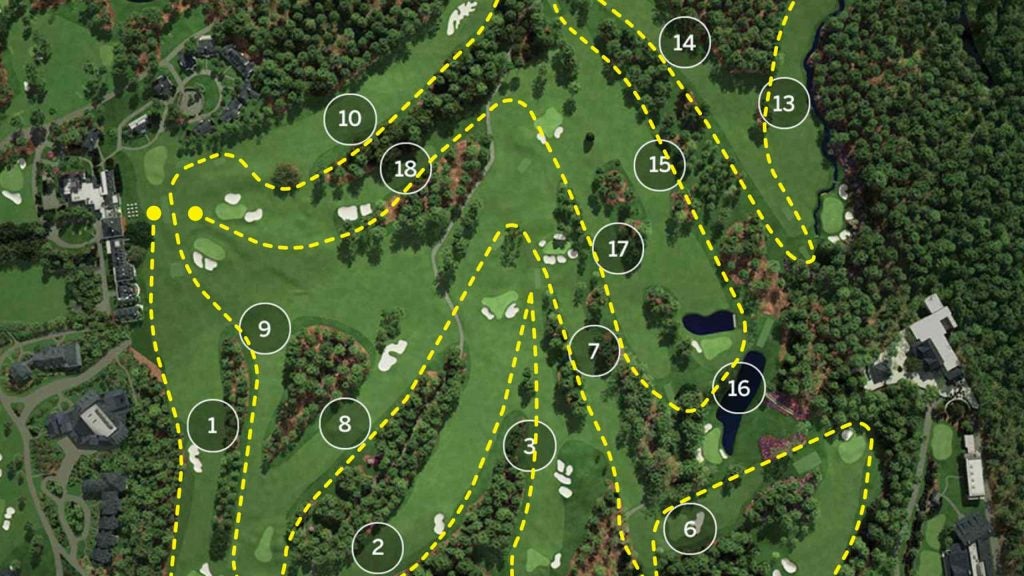
Image Source: golf.com
How Many Miles Is An 18 Hole Golf Course? Find Out!
You might ask, “How long is a typical golf course?” The answer is not just one simple number. The official length of an 18-hole golf course, measured from the tee markers to the green, is usually between 5,000 and 7,000 yards. This equals about 2.8 to 4 miles. But the distance you walk playing golf is much more, often 5 to 7 miles or even more. This is because you don’t walk in a straight line from tee to green. You walk on the fairway, maybe into the rough looking for a ball, to the next tee box, and around the green.
This article will look closely at what makes up a golf course’s length and how far you really walk when you play. We will cover standard golf course yardage, the average length of 18 hole golf course, and the actual walking distance 18 holes golf.
Deciphering Course Length: Yards to Miles
Golf courses use yards as the main unit to measure length. Each hole has a yardage listed on the tee box or scorecard. This number tells you the distance from the tee marker you are playing from to the center of the green.
The regulation golf course length for 18 holes adds up the yardage of all 18 holes from a specific set of tee markers. Courses have different sets of tees. These are often called championship, regular, senior, or forward tees. Each set makes the course a different length.
- Standard measurement: Yards are the common way to measure.
- Total adds up: The total yardage is the sum of each hole’s length.
- Tee boxes matter: The tees you choose change the total length a lot.
Let’s put those yardage numbers into miles so it’s easier to picture. There are 1,760 yards in 1 mile.
- 5,000 yards is about 2.84 miles.
- 6,000 yards is about 3.41 miles.
- 7,000 yards is about 3.98 miles.
- 7,500 yards is about 4.26 miles.
So, the average yardage 18 holes for a standard course is often in the 6,000 to 6,500 yard range. This is roughly 3.4 to 3.7 miles from tee to green if you could walk in a perfectly straight line.
Factors Influencing Course Yardage
Many things change the total length of an 18-hole golf course. It’s not just a set number.
Par and Its Connection to Length
Each hole on a golf course has a “Par.” Par is the number of strokes an expert golfer is expected to take to finish the hole. Par includes the tee shot, shots to reach the green, and two putts.
The Par of a hole tells you a lot about its length.
- Par 3 holes: These are the shortest holes. They usually measure from under 100 yards up to about 250 yards. Most Par 3s are between 130 and 200 yards.
- Par 4 holes: These are the most common holes. They are medium length. They usually measure from about 250 yards up to about 490 yards. Most Par 4s are between 350 and 450 yards.
- Par 5 holes: These are the longest holes. They usually measure from about 450 yards up to 600 yards or even more. Most Par 5s are between 480 and 550 yards.
An 18-hole golf course is made up of a mix of Par 3, Par 4, and Par 5 holes. Most courses have a total Par of 70, 71, or 72. A Par 72 course often has four Par 3s, ten Par 4s, and four Par 5s.
Here is a simple look at how the Par breakdown affects the total yardage:
h4 Typical Hole Yardage Ranges
| Par of Hole | Common Yardage Range (Yards) |
|---|---|
| Par 3 | 100 – 250 |
| Par 4 | 250 – 490 |
| Par 5 | 450 – 600+ |
h4 Example Par 72 Course Yardage (Approximate)
| Hole Type | Number of Holes | Average Yardage per Hole | Total Yardage for Type |
|---|---|---|---|
| Par 3 | 4 | 170 yards | 680 yards |
| Par 4 | 10 | 410 yards | 4,100 yards |
| Par 5 | 4 | 520 yards | 2,080 yards |
| Total | 18 | 6,860 yards |
This example shows how a Par 72 course can easily be close to 7,000 yards from the back tees. A course with more Par 4s and fewer Par 5s or longer Par 3s might have a different total.
Different Tee Boxes
Courses offer different teeing areas on each hole. These are set at different distances from the green.
- Back Tees (Championship Tees): These are the furthest back. They make the course longest. This is where pro tournaments are played.
- Middle Tees (Regular or Men’s Tees): These are shorter than the back tees. This is where many casual golfers play.
- Forward Tees (Senior, Ladies’, or Red Tees): These are the shortest tees. They make the course much shorter and easier for players who don’t hit the ball as far.
Playing from the forward tees can cut the total standard golf course yardage by hundreds or even thousands of yards compared to the back tees. This greatly affects the average length of 18 hole golf course that you play on any given day.
Course Design and Terrain
The way a course is designed also affects its true length.
- Straight vs. Dogleg: A straight hole plays its listed yardage. A dogleg (a hole that bends) might feel longer if you can’t cut the corner, or shorter if you can.
- Hills: Uphill shots play longer. Downhill shots play shorter. A hilly course might have a lot of elevation changes that make it play longer or shorter than the listed yardage. This adds to the physical effort and often the golf course distance walked.
Exploring Shorter Courses: The Executive Option
Not all 18-hole courses are long regulation golf course length. Some courses are designed to be shorter, faster to play, and sometimes easier. These are often called executive golf course length courses.
- More Par 3s: Executive courses usually have many more Par 3 holes than a standard course.
- Fewer Par 4s and 5s: They might have only a few shorter Par 4s and sometimes no Par 5s at all.
- Total Length: An 18-hole executive course might measure only 3,000 to 5,000 yards. This is much shorter than a standard golf course yardage.
- Miles: This puts their official length between about 1.7 and 2.8 miles from tee to green.
These courses are great for beginners, juniors, seniors, or anyone wanting a quicker game or less walking.
The Real Distance: Miles Walked Playing Golf
Now let’s talk about the actual distance you cover when you play 18 holes while walking. This is the miles walked playing golf. It’s always more than the official yardage of the course. Why? Because you don’t just walk in a straight line from the tee to where your ball lands, then to the green, and so on.
Most golfers walk between 5 and 7 miles during an 18-hole round. Some might walk less, others much more. This is the golf course distance walked.
Think about your path on just one hole:
- Walk from the clubhouse to the first tee.
- Walk from the tee box down the fairway towards your ball.
- Walk from your ball to where it lands after your next shot.
- Maybe walk into the rough or trees to find an errant shot.
- Walk onto the green.
- Walk around the green to read putts and mark your ball.
- Walk off the green.
- Walk to the next tee box.
- Repeat for 18 holes.
- Walk back to the clubhouse.
All these extra steps add up!
Why You Walk More Than The Course Length
Several things cause the walking distance 18 holes golf to be longer than the official yardage.
Not Walking in a Straight Line
The official yardage is a straight line from tee to green. You rarely, if ever, walk in such a perfect line.
- You walk along the fairway, which might curve.
- You walk around bunkers, water hazards, and trees.
- You walk to the side to talk to playing partners or look at their shots.
Finding Your Ball
If your shot goes off the fairway into the rough, woods, or hazards, you have to walk over to find it. This can involve walking extra distance off the planned path. The worse you hit the ball, the more extra steps you might take searching.
Traveling Between Holes
After finishing a hole, you have to walk to the next tee box. These walks can range from short paths right next to the green to longer walks of 50 to 100 yards or more, especially on courses with holes spread far apart.
Moving Around on the Green
Putting involves walking around the green. You walk to your ball, mark it, clean it, walk to read the putt from different angles, walk to your ball to putt, walk to the hole after making it, and walk to pick up your ball. This adds up over 18 greens.
Walking to Other Players’ Balls
Often, golfers walk with their playing partners to their balls, or at least near where they are hitting from. This adds steps compared to just walking straight to your own ball.
Using the Cart Path
Even if you walk, you might stick to the cart path which isn’t always the most direct route from your ball. Cart paths wind and sometimes go around areas you would walk through directly if there wasn’t a path.
h4 Things That Add Steps to Your Walk
- Walking curves and doglegs
- Searching for balls in rough or woods
- Walking to the next tee box
- Walking around greens while putting
- Walking with playing partners
- Following cart paths
How Course Layout Impacts Your Walk
The design of the course doesn’t just affect the official yardage; it also changes how far you walk.
- Course Routing: How the holes are laid out in relation to each other matters. Are the green of one hole and the tee of the next close together? Or is there a long walk between them? A well-designed course often has greens and tees near each other to reduce travel time and walking distance.
- Terrain: A hilly course means you walk up and down slopes. While it might not add much to the straight-line distance, it adds to the effort and can make you feel like you’ve walked further. Steep ups and downs can also make the direct path harder, forcing you to walk a more winding route.
- Hazards: Lots of bunkers, water, or out-of-bounds areas can mean you spend more time looking for balls or taking penalty drops, which involves extra walking.
Your Game Affects Your Steps
Believe it or not, how well you play can change how many miles you walk!
- Accuracy: Golfers who hit the ball straight tend to walk less. Their ball is usually in the fairway, making it easy to find and walk directly to.
- Inaccuracy: Golfers who hit the ball off line often walk much more. They are constantly walking into the rough, under trees, or into other areas off the main path to find their ball. Searching takes extra steps.
- Score: Playing more strokes on a hole can mean more walking. If you hit an extra shot from the fairway or rough, you have to walk to that new spot. Penalty shots might mean walking back to where you hit from or dropping in a specific area.
So, while the average length of 18 hole golf course from the scorecard is set, your personal miles walked playing golf can vary based on your performance during the round.
Comparing The Walk on Different Course Styles
The type of course you play on can also influence the walking distance.
- Parkland Courses: These courses are often in more developed areas with trees lining the fairways. They might have more separation between holes, leading to longer walks between greens and tees. The terrain can vary but is often managed.
- Links Courses: Found by the sea, these courses are often more open with rolling, natural terrain. The distance between greens and tees might be shorter as the layout flows more naturally. However, the ground can be uneven, and wind can cause more errant shots, potentially increasing searching time and distance walked.
- Executive Courses: As mentioned, the executive golf course length is shorter. This naturally leads to less walking overall compared to a full-length regulation golf course length. You’ll likely walk fewer miles on an executive course.
Tracking Your Miles on the Course
Many golfers like to know exactly how far do you walk playing golf. There are easy ways to measure your golf course distance walked:
- Fitness Trackers/Smartwatches: Devices like Fitbits, Apple Watches, and Garmin watches track your steps and can estimate distance. Just wear one while you play.
- Golf GPS Apps: Many golf GPS apps for smartphones or dedicated golf GPS devices have features that track the distance you walk during a round.
- Smartphone Step Trackers: Most modern smartphones have built-in step tracking features. Make sure it’s on and in your pocket or bag while you play.
These tools give you a good idea of the miles walked playing golf during your round. You might be surprised how many miles you cover! Often, the step count for 18 holes is between 10,000 and 15,000 steps, which is roughly 5 to 7.5 miles depending on your stride length.
The Fitness Side of Golf
Walking 18 holes is good exercise! It provides a solid workout.
- Calorie Burn: Walking 5 to 7 miles can burn a significant number of calories.
- Heart Health: It’s great for your cardiovascular system.
- Low Impact: Compared to running, walking is easier on your joints.
For those wondering how far do you walk playing golf from a health view, remember it’s a good few miles of walking, often with some hilly terrain and carrying a bag (unless you use a push cart). This makes golf a fun way to stay active.
Summing Up: Course Length vs. Walking Distance
Let’s bring it all together.
The official length of an 18-hole golf course, known as the standard golf course yardage or regulation golf course length, is the sum of the distances from each tee marker to the center of the green. This average yardage 18 holes is usually between 5,000 and 7,000 yards for a standard course, which is about 2.8 to 4 miles. Executive golf course length is shorter, often 3,000 to 5,000 yards (1.7 to 2.8 miles).
However, the actual walking distance 18 holes golf is always longer. Because you don’t walk in a straight line, search for balls, and walk between holes, the miles walked playing golf is typically between 5 and 7 miles. Factors like course design, terrain, and how well you play can make this distance shorter or longer.
So, when someone asks how many miles is an 18 hole golf course, the simple answer is:
- Official Course Length: About 2.8 to 4 miles (tee to green).
- Distance Walked: About 5 to 7 miles (your actual path).
They are different numbers, but both are important to know!
Frequently Asked Questions (FAQ)
h5 Is walking 18 holes good exercise?
Yes, very good! Walking 5 to 7 miles is great for your health. It helps your heart and burns calories.
h5 Does a golf cart mean I don’t walk at all?
No, not quite. Even with a cart, you walk from the cart to your ball, around the green, and to your playing partner’s ball sometimes. You might still walk 1 to 3 miles or more depending on how you play and the course layout.
h5 Is an executive golf course shorter to walk?
Yes. Because the official executive golf course length is shorter, the total distance you walk will also be less than on a full-length regulation golf course length.
h5 How accurate are golf GPS apps or watches for distance walked?
They are usually quite accurate for tracking your path. Using one gives you a very good idea of the total golf course distance walked during your round.
h5 Does playing from different tees change the walking distance much?
Playing from shorter tees (like forward tees) makes the official course length much shorter. While it might slightly reduce your total steps (less distance from tee shots means less walking down the fairway), the difference in total walking miles might not be as big as the change in official length. You still walk between holes and look for balls. However, on average, a shorter course will result in less walking overall.
h5 How long does it take to walk 18 holes?
Walking 18 holes usually takes between 3.5 and 5 hours for a group of golfers. This time includes walking, hitting shots, waiting, and time on the green. The pace of play on the course affects the total time.
h5 Is the golf course distance walked always the same on the same course?
No. It can change based on which tees you play from, how straight you hit the ball (do you need to search?), the weather (wind can cause more errant shots), and how busy the course is (more waiting can mean more standing, not walking).
h5 What is the longest recorded golf course length?
Some courses stretch beyond 7,500 or even 8,000 yards from the back tees. The longest in the world is often cited as the International Golf Club in Bolton, Massachusetts, measuring over 8,300 yards from the tips. This is nearly 4.7 miles, just tee to green! Walking that course would likely be 7-9 miles or more.