
Topping a golf ball means hitting the top half of the ball. This makes the ball go low or just roll along the ground. It is a common problem for many golfers. It happens when your club hits the ball on its way up instead of on its way down. Fixing this takes knowing the cause. Then you need to change your setup and swing. This guide will show you how to stop topping.
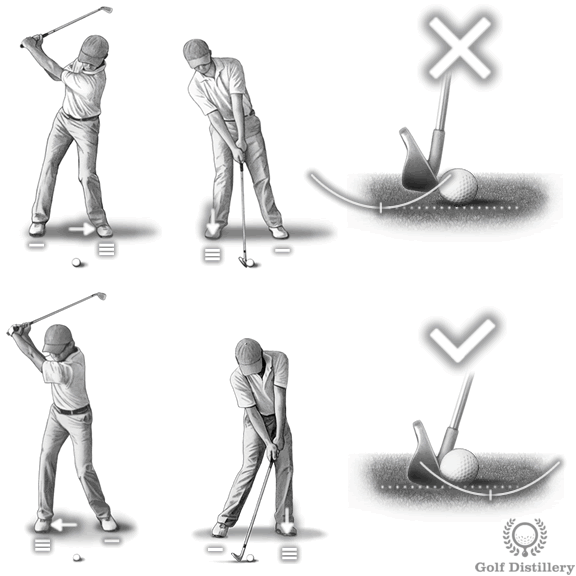
Image Source: www.golfdistillery.com
Grasping What Topping Is
Topping the golf ball looks simple. The club face hits high on the ball. The ball does not fly well. It stays low or just bounces. This can feel bad on your hands too. It is often caused by swinging up at the ball. A good golf swing hits down on the ball. This puts spin on the ball. It makes the ball fly high. Topping means you missed the sweet spot low on the club face. You hit the very top edge.
Causes of Topping in Golf
Many things can cause you to top the ball. It is usually not just one thing. It is often a mix of small mistakes. Let’s look at the main ones.
Issues with Your Setup
How you stand and get ready is your setup. A bad setup can cause problems before you even swing.
- Wrong Ball Position: Where the ball is in your stance matters. If the ball is too far forward, you might hit it after the low point of your swing arc. This means your club is going up. Hitting a ball while the club is going up causes a top.
- Bad Posture: How you bend at the waist is your posture. If you stand up too straight, you might not bend enough from your hips. This can make your body too high. You might then lift up during the swing to reach the ball. Lifting up causes a top.
- Standing Too Far or Too Close: Your distance from the ball is key. If you stand too far away, you might reach for the ball. Reaching makes you stand up taller. Standing up taller causes topping. If you stand too close, you might feel stuck. This can also make you move in ways that cause topping.
Swing Motion Problems
Mistakes during the swing itself are common reasons for topping.
- Lifting Your Body: Many people lift their body up during the swing. This happens on the way down to the ball. It is like trying to help the ball get airborne. This moves your swing arc up. Your club then hits the top of the ball.
- Early Extension Golf: This is a big one. Early extension means your hips move towards the ball. Your body also stands up tall too early. This happens on the way down to the ball. It changes your posture a lot. It makes it hard to hit down on the ball. Your club path goes up instead of down. This is a main cause of topping.
- Scooping the Ball: Scooping is trying to lift the ball with your hands or wrists. People do this to help the ball up. But it has the opposite effect. It makes your club head slow down at impact. It also makes you hit up on the ball. This causes topping.
- Not Shifting Weight: Your weight needs to move in the swing. It goes back on the backswing. It moves forward on the downswing. If your weight stays back, you will hit behind the ball or scoop. This often leads to topping. Proper weight transfer in golf swing is vital.
- Arm and Body Disconnect: Your arms and body must work together. If your arms swing too fast without your body turning, you can lose your posture. This can make you lift up. Or it can make you swing across the ball. Both can lead to topping.
- Looking Up Too Early: This is lifting your head to see where the ball goes. This often makes your shoulders and body lift too. Lifting the body causes topping. You should keep your head down longer. Watch the club hit the ball.
Fixing Golf Swing Faults – Your Setup
Correcting your setup is the first step. A good setup helps your body get in the right place. It makes a good swing easier. Here are tips for a proper golf setup.
Golf Posture Correction
Your golf posture is your body’s angle. It is how you bend from the waist.
- Stand tall with your feet shoulder-width apart.
- Hold the club in front of you.
- Bend forward from your hips. Let your arms hang down. Your back should feel flat, not rounded.
- Bend your knees just a little. Your weight should feel balanced. It should be on the balls of your feet, not your heels or toes.
- Your hands should hang right below your shoulders. The club head should rest behind the ball.
- Check this often. Poor posture creeps back in.
Ball Position Tips
Where the ball is set up in your stance matters for different clubs. But for irons, a good spot is key to hitting down.
- For irons, place the ball just forward of the center of your stance.
- Center means between your feet. Just forward means maybe one ball width towards your front foot.
- This position helps you hit the ball when the club is slightly moving down.
- For woods or drivers, the ball is more forward. But for irons, center or just ahead of center is good. This helps you hit down.
Your Distance from the Ball
Your arms should hang naturally. Not stretched out. Not too close in.
- Set your posture first.
- Let your arms hang.
- The club head goes behind the ball.
- If you feel you have to reach, you are too far away. Step closer.
- If your arms feel jammed into your body, you are too close. Step back.
- Finding the right distance helps you swing freely.
Fixing Golf Swing Faults – The Swing Itself
Once your setup is good, you need to fix the motion. This is where most topping happens. We need to learn how to hit down on the golf ball. We need to improve golf impact position.
Comprehending Weight Transfer in Golf Swing
Moving your weight correctly gives you power. It also helps you hit down on the ball.
- Backswing: As you turn your body back, your weight should shift to your back foot. Think about feeling pressure in the arch of your back foot. Do not let all your weight go to the outside edge of your foot.
- Downswing: This is key for topping. You must start moving your weight forward. Before your arms fully swing down, your body should start shifting. Your weight moves to your front foot. Think about pressing into the ground with your front foot.
- Impact: At impact, most of your weight should be on your front foot. Your hips should be open (turned towards the target). This helps you hit down and through the ball.
- Finish: All your weight should be on your front foot. You should be balanced. Your back foot should be up on its toe.
Avoiding Early Extension Golf
This is a common fault that lifts your body. It causes topping and loss of power.
- What it looks like: Your hips move closer to the ball on the way down. Your upper body stands up.
- Why it happens: Often, it is from trying to lift the ball. Or from not turning your body well. Sometimes it is from not shifting weight forward.
- How to stop it: You need to keep your hip turn and angle. Your backside should stay back. Imagine there is a wall right behind you. Try to keep your backside touching that wall through the downswing and impact.
The Importance of Hitting Down on the Golf Ball
Good iron play means hitting the ball first. Then hitting the ground, making a divot. This is hitting down.
- Your swing arc has a low point. For irons, this low point should be after the ball.
- When you hit down, the club face compresses the ball. This creates backspin. Backspin makes the ball fly high and stop on the green.
- Hitting up on the ball (topping or scooping) prevents this spin. The ball knuckleballs or stays low.
- Hitting down comes from having your weight forward at impact. It comes from keeping your posture. It comes from not scooping.
Improving Golf Impact Position
This is the moment of truth. Your body and club must be in the right spots.
- At impact, your weight should be mostly on your front foot (around 70-80%).
- Your hips should be open (turned left for a right-handed golfer).
- Your shoulders should be more level than your hips.
- Your hands should be slightly ahead of the ball. This is called shaft lean. It helps you hit down.
- Your chest should point past the ball towards the target.
- Think about holding your posture. Your head should be behind the ball slightly.
General Golf Swing Tips to Avoid Topping
Here are some broad tips to help your overall swing motion.
- Smooth Tempo: Do not rush the swing. A smooth swing is easier to control. Rushing often leads to standing up or scooping.
- Connect Your Arms and Body: Feel like your arms swing with your body turn. Not faster than your body. This keeps your swing centered. It helps maintain posture.
- Control the Low Point: Focus on making your divot after the ball. This ensures you are hitting down.
- Keep Your Head Still (Relatively): Your head should not bob up and down. Or move towards the target too early. Keep your head steady behind the ball until well after impact.
Golf Swing Drills for Topping
Drills help you feel the right movements. Practice these to stop topping and start hitting down. These are specific golf swing drills for topping.
Drill 1: The “Tee It Low” Drill
This helps you learn to hit down and through.
- Put a ball on a very low tee. Use a tee meant for irons, the small ones. Or even just push a regular tee low into the ground.
- The ball should sit just on top of the grass.
- Now try to hit the ball and take the tee out of the ground.
- This forces you to swing down and through the ball’s position. If you swing up, you will top the ball or miss the tee.
- Start with slow swings. Build up speed as you get better.
Drill 2: The “Divot First” Focus
This drill is about feeling the low point of your swing.
- Place a tee about an inch or two in front of the ball. Towards the target.
- Focus on hitting the ball. Then, focus on your club hitting the ground after the ball. Take a divot that starts just after the ball.
- The tee acts as a check. If you hit the tee, your low point is too far back. If you don’t take a divot after the ball, you might be hitting up or scooping.
- Practice hitting ball, then ground. Ball, then divot.
Drill 3: The “Two-Ball” Drill
This helps prevent scooping and improves impact.
- Set up two balls close together. The first ball is where you would normally hit it. The second ball is about a club head length behind the first ball.
- Set up to hit the first ball (the one towards the target).
- Swing the club. Your goal is to hit only the first ball.
- If you scoop or lift up, your club head might hit the second ball on the way down or back.
- To hit only the first ball, you must swing down and through it. Keep your hands ahead. Keep your body turning.
Drill 4: The “Pump” Drill
This helps you feel the transition and weight shift. It stops you from casting or standing up early.
- Make your backswing to the top.
- Stop for a second.
- Pump your hands down towards the ball a little bit. Maybe a foot or so. Keep your body angle. Do not stand up. Feel the weight shift starting forward.
- Then make your full swing down and through the ball.
- This drill breaks down the swing. It helps you feel the proper sequence. Weight shift, then arms, then club head. It prevents lifting up from the top.
Drill 5: The “Hold the Finish” Drill
This improves balance and teaches a full turn. Lack of a full turn can cause compensations like topping.
- Make a slow swing.
- After you hit the ball, hold your finishing pose for 3 to 5 seconds.
- You should be balanced. All your weight should be on your front foot. Your belt buckle should face the target. Your back foot should be on its toe.
- If you are unbalanced, something went wrong in the swing motion or weight transfer. Often, topping comes with falling back or standing up, which makes holding the finish hard.
- Practice holding the finish until you are steady there.
Deciphering Which Cause Is Yours
To stop topping, you need to know why you top it. It could be one reason or a mix.
- Self-Check: Watch yourself swing. If possible, film your swing with a phone. Look at your setup. Look at your swing path. Look at your impact position. Are you standing up? Are your hips moving forward? Are you trying to scoop?
- Listen to the Sound: A topped shot sounds thin and weak. A well-struck iron sounds solid.
- Look at the Divot: If you top, you will likely not take a divot. Or the divot will be behind the ball. A good iron shot makes a divot after the ball.
- Feel the Shot: Topped shots feel bad. Solid shots feel crisp.
- Get Help: A golf pro can watch you and tell you exactly what you are doing wrong. They can give you specific fixing golf swing faults advice.
Putting It All Together
Fixing topping takes practice. Do not try to fix everything at once.
- Start with Setup: Spend time on your proper golf setup. Get your posture right. Check your ball position. This builds a good base.
- Focus on One Swing Fault: Pick the main reason you top the ball. Is it early extension? Is it scooping? Work on just that one thing. Use a drill for that fault.
- Slow Motion Practice: Practice your swing very slowly. Focus on the feeling of weight transfer. Feel your body turning. Feel your hands staying ahead at impact.
- Hit Shots with Focus: When hitting balls, focus on the feeling of hitting down. Try to make that divot after the ball. Do not worry about where the ball goes at first. Just work on the impact.
- Use Drills Often: Spend half your practice time doing drills. Drills teach your body new movements.
- Be Patient: Fixing a golf swing fault takes time. Do not get frustrated. Keep practicing the right way.
Table: Common Topping Causes and Fixes
| Cause | What it looks like | How to Fix (Simple) | Drills to Help |
|---|---|---|---|
| Bad Posture | Standing too straight, bending from back | Bend from hips, flat back, slight knee bend | Practice getting into good posture |
| Wrong Ball Position | Ball too far forward (for irons) | Move ball slightly back, just ahead of center | Check ball position every time |
| Standing Too Far/Close | Reaching for ball or jammed arms | Let arms hang naturally in good posture | Set up, let arms hang, check distance |
| Lifting Body / Standing Up | Head or chest comes up on downswing | Stay in posture, feel bend from hips | Two-Ball Drill, Pump Drill |
| Early Extension Golf | Hips move towards ball, body stands up | Keep backside back, feel hip turn through impact | Against-the-Wall Drill (imagine) |
| Scooping | Trying to lift the ball with hands | Keep hands ahead at impact, hit down | Two-Ball Drill, Divot First Drill |
| No Weight Transfer | Weight stays on back foot | Shift weight forward on downswing | Pump Drill, Hold the Finish Drill |
| Looking Up Too Early | Head pops up before impact | Keep head down, watch club hit the ball | Focus on ball until it’s gone |
Keeping It Simple
To stop topping, remember these simple things:
- Get your setup right first. Posture is key.
- Learn to shift your weight forward.
- Learn to hit down on the ball, not up.
- Keep your body level and turned, do not stand up early (avoid early extension golf).
- Use golf swing drills for topping to practice the right feelings.
- Be patient and practice well.
Mastering these fundamental golf swing tips and fixing golf swing faults like topping will make a huge difference. It will improve golf impact position and make the game more fun.
Frequently Asked Questions About Topping
Why do I suddenly start topping the ball?
Topping can start suddenly if you lose your focus on the basics. Maybe your setup changed a little. Maybe you are trying too hard to hit the ball far. This can make you stand up or scoop. Check your setup first. Then think about your swing tempo and body movement.
Does topping lose me distance?
Yes, big time. Topping does not put power or backspin on the ball. The ball goes low and rolls. A solid hit, even with less power, will go much farther because it flies high and carries through the air. Hitting down on the ball gives you better distance and control.
Can my equipment cause topping?
Rarely. Topping is almost always a swing or setup issue. Your clubs might be the wrong size (too long or too short), which can affect your posture and distance from the ball. But the club itself does not make you top it directly. Focus on your swing first.
Is topping worse than hitting fat shots?
Both are bad golf swing faults. Topping gets less distance. Hitting fat means hitting the ground first, which also kills distance and feels bad. Often, people who top are trying not to hit fat, so they lift up. Working on proper weight transfer and hitting down fixes both issues over time.
How long does it take to stop topping?
It varies for everyone. If it is a simple setup fix, maybe a few practice sessions. If it is a deep swing fault like early extension golf, it can take weeks or months of focused practice. Patience and correct practice using golf swing drills for topping are key.
Should I try to keep my head down longer?
Yes, this is a helpful thought for many people. Keeping your head down or looking at the spot where the ball was helps keep your body in posture. It prevents lifting up too early. Focus on watching the club hit the ball and the ground after the ball.
Does weight transfer in golf swing affect topping?
Absolutely. Poor weight transfer is a major cause. If your weight stays back, you will hit up on the ball or scoop. Shifting your weight forward helps you hit down through the ball. This is a critical part of improving golf impact position.
What’s the simplest way to think about hitting down?
Imagine hitting through the ball and the grass just after it. Think “ball then ground”. Do not think “scoop the ball up”.
By understanding the causes and using these fixing golf swing faults tips and golf swing drills for topping, you can stop topping and start hitting solid, well-flying golf shots. Keep practicing, and you will see great results!