
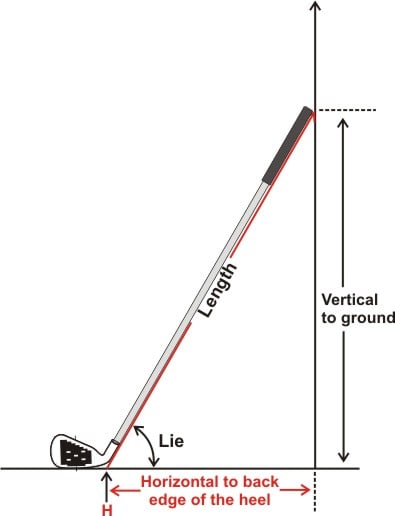
Image Source: www.hirekogolf.com
Guide On How To Measure Length Of Golf Club Shaft Correctly
Knowing how to measure golf club length correctly is important for every golfer. The most accepted method follows the Golf club length measurement standard set by golf’s governing bodies. To measure your golf club’s length correctly, you typically place the club with the sole flat against a wall or floor and measure from the ground up the back of the shaft to the top of the grip. This guide will walk you through the simple steps using a common golf shaft measurement tool. We will also touch upon standard golf club length and how it fits into the broader golf club fitting process.
Why Length Matters in Golf Clubs
Club length is a big deal in golf. It has a major impact of club length on swing. A club that is too long can make it hard to control the club head. This can lead to hitting the ball off-center, slicing, or hooking. It can also mess up your swing path and tempo. Your posture at address will change too.
On the other hand, a club that is too short might make you bend over too much. This can strain your back and limit your ability to make a full, powerful swing. It can also make it hard to reach the ball properly, especially on uphill or downhill lies.
Finding the right length helps you swing freely and hit the ball in the center of the club face more often. This leads to better shots, more control, and hopefully, lower scores. This is why knowing the standard golf club length for different clubs is a good starting point, but getting fitted is even better. The golf club fitting process uses accurate measurements, including length, to match clubs to your specific needs.
The Accepted Way to Measure Club Length
Golf’s main rules bodies, like the USGA (United States Golf Association) and R&A, have rules for how clubs must be made and measured. These USGA club length rules include how length is determined. This creates the Golf club length measurement standard that most people follow.
The standard way to measure is quite simple once you know it. It’s not just laying the club on the floor and measuring end-to-end. That method is wrong. The correct way takes into account how the club sits when you are about to hit the ball.
Here is the main idea:
- Put the club down like it is ready to hit a ball.
- The bottom of the club (the sole) should be flat on the ground or a level surface.
- Measure straight up the back of the shaft to the very top of the grip.
This method gives a consistent number that golf pros and club makers use. It ensures everyone is measuring the same way.
Getting the Right Measurement
To measure your golf clubs correctly, you need a good golf shaft measurement tool. A specialized golf club ruler or measuring board is best. These tools usually have a stop at one end where the club head sits, helping you keep the sole flat. They also have clear markings to measure along the shaft.
If you do not have a special golf ruler, a standard tape measure can work, but it is harder to get a truly accurate measurement. You need to be very careful to keep the sole flat and measure along the line of the shaft.
Here are the steps for how to measure golf club length correctly:
- Prepare the Club: Make sure the club face is not angled open or closed. The sole should be flat and level, as if sitting naturally on the ground.
- Position the Club: Place the club on a hard, flat surface. A floor or a workbench works well. If you have a golf club measuring board, place the club head against the stop.
- Keep Sole Flat: This is key. Imagine the club is sitting ready to hit a ball. The bottom of the club should be entirely touching the surface along its length.
- Place the Ruler: Lay your golf shaft measurement tool or tape measure along the back side of the club shaft. The measuring tool should touch the surface the club is resting on at the club head end.
- Measure Up the Shaft: Run the ruler straight up the back of the shaft. Follow the line of the shaft closely.
- Read the Length: Measure from the surface the club is on (the bottom of the sole) straight up the back of the shaft to the very top edge of the grip cap.
Do not measure from the toe or heel straight up. Do not measure from the center of the club head up. Always measure along the line of the shaft from the point where the sole meets the ground.
Length Specifics for Different Clubs
The general method for how to measure golf club length correctly applies to most clubs. However, there are slight differences or points to consider based on the type of club.
Measuring Driver Length
The driver is typically the longest club in the bag. Measuring driver length follows the standard method precisely. Place the driver with the sole flat on the ground. Measure from the ground straight up the back of the shaft to the top of the grip.
- Drivers have large heads. Make sure the very bottom edge of the sole is flat on the surface.
- Do not angle the club face up or down. Keep it neutral.
- Measure from the bottom of the sole to the top of the grip cap.
The USGA club length rules have a maximum length limit, which we will discuss later. Drivers are the clubs most likely to be near or at this limit.
Measuring Iron Length
Measuring iron length also uses the standard method. Irons have smaller heads than drivers, but the principle is the same.
- Place the iron with the sole flat on the ground or measuring surface. The leading edge and trailing edge of the sole should both touch the surface.
- Run your golf shaft measurement tool up the back of the shaft.
- Measure from the surface (bottom of the sole) to the top of the grip.
The length of irons changes pretty evenly from the longest iron (like a 4 or 5 iron) down to the shortest (like a pitching wedge or sand wedge). Each iron in a set is usually about half an inch shorter than the next longer one.
Measuring Putter Length
Measuring putter length is a bit different. The standard method for woods and irons (sole flat on the ground, measure up the back of the shaft) is common. However, because putters often have unique sole shapes (like curved bottoms or very small contact points), there can be variations.
The most widely accepted method for putters, especially for conforming to USGA club length rules, is slightly different or requires careful attention.
- Place the putter with the sole flat on the ground.
- The USGA measurement for putters is usually taken from the bottom of the sole (where it rests on the ground) up the axis of the shaft to the top of the grip.
- Some putters have soles that only touch the ground at one or two points. In these cases, you still measure from the flat surface up the shaft.
Some golfers might measure from the heel or the center of the sole, but the key is consistency and following the Golf club length measurement standard if you want to compare your club to others or check for rule conformity. When in doubt, use the standard method that works for woods and irons, keeping the sole as flat as possible.
Exploring Standard Club Length
What is considered standard golf club length? This term can be confusing because there is no single “standard” length that fits everyone. Club makers use average lengths based on player height and typical swing needs. These averages are starting points, not strict rules.
Here are some general ideas of common lengths for men’s standard-length clubs:
- Driver: Often between 45 and 46 inches. Some are shorter, some are longer.
- 3-Wood: Usually around 43 inches.
- Hybrids: Typically 40 to 41 inches.
- 5-Iron: Around 38 inches.
- Pitching Wedge (PW): Often around 35.5 or 36 inches.
- Putter: Most common lengths are 33, 34, or 35 inches.
These are just examples. Women’s clubs are generally shorter by about an inch or so across the set. Junior clubs are much shorter and come in different sizes for different ages.
The term standard golf club length is more useful for understanding typical club sets than for knowing what length you should play. That is where the golf club fitting process comes in.
The Role of Club Fitting
Measuring your clubs is often the first step in the golf club fitting process. A fitting expert uses measurements of your clubs, your body (like height and wrist-to-floor distance), and your swing data to figure out the best club specifications for you.
Correct club length is vital for a good fitting. If your clubs are the wrong length, it affects how you stand, how you swing, and where you hit the ball on the face. A good fitter will measure your current clubs using the correct method (Golf club length measurement standard) and then help you try clubs of different lengths to see which feels best and performs best for you.
During a fitting, the expert watches:
- Posture: How you stand over the ball.
- Swing Plane: The angle of your swing.
- Ball Striking: Where you hit the ball on the club face.
- Ball Flight: How the ball flies (height, direction, shape).
Changes in length can fix issues with posture, improve ball striking, and give you more control. The impact of club length on swing is big, so getting it right during a fitting is key.
What USGA Rules Say About Length
The USGA club length rules are important for golfers who play in official competitions. They set limits on club length to keep the game fair.
- Maximum Length: A golf club (not including putters) must not be longer than 48 inches. Putters must not be shorter than 18 inches. There is no maximum length for putters under the main Rules of Golf, but local rules or competition conditions might set one (often 50 inches).
- Measurement Method: The rules specify the standard measurement method: measure from the heel of the club along the back of the shaft to the end of the grip. However, for practical purposes, and as described earlier, placing the club with the sole flat and measuring up the shaft is the common way to implement this. The “heel” reference in the rules ensures measurement starts from the bottom where the club touches the ground near the heel.
Knowing the USGA club length rules is good if you play in tournaments. Most recreational golfers do not need to worry about hitting the 48-inch limit unless they are using a specially made long driver. However, understanding how they measure helps confirm the correct Golf club length measurement standard.
Tools Used for Measuring
As mentioned, a golf shaft measurement tool is best for accuracy.
- Golf Club Rulers or Boards: These are designed specifically for measuring clubs. They often have a raised edge or stop to position the club head correctly and a channel or flat edge to lay the ruler along the back of the shaft. They are marked in inches and often fractions of an inch.
- Standard Tape Measure: You can use a regular retractable tape measure. The challenge is holding it straight and making sure you measure from the point where the sole touches the ground, along the line of the shaft, to the top of the grip. This requires a steady hand and careful alignment.
- Specialized Jigs: Professional club fitters and club builders use more complex jigs that hold the club perfectly still and aligned for precise measurement. These are not needed for a golfer checking their own clubs at home.
For checking your own clubs, a good quality golf club ruler is a worthy investment if you plan to measure often or adjust grip sizes, which can slightly change length. Otherwise, a careful use of a standard tape measure following the correct method (how to measure golf club length correctly) will give you a good idea of your club lengths.
Potential Pitfalls When Measuring
Even with the right method and a good golf shaft measurement tool, people can make mistakes.
- Not Keeping the Sole Flat: This is the most common error. If the toe or heel is lifted, or the club face is tilted, the measurement will be wrong. Imagine the club sitting naturally on the ground at address.
- Measuring Down the Center of the Shaft: You must measure along the back of the shaft, following its straight line from the sole to the grip end.
- Measuring to the Bottom of the Grip: You measure to the very top edge of the grip cap, not where the shaft ends inside the grip.
- Using a Flexible Tape Measure Carelessly: A soft tape measure can bend or not be perfectly straight, leading to inaccurate readings.
- Not Accounting for Grip Changes: Putting on a thicker or thinner grip, or a grip with a different cap, can slightly change the overall length when measured to the top of the grip.
Always double-check your measurement. Measure twice to make sure you get the same number. Using the standard method (Golf club length measurement standard) is the best way to avoid these errors.
How Length Affects Your Swing
Let’s look deeper at the impact of club length on swing. A club’s length affects several things:
- Swing Speed: Longer clubs can potentially be swung faster, creating more club head speed. However, only if you can control the added length.
- Control and Accuracy: Shorter clubs are generally easier to control. This is why wedges are short – control is more important than distance. Longer clubs are harder to swing on plane and hit the sweet spot.
- Lie Angle: Club length influences the club’s lie angle at impact. If a club is too long, the toe of the club might be off the ground at impact. If it’s too short, the heel might be up. An incorrect lie angle makes it harder to hit the ball straight.
- Center of Face Contact: Using a club that is the right length for you makes it much easier to hit the ball consistently on the center of the club face (the sweet spot). Off-center hits lose a lot of energy and go off line.
- Comfort and Feel: Simply put, a club that is the right length just feels better to swing. It allows you to maintain good posture and balance throughout the swing.
This is why accurate measurement using the Golf club length measurement standard and finding the right length through the golf club fitting process is so important for playing your best.
Connecting Measurement to Fitting Goals
The goal of the golf club fitting process is to give you clubs that help you hit the ball better. Length is one of the main factors a fitter looks at, along with shaft flex, weight, grip size, and lie angle.
When you get fitted, the fitter will use data from your swing, like club head speed, ball speed, launch angle, and spin rate. They will also look at how you stand and swing. If your current clubs are measured and found to be too long or too short for your height and swing type, the fitter will recommend changes.
They might have you try clubs that are half an inch or an inch shorter or longer than your current ones. You will hit shots with these clubs, and the fitter will look at the data and how the clubs feel to you.
For example:
- If you are tall and your current clubs are standard golf club length, they might be too short. A fitting could show you need longer shafts to maintain good posture and hit the center of the face.
- If you struggle with control or hitting the sweet spot on your driver, even though it’s a standard golf club length, a fitting might show that a slightly shorter driver gives you much better control and consistent center hits, even if your swing speed is slightly lower. The improved contact leads to more distance and accuracy.
Accurate measurement using a proper golf shaft measurement tool that follows the Golf club length measurement standard is the necessary starting point for these adjustments and tests in the fitting process.
USGA Rules in Practice
While the USGA club length rules set maximums and a measurement method, they also cover other things like club head size, grip shape, and shaft bending. For length, the key is the 48-inch limit (for non-putters) and 18-inch minimum for putters.
These rules are there to prevent golfers from using equipment that gives an unfair advantage. A driver much longer than 48 inches, for example, might be too hard to control but could theoretically be swung very fast by a strong player, creating massive distance. The limit keeps the game fair.
When you measure your clubs using the standard method (how to measure golf club length correctly), you are essentially using the same method the USGA would use if they checked your clubs. This ensures your clubs conform to the rules if their length is within the limits.
Most clubs bought off the rack are well within the USGA club length rules, especially drivers which are usually 45-46 inches. Custom-built clubs or clubs with shaft extensions are where you might need to be more careful about the maximum length.
Keeping Your Measurements Current
Your club length can change over time, especially if you change grips. Installing a new grip can sometimes slightly change the overall length measured to the top of the grip cap.
Also, if you reshaft a club, the length will likely change unless the new shaft is specifically cut and installed to match the old one perfectly in length and how it fits into the club head.
If you have had a club fitting, it is a good idea to measure your clubs yourself or have them measured periodically to make sure they still match the specifications you were fitted for. Using your golf shaft measurement tool and the standard method (Golf club length measurement standard) takes only a few minutes per club.
Knowing your club lengths accurately helps you understand your equipment and how it affects your game. It’s a simple but important part of taking your golf seriously.
Frequently Asked Questions
How do I measure golf club length correctly?
Place the club with the sole flat on the ground or a level surface. Measure from the surface up the back of the shaft to the top of the grip. Use a proper golf club ruler or tape measure.
What is the standard golf club length?
There isn’t one strict standard for everyone. Club makers use average lengths for men (e.g., 45 inches for a driver, 37 inches for a 7-iron) and women (slightly shorter). Your ideal length depends on your height, arm length, and swing.
What tool do I need to measure a golf shaft?
A specialized golf club measuring ruler or board is best. A standard tape measure can work if used carefully, ensuring you measure from the sole along the back of the shaft to the top of the grip.
How do USGA club length rules affect measurement?
The USGA sets a maximum length (48 inches for non-putters, 18 inches minimum for putters) and defines the standard measurement method (from the sole up the back of the shaft). Measuring correctly ensures your clubs are legal for play in competitions.
Does club length really impact my swing?
Yes, greatly. The impact of club length on swing includes affecting your posture, ability to hit the center of the face, swing speed, control, and lie angle at impact. The correct length helps you swing better and hit straighter shots.
How is measuring a putter different?
The standard method (sole flat, measure up the shaft to the grip top) works for putters. However, their unique sole shapes mean you must ensure the part of the sole that naturally rests on the ground is flat when measuring. Some specific rules might measure from the heel up the shaft axis.
Why is length measurement part of the golf club fitting process?
Accurate length measurement is a starting point in fitting. Fitters measure your current clubs and observe your swing to determine if longer or shorter clubs would improve your posture, ball striking, control, and overall performance. The golf club fitting process uses measurement to match clubs to your body and swing.
What is the Golf club length measurement standard?
It’s the method accepted by golf’s governing bodies (like USGA/R&A). It involves placing the club with the sole flat on a surface and measuring from that surface up the back of the shaft to the top of the grip. This ensures consistent and comparable measurements.
Conclusion
Measuring your golf clubs correctly is a simple step that can provide valuable information about your equipment. By following the Golf club length measurement standard and using a suitable golf shaft measurement tool, you can accurately determine your club lengths. This knowledge is fundamental, whether you are comparing your clubs to standard golf club length figures, checking compliance with USGA club length rules, or preparing for a golf club fitting process.
The impact of club length on swing is too significant to ignore. Clubs that are the right length for you allow for better posture, more consistent contact, improved control, and ultimately, better golf shots. So, take the time to measure your clubs the right way. It’s an easy skill to learn and an important part of understanding your game and your gear.