
Cutting down a golf club safely means you can adjust its length to fit your swing better. You can learn how to do this yourself, but you need the right tools and steps, especially when you trim a golf shaft made of graphite or steel. This guide will walk you through shortening a golf club without damaging it, covering everything from how to shorten a putter to adjusting a golf driver and ensuring the finished club feels right when you swing.
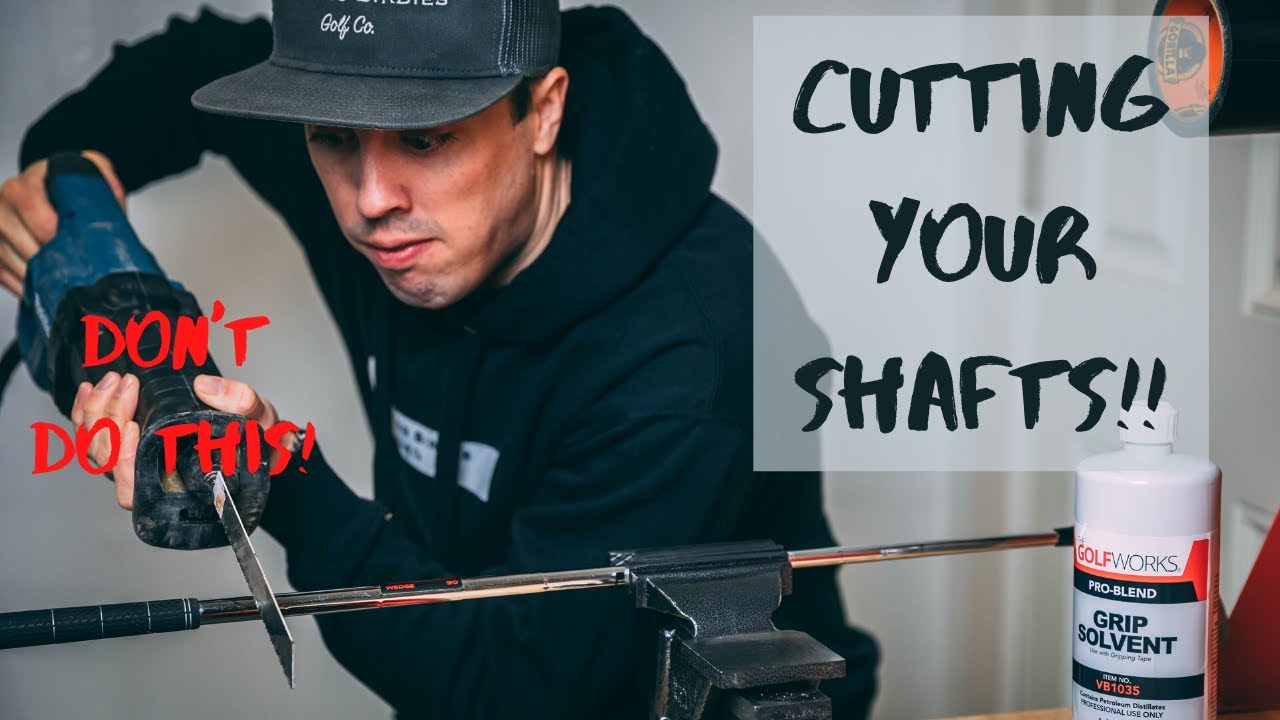
Image Source: i.ytimg.com
Why Shorten a Golf Club?
People cut golf clubs shorter for many reasons. Often, it’s about getting a better fit. A club that is too long can be hard to control. It can mess up your swing path. Shortening the club can help you hit the ball more often in the sweet spot. This means better shots.
Sometimes, golfers shorten clubs to change how they feel. A shorter club might feel lighter or easier to swing fast. This can lead to more speed if the club was too heavy or long for you before. Junior golfers often need clubs cut down as they grow. Instead of buying new clubs, parents can adjust old ones. This is part of making sure golf equipment fits the player.
Shortening a club can also help with specific issues. For example, if you keep hitting the ball off the heel of the club, it might be too long. Cutting it down a bit can fix this problem. It helps you stand closer to the ball.
What Happens When You Shorten a Club?
When you take length off a golf club, you change more than just how long it is. The biggest change is to the club’s swing weight. Swing weight is about how the club feels when you swing it. It’s the balance of the club. When you cut the grip end of a club, the club head end becomes lighter compared to the grip end. This makes the swing weight lighter.
A lighter swing weight makes the club feel less heavy when you swing it. This can be good for some golfers. But if the swing weight gets too light, you might lose feel for the club head during your swing. This can make it harder to time your hit.
For every half-inch you cut off the grip end, the swing weight goes down by about 3 swing weight points. This is a big change. For example, going from D2 to C5 swing weight by cutting two inches off a driver.
Cutting the shaft can also slightly change the stiffness of the shaft. Making a shaft shorter usually makes it a little stiffer. This change is small for small cuts. But cutting off many inches can make the shaft much stiffer.
The loft and lie angle of the club head don’t change when you shorten the shaft. These angles are part of the club head design. They are not affected by the shaft length. However, because you stand closer to the ball with a shorter club, the effective lie angle you play at might feel different.
Planning Your Golf Club Shortening Project
Before you pick up a tool, you need a plan. Cutting a golf club is not hard, but doing it right takes care. This is key for a good DIY golf club shortening job.
Finding the Right Length
How short should you make the club? This is the most important question. The right length depends on your height, your posture when you swing, and how you swing the club.
A good starting point is to measure your wrist-to-floor distance. Stand straight up with your arms hanging loosely. Have someone measure from the crease of your wrist down to the floor. This measurement helps fitting systems suggest a starting club length.
You can also hold the club you want to shorten. Get into your golf stance. See where the club head rests on the ground. If the heel is way up in the air, the club might be too long. If the toe is way up, it might be too short. The sole of the club should be flat on the ground, or very close to it.
Think about other clubs you hit well. How long are they? You can use those lengths as a guide. If your 7-iron feels perfect, measure it. Then compare it to the club you want to cut.
Most club fitters use launch monitors and sensors to find the perfect length. They watch how you swing and how you hit the ball. They might have you hit balls with clubs of different lengths. This helps them find the length that gives you the best results.
If you can’t see a fitter, start small. Cut only a little bit at a time. You can always cut more off later. You can’t add it back. Many people find that cutting half an inch to one inch is a good start.
Marking the Cut Point
Once you know how much to cut, you need to mark the spot on the shaft. Use a fine-tip marker or a pencil. Wrap a piece of masking tape around the shaft where you plan to cut. Make the mark on the tape. The tape helps guide your cut and protects the shaft surface near the cut line.
Measure from the butt end (grip end) of the club down the shaft to the mark. Double-check your measurement. Make sure it is exactly where you want it.
Tools You Will Need
To cut down a golf club, you need the right golf shaft cutting tool. The tool you use depends on the shaft material.
- For Steel Shafts: You need a pipe cutter or a hacksaw with a metal-cutting blade. A pipe cutter is better. It makes a clean, straight cut around the shaft.
- For Graphite Shafts: You need a special cutting tool. This is often a thin, toothed saw blade designed for cutting composite materials. A high-speed rotary tool with a cut-off wheel also works well, but requires care. Using the wrong tool, like a standard hacksaw or pipe cutter, can crush or splinter a graphite shaft. This will ruin the shaft.
- Other Tools:
- A vice to hold the club steady. Use rubber vice clamps to protect the shaft.
- Measuring tape or ruler.
- Fine-tip marker or pencil.
- Masking tape.
- Sandpaper or file (medium and fine grit) to smooth the cut end.
- New grip.
- Grip tape.
- Grip solvent.
- A utility knife or hook blade to remove the old grip.
Make sure your tools are sharp and in good condition. Dull tools can make the job harder and less safe.
Step-by-Step Cutting Process
Here is how to cut down a golf club, step by step. The process is different for steel and graphite shafts at the cutting stage.
Step 1: Prepare the Club
First, you need to remove the old grip. Use a utility knife with a fresh blade. Cut a line along the length of the grip, away from your body. Peel the grip off. Clean off any old grip tape and solvent from the butt end of the shaft.
Now, measure the club’s current length. Stand the club on its toe with the sole flat against a wall. Measure from the floor up to the very top edge of the grip end of the shaft (where the grip was). Note this length.
Decide how much length you want to remove. Subtract that amount from the current length to find your target length.
Measure down the shaft from the butt end. Make your mark where you need to cut to reach the target length. Wrap masking tape around the shaft just below your mark. This protects the shaft and gives you a clear line to follow.
Step 2: Secure the Club
Put the club shaft in a vice. Use rubber vice clamps to protect the shaft from getting crushed or scratched. Clamp the shaft just below your mark. Make sure the club is held firmly and cannot move while you cut. The part you are cutting off should be above the vice jaws.
Step 3: Cut the Shaft
This is the most important part. The method depends on the shaft material.
Cutting Steel Shafts
Put the steel shaft in the pipe cutter. Line up the cutting wheel with your mark on the tape. Turn the handle to gently tighten the cutter onto the shaft. Rotate the pipe cutter around the shaft, applying light pressure as you turn. Keep turning and tightening a little bit with each rotation. The wheel will slowly cut through the steel.
Keep turning and tightening. The shaft will cut cleanly. The cut will be straight and square. This method is best for steel. It makes a smooth edge with no burrs inside the shaft.
If you use a hacksaw, make sure it has a blade meant for metal. Hold the saw straight. Cut carefully along your mark. Try to keep the cut square to the shaft. This is harder than using a pipe cutter.
Cutting Graphite Shafts
This step needs more care than cutting steel. Do NOT use a pipe cutter on graphite. It will crush the shaft walls. This weakens the shaft structure. The shaft could break later during a swing.
You need a high-speed cut-off wheel or a sharp hacksaw blade designed for composites or wood. A small, motorized rotary tool with a cut-off disc works well.
Put on safety glasses. Graphite dust is bad for your eyes and lungs. Work in a place with good air flow.
Put the shaft in the vice with rubber clamps. Put the clamp below your cut line.
Use the rotary tool or saw blade. Cut through the shaft at your mark on the tape. Apply light pressure. Let the tool do the work. Try to make the cut quickly to avoid heat buildup. This can damage graphite.
Keep the saw or wheel straight. Make a clean cut. You might see dust or fine shavings.
Some specialized graphite shaft cutting tools score the shaft and then snap it. These tools are designed to prevent splintering. They also work well if you have one.
After cutting, remove the tape from the shaft.
Step 4: Finish the Cut End
The cut end of the shaft will be sharp. It might have rough edges or burrs, especially steel shafts cut with a hacksaw. You need to smooth this down.
Use a file to gently smooth the outer and inner edges of the cut. Angle the file slightly. Remove any sharp metal or splintered graphite. Be careful not to file away too much material. You just want a smooth edge.
Then, use fine-grit sandpaper (like 200 or 300 grit) to make the end very smooth. You want the end to be flat and clean. This helps when putting on the new grip. A smooth end is also safer when working with the shaft.
Make sure there are no sharp points or rough spots inside the shaft opening either. These can damage the grip when you install it.
Step 5: Regrip the Club
You cut off the grip end, so you need a new grip. This is a good time to put on a fresh grip that you like.
Clean the shaft end again. Make sure it is dry. Apply fresh double-sided grip tape to the butt end of the shaft. Start just below the cut end. Wrap the tape down the shaft about an inch or two below where the grip will end. Don’t let the tape overlap too much.
Cover the tape with grip solvent. Pour some solvent inside the new grip too. Cover the hole at the end of the grip with your finger. Shake the solvent inside. Pour it out over the tape on the shaft.
Work quickly. Slide the new grip over the wet, taped end of the shaft. Push it on straight until the end of the shaft reaches the cap at the top of the grip. Make sure the grip is on all the way. Line up the grip pattern correctly before the solvent dries.
Let the grip dry completely before using the club. This usually takes a few hours, sometimes longer. Check the grip solvent instructions.
Thinking About Swing Weight After Cutting
As mentioned, cutting the shaft makes the club’s swing weight lighter. This might be exactly what you want. If you cut a lot off, the club might feel too light. You might want to add weight back to the club head. This is called swing weight adjustment golf club work.
Golf repair shops have special scales to measure swing weight. They use an ‘L-scale’. It gives a reading like D2, C7, etc. The higher the letter and number, the heavier the swing weight feels.
If your club feels too light after cutting, you can add weight to the club head. You can use lead tape. Lead tape is sticky tape that is heavy. You can stick it to the sole or back of the club head. Adding a few strips of lead tape can increase the swing weight.
Adding about 2 grams of weight to the club head increases the swing weight by about 1 point. So, if you cut 1 inch off (about 6 swing weight points lighter), you might need to add 12 grams of lead tape to get the swing weight back close to where it was.
You can also add weight down the shaft or inside the tip of the shaft, but this is harder. Lead tape is the easiest DIY way to add head weight and increase swing weight. Be careful not to add too much weight. It can change how the club performs.
Shortening Different Club Types
The process for cutting is mostly the same for different types of clubs, but there are some things to keep in mind.
Shorten Golf Driver
Drivers are the longest clubs. People often shorten drivers for more control and to hit the center of the face more often. A driver shaft is usually graphite, so you must use the correct cutting method (rotary tool or special saw). Be mindful of the big drop in swing weight when shortening a driver. Adding lead tape to the head might be needed to restore the feel.
Shortening Irons
Irons come in a set with different lengths. You might shorten one or two irons, or a whole set. Irons can have steel or graphite shafts. Use the right tool for the shaft material. Shortening irons also affects swing weight. If you shorten a whole set by the same amount, the swing weight change will be consistent across the set.
How to Shorten Putter
Putters are often cut down for a better fit. Many golfers use putters that are too long. A shorter putter helps you get into a better putting posture. This can improve your stroke.
Putter shafts are almost always steel. Use a pipe cutter for a clean cut. Because putters are much shorter and heavier in the head than other clubs, the swing weight works differently. Putter balance is often measured by ‘putter swing weight’ or how ‘face-balanced’ or ‘toe-heavy’ they are. Cutting a putter shaft makes the head feel heavier relative to the total weight. This is often desired in putters. The process of cutting and regripping is the same.
Safety First!
Cutting golf shafts involves sharp tools and dust. Always follow these safety rules:
- Wear safety glasses or goggles to protect your eyes.
- If cutting graphite, work in a well-ventilated area or wear a dust mask. Graphite dust is an irritant.
- Use a vice and rubber clamps to hold the shaft securely. Never try to hold the shaft by hand while cutting.
- Cut away from your body.
- Keep fingers away from sharp blades or spinning wheels.
- Clean up all dust and debris after cutting.
- Read the instructions for your tools before you start.
Taking your time and being careful is key to a safe and successful job.
DIY vs. Professional
Cutting down a golf club yourself can save money. It is a good skill to learn if you like working on your own equipment. The tools needed for cutting steel shafts are common. Tools for graphite shafts are more specific, but still available.
However, if you are not comfortable using tools, or if you are afraid of ruining a valuable club, it might be better to go to a professional club fitter or repair shop. They have the right tools, experience, and knowledge. They can help you decide the best length. They can also adjust the swing weight perfectly.
For cutting graphite, using the wrong tool is a real risk. Ruining a graphite shaft means you need a full reshaft, which costs much more than just shortening the club. If you are unsure about cutting graphite, especially expensive shafts, a pro is a safer bet.
Also, professionals can measure swing weight accurately. They can add internal weights or use special methods to adjust the swing weight if adding lead tape is not enough or not desired.
Consider the cost of the tools versus the cost of a professional service. If you only plan to shorten one club, buying all the tools might cost more than paying a pro. If you plan to do this often for yourself or others, the tools are a good investment.
Tips for Success
- Measure Twice, Cut Once: This old saying is very true here. Be absolutely sure of your measurement and where you are marking the cut.
- Use Sharp Tools: Dull tools make the job harder, the cut messier, and can be more dangerous.
- Go Slow: Don’t rush the cutting process. Let the tool do the work. Apply steady, light pressure.
- Protect the Shaft: Always use rubber clamps in the vice. Wrap the shaft in tape around the cut line.
- Smooth the Edges: A smooth cut end is vital for putting on the new grip correctly and safely.
- Have a New Grip Ready: You will need a new grip right after cutting. Make sure you have it before you start.
- Consider Swing Weight: Be aware that the swing weight will change. Decide if you need to add weight back.
Grasping Swing Weight Adjustment
Let’s dive a bit deeper into swing weight adjustment golf club work. Swing weight is measured on the L-scale from A0 (very light) to F9 (very heavy). A typical driver for a male golfer might be D1 or D2. An iron might be D2 or D3. A cuttter is often heavier, maybe E0 or more.
When you shorten a club by cutting from the grip end, you remove weight from the handle side of the club’s balance point. This makes the club head feel lighter when you swing it.
Here’s a simple look at how much swing weight changes when cutting:
h4 Table: Approximate Swing Weight Change Per Inch Cut
| Amount Cut (from butt end) | Approx. Swing Weight Change (points) |
|---|---|
| 0.5 Inches | Down 3 points |
| 1.0 Inch | Down 6 points |
| 1.5 Inches | Down 9 points |
| 2.0 Inches | Down 12 points |
So, if you shorten your driver by 1.5 inches, the swing weight could drop from D2 to C5. This is a noticeable difference in feel.
To get the swing weight back up, you add weight to the head. Lead tape is the easiest way for DIY work. You can buy lead tape at golf shops or online. It comes in rolls. You cut off strips and stick them onto the club head.
How much lead tape? As a rule of thumb:
h4 Table: Approximate Lead Tape Needed to Add Swing Weight
| Weight Added to Head (grams) | Approx. Swing Weight Change (points) |
|---|---|
| 2 grams | Up 1 point |
| 4 grams | Up 2 points |
| 6 grams | Up 3 points |
| 12 grams | Up 6 points |
If you cut off 1 inch (6 swing weight points), you might need about 12 grams of lead tape. Spread the tape evenly on the back or sole of the club head. Avoid putting it on the face or top line where it might affect how you hit the ball.
Testing is key. Add a few strips of lead tape. Grip the club. See how it feels when you waggle it or take a practice swing. Add more if needed. It’s best to have access to a swing weight scale for accuracy, but you can get close by feel.
Adding weight can also affect the total weight of the club. This is less critical than swing weight for most golfers but something to be aware of.
Fathoming Shaft Types and Their Needs
The shaft is the engine of the golf club. It connects the grip to the head. Golf shafts are made from steel or graphite.
- Steel Shafts: These are heavier and stronger. They are common in irons and putters. Steel shafts give golfers more feedback on the shot. They are good for players with faster swing speeds because they are stable. Cutting steel shafts needs a pipe cutter for the best result. A hacksaw can work but requires more cleanup of the cut edge.
- Graphite Shafts: These are much lighter than steel. They are common in drivers, fairway woods, and hybrids. They are also used in some irons. Graphite shafts can be made to be very flexible or very stiff. They can help increase swing speed due to their light weight. Cutting graphite shafts requires a specific method to avoid damage. You must use a tool designed for composites, like a high-speed abrasive wheel or a sharp saw blade. Never use a pipe cutter on graphite. It will likely damage the shaft.
When you trim a golf shaft, knowing if it’s steel or graphite is the first step in choosing the right golf shaft cutting tool and method.
Getting Started with DIY Golf Club Shortening
If you are ready to try DIY golf club shortening, start with a club that isn’t your most expensive one. Maybe an older iron or a spare club. This lets you practice the steps.
Make sure you have a clear workspace. Lay out all your tools. Review the steps for the type of shaft you are cutting.
Remember the goal: to make the club a better fit for you. A properly sized club can improve your comfort, control, and maybe even your scores. Taking the time to measure correctly, cut safely, and refinish the club is important for a successful job.
Shortening a club is a common adjustment. It’s a key part of golf club fitting for many players. With the right care and tools, you can adjust golf club length yourself safely and effectively.
Frequently Asked Questions (FAQ)
h4 Can cutting a golf club ruin it?
Yes, if you use the wrong tools or methods, especially on graphite shafts. Cutting graphite with a pipe cutter will likely crush and damage the shaft. Cutting either type of shaft unevenly or failing to smooth the edges can also cause problems. Following the correct steps for each shaft type is important to avoid ruining the club.
h4 Does shortening a club make it stiffer?
Yes, cutting a shaft from the butt end makes it slightly stiffer. The amount of stiffness change depends on how much length you cut off. For small adjustments (half an inch to an inch), the change in stiffness is usually very small and might not be noticed by many golfers. Cutting off several inches will make the shaft noticeably stiffer.
h4 How much length should I cut off?
This depends on your height, swing, and preference. It’s best to get measured or try different lengths. If doing it yourself, start by cutting only a small amount, like half an inch or one inch. You can always cut more if needed, but you can’t add length back.
h4 How does shortening a club affect distance?
Shortening a club can reduce swing speed slightly due to the lighter swing weight and shorter lever. This might lead to a small loss in distance for some golfers. However, if the original club was too long and hard to control, shortening it can help you hit the ball more squarely on the face more often. Hitting the sweet spot consistently can actually increase distance or improve accuracy, which is often more important than maximum raw distance. The goal is better contact and control, not necessarily just more distance.
h4 Do I need special tools to cut a graphite shaft?
Yes. You need a tool that makes a clean cut without crushing the shaft walls. A high-speed rotary tool with an abrasive cut-off wheel or a sharp hacksaw blade made for composites or fine materials works well. A pipe cutter designed for metal will damage a graphite shaft.
h4 What is swing weight?
Swing weight is a measure of how the weight of a golf club feels when you swing it. It’s about the balance point. When you cut length off the grip end, you make the swing weight lighter because you remove weight from the handle side, making the head feel lighter in comparison. Golfers often use lead tape to add weight to the club head and increase swing weight after shortening a club.
h4 Can I shorten my putter?
Yes. Many golfers shorten putters for a better putting posture and control. Putter shafts are usually steel, so you can use a pipe cutter. Shortening a putter makes the head feel heavier relative to the total weight, which many golfers prefer for putting feel. The process is similar to shortening other clubs, including regripping.