
How long do golf cart lithium batteries last? You can expect most quality lithium golf cart batteries to last for a long time, often giving you 8 to 10 years or even more of use. This is a big step up from older battery types. How long your battery actually lasts depends on things like how you use it, how you charge it, and the quality of the battery itself. This excellent lithium golf cart battery life expectancy is one main reason people switch to them.
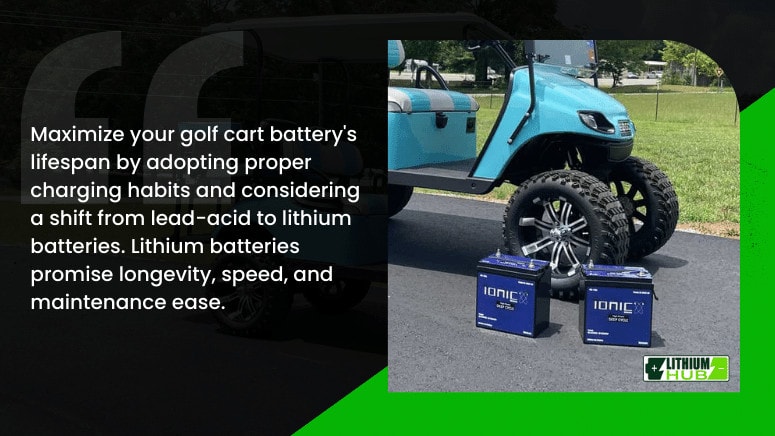
Image Source: lithiumhub.com
Grasping What Lithium Batteries Are
Let’s talk about what these batteries are. Most lithium batteries used in golf carts today are called Lithium Iron Phosphate, or LiFePO4 for short. (You say it “life-po-four”). This specific type is known for being very safe and stable.
They work by moving lithium ions between positive and negative parts inside the battery. When you use the golf cart, the ions move one way. When you charge it, they move back. This movement lets the battery store and release power.
Key Metric: The Golf Cart Lithium Battery Cycle Count
How long a lithium battery lasts is often measured in “cycles.”
What is a Battery Cycle?
Think of a cycle like this:
* You charge the battery up to full.
* You use the golf cart, using up some of the battery’s power.
* You charge it back up again.
That’s one cycle, roughly. Battery makers usually rate their batteries by how many cycles they can handle before their ability to hold a full charge drops significantly (often to about 80% of what it was when new).
Why Cycle Count Matters
Every time you charge and use a battery, the materials inside change a tiny bit. Over many cycles, these tiny changes add up. Eventually, the battery can’t hold as much power as it used to. The cycle count tells you how many times the battery can go through this process before it starts to lose a lot of its power-holding ability.
A good lithium golf cart battery might be rated for 3,000 to 5,000 cycles, or even more for some high-end ones.
Translating Cycles to Years
So, what do 3,000 cycles mean in terms of years? This depends on how often you use your golf cart.
Let’s look at some examples:
- Casual User: If you use your golf cart maybe once or twice a week and charge it after each use, you might go through about 100 cycles in a year. At 3,000 cycles, the battery could last about 30 years (3000 cycles / 100 cycles/year).
- Average User: If you use your cart more often, maybe every other day and charge it after each use, you might use about 150-200 cycles a year. At 3,000 cycles, that’s 15-20 years (3000 cycles / 200 cycles/year).
- Heavy User: If you use your cart daily and charge it every night, you might use 300-365 cycles a year. At 3,000 cycles, that’s about 8-10 years (3000 cycles / 365 cycles/year).
As you can see, even for a heavy user, 3,000 cycles is a lot! And many good batteries offer 5,000 cycles or more. This shows why the lithium golf cart battery life expectancy is so much better than older kinds.
Factors Affecting Golf Cart Lithium Battery Lifespan
While the cycle count gives us a good idea, other things also play a big part in how long your specific battery lasts. These are the factors affecting golf cart lithium battery lifespan.
How You Use the Battery
- Depth of Discharge (DoD): How much power you use before recharging is important.
- A “deep cycle” is using almost all the battery’s power (e.g., going from 100% down to 20% or lower before charging).
- A “shallow cycle” is using only a little power (e.g., going from 100% down to 80% and then charging).
- Lithium batteries like shallow cycles better. Doing many shallow cycles puts less stress on the battery than doing deep cycles often. A battery rated for 3,000 cycles at 100% depth of discharge might last for 5,000 or more cycles if you only use 50% each time.
How You Charge the Battery
- Using the Right Charger: Lithium batteries need a charger designed for lithium. Using a charger meant for lead-acid batteries can damage the lithium battery or not charge it fully.
- Proper Charging Voltage and Current: The battery’s brain (the BMS, which we’ll talk about) makes sure the voltage and current are right. But using a bad charger can mess this up. Properly charging lithium golf cart batteries is key.
- Avoiding Constant Full Charge: Leaving a lithium battery on the charger all the time after it’s full isn’t ideal for long-term life, though the BMS helps prevent overcharging. It’s often better to charge it fully and then disconnect it until you need it.
Temperature
- Heat: High temperatures are bad for lithium batteries. Using or charging a lithium battery in very hot conditions speeds up how fast it wears out. Try to avoid parking your cart in direct sun on very hot days if possible.
- Cold: Cold temperatures don’t damage the battery permanently as much as heat, but they do reduce how much range you get from a charge. More importantly, you must not charge most lithium batteries when their temperature is below freezing (0°C or 32°F). Charging below freezing can cause serious damage to the battery cells over time. The BMS usually prevents this.
Storage
- Long-Term Storage: If you won’t use your golf cart for a long time (like over winter), how you store the battery matters. Storing a lithium battery fully charged or completely empty for months isn’t good for its long-term health. It’s best to store them at a partial charge, usually between 50% and 80%. Store them in a cool, dry place if possible.
Battery Quality and the BMS
- Quality of Cells: Just like anything else, some battery cells are made better than others. Higher quality cells from reputable manufacturers will generally last longer and perform better.
- The Battery Management System (BMS): This is super important for lithium batteries. A good lithium golf cart battery BMS protects the battery from things like overcharging, over-discharging (using too much power), too much current, and charging when it’s too cold. A high-quality BMS helps ensure the battery operates safely and lasts for its expected cycle life. A poor quality BMS might not protect the battery as well, leading to a shorter life or even safety issues.
The Vital Role of the Lithium Golf Cart Battery BMS
Let’s spend a moment on the Battery Management System. It’s the “brain” or “guardian” of your lithium battery pack. It’s not just a simple circuit; it’s a smart system that monitors and manages the battery’s health and performance.
What the BMS Does:
- Cell Balancing: A battery pack is made of many smaller cells. These cells don’t all charge and discharge perfectly at the same rate. The BMS balances the voltage and charge level between the cells. This makes sure no single cell is overworked (either overcharged or over-discharged), which helps the whole pack last longer and perform better.
- Overcharge Protection: Prevents the charger from putting too much power into the battery once it’s full. Overcharging is very bad for lithium cells.
- Over-discharge Protection: Stops you from using the battery when its charge level gets too low. Discharging lithium cells too much can damage them permanently.
- Over-current Protection: Protects the battery if the motor or accessories try to pull too much power at once (like accelerating very hard uphill).
- Temperature Protection: Stops charging if the battery is too hot or too cold (especially important for preventing charging below freezing).
- Short Circuit Protection: Shuts off the battery instantly if a short circuit happens, which is a major safety feature.
A robust and well-designed lithium golf cart battery BMS is essential for both the lifespan and the safety of the battery pack. It allows the battery to perform at its best while protecting it from conditions that would shorten its life or cause damage. Don’t compromise on battery quality, as the BMS is a key part of that quality.
Extending Golf Cart Lithium Battery Life
Want to get the maximum possible life out of your lithium battery? Here are some simple steps to help with extending golf cart lithium battery life:
1. Use the Right Charger
Always use the charger that came with your lithium battery or one specifically approved by the battery maker for that model. A good lithium charger works with the BMS to charge the battery correctly and safely.
2. Charge Properly
- Follow Maker’s Instructions: Read the manual! It will tell you the best way to charge your specific battery.
- Avoid Extreme Temps: Don’t charge the battery in freezing cold or very hot places.
- Don’t Leave on Charger Forever (Usually): Once the battery is full, it’s generally best to disconnect the charger. The BMS should prevent overcharging, but unplugging reduces stress on the system over long periods.
- Avoid Deep Drains Often: Try not to run the battery down to almost empty every single time. Charging when it’s only half or three-quarters empty is better for the battery’s long-term health.
3. Store Your Cart Wisely
- Temperature: Park your golf cart in a place where temperatures are moderate, if possible. Avoid leaving it in direct hot sun or freezing cold for long times.
- Long Storage: If storing for weeks or months, charge the battery to about 50-80% capacity before storing. Disconnect the battery or turn off the main switch if it has one, following the maker’s guide.
4. Don’t Overload Your Cart
Trying to carry too much weight or driving constantly up steep hills puts extra strain on the battery and motor, which can stress the battery cells.
5. Keep It Clean
While lithium batteries need almost no maintenance, keeping the terminals clean and free of dirt and corrosion ensures a good connection for efficient power transfer and charging.
Following these tips for extending golf cart lithium battery life can help you get closer to that maximum cycle count and many years of service.
The Lithium Golf Cart Battery Warranty Period
Most quality lithium golf cart battery manufacturers offer a good warranty. The typical lithium golf cart battery warranty period is 8 to 10 years. Some might offer slightly less (like 7 years), and a few premium brands might offer more.
What a Warranty Covers
A warranty usually covers defects in materials and workmanship. This means if the battery fails because of a problem with how it was made, the company will fix or replace it according to their terms.
What a Warranty Might Not Cover
Warranties typically do not cover:
* Damage from misuse or accidents (like physical damage).
* Using the wrong charger.
* Improper installation.
* Operating outside the specified temperature ranges (like charging below freezing if your BMS didn’t stop it, or operating in extreme heat).
* Normal wear and tear over its expected life.
It’s very important to read and understand the warranty terms before you buy. An 8-10 year warranty shows the manufacturer’s confidence in the battery’s expected lifespan.
Comparing Lithium and Lead-Acid Golf Cart Battery Life
This is a major reason many people switch to lithium. Let’s do a quick comparing lithium and lead-acid golf cart battery life.
| Feature | Lithium (LiFePO4) Batteries | Lead-Acid Batteries (Standard Deep Cycle) |
|---|---|---|
| Typical Lifespan | 8 – 10+ Years | 3 – 5 Years |
| Cycle Life | 3,000 – 5,000+ cycles | 500 – 1,000 cycles |
| Performance | Stays strong until almost empty. | Power drops noticeably as charge lowers. |
| Weight | Much lighter (often 1/3 the weight). | Very heavy. |
| Maintenance | None (sealed). | Needs watering, cleaning terminals. |
| Charging Time | Much faster (often 2-3 hours). | Slower (often 8+ hours). |
| Voltage Stability | Holds voltage well during use. | Voltage sags under load. |
| Cost (Upfront) | Higher. | Lower. |
| Cost (Over Life) | Lower (lasts much longer, less hassle). | Higher (needs replacing more often). |
As you can see, the lithium golf cart battery life expectancy is significantly longer than that of lead-acid batteries. You might replace lead-acid batteries 2 or 3 times (or more!) in the time a single lithium battery pack lasts. This long life, plus the better performance and no maintenance, is why lithium is becoming more popular, even with the higher initial price.
The Cost of Replacing Golf Cart Lithium Batteries
Let’s talk about the cost of replacing golf cart lithium batteries. Yes, the upfront cost is higher than replacing lead-acid batteries.
Initial Cost
For a typical golf cart (like a 48V system), a quality lithium battery pack can cost anywhere from $1,000 to $3,000 or more, depending on the brand, capacity (Ah rating), and features (like a built-in meter or heated option).
Compare this to a set of lead-acid batteries, which might cost $600 to $1,500. So, lithium is roughly 1.5 to 3 times the cost upfront.
Installation Cost
If you’re replacing lead-acid with lithium, there might be some extra costs:
* The Battery Itself: The price of the new lithium battery pack.
* The Charger: You must use a lithium-compatible charger. If you don’t have one, you’ll need to buy one. This adds to the cost (often a few hundred dollars).
* Installation Labor: If you don’t install it yourself, there will be a cost for the mechanic’s time. Swapping lithium for lead-acid can be quicker because lithium is lighter and often comes as a single unit or fewer units, but some wiring adjustments might be needed depending on the cart and the battery system.
The Value Over Time
While the cost of replacing golf cart lithium batteries upfront is higher, think about the long term.
- Longer Life: You buy one lithium battery instead of 2 or 3 sets of lead-acid batteries.
- Less Maintenance: You save time and money on checking water levels, cleaning corrosion, and dealing with messy acid.
- Better Performance: You get full power for longer, and the cart might even go a bit faster and farther because it’s lighter.
- Faster Charging: Less time waiting for your cart to be ready.
When you add up the cost of multiple sets of lead-acid batteries, their maintenance, and the inconvenience of weaker performance and longer charging times, the higher upfront cost of lithium often works out cheaper over the total ownership period of 8-10+ years. It’s an investment that pays off.
Deciphering When to Consider Replacement
Even a great lithium battery won’t last forever. How do you know when it might be time to think about replacing it?
Reduced Range
The most common sign is that your golf cart doesn’t go as far on a full charge as it used to. This is the battery’s capacity starting to drop below that 80% mark that manufacturers use to rate end-of-life.
Taking Less Charge
The battery seems to charge up very quickly, but then the range is still low. This means it can’t accept and hold a full charge anymore.
Error Codes from the BMS
If your battery has a display or indicator lights, or if your cart integrates with the BMS, you might get error codes indicating a problem with a cell or the overall pack health.
Age and Cycle Count
Even if it seems okay, if your battery is 10+ years old and you’ve used it regularly, it’s nearing the end of its likely lithium golf cart battery life expectancy. Checking the manufacturer’s stated cycle life and estimating your usage can help.
Swollen or Damaged Case
Very rare with LiFePO4 if the BMS is working, but any physical damage or swelling of the battery case is a serious sign that requires immediate attention and likely replacement.
If you notice a significant drop in range or any other worrying signs, it’s a good idea to have it checked by a professional.
Fathoming the Future of Golf Cart Batteries
The trend is clearly towards lithium. The benefits in terms of lithium golf cart battery life expectancy, lower weight, zero maintenance, better performance, and faster charging make them very appealing.
As technology improves and production scales up, the cost difference between lithium and lead-acid is likely to shrink further. This will make lithium an even more obvious choice for most golf cart owners in the future. The focus will likely shift even more towards maximizing the golf cart lithium battery cycle count and ensuring robust BMS technology.
Conclusion: A Long and Powerful Life
So, how long do golf cart lithium batteries last? A high-quality lithium iron phosphate golf cart battery life is impressive. You can reasonably expect 8 to 10 years or even much longer, reaching 3,000 to 5,000 or more charge cycles. This is multiple times the life of traditional lead-acid batteries.
Many factors affecting golf cart lithium battery lifespan exist, including how often you use it, how deeply you discharge it, temperature conditions, storage habits, and most importantly, the quality of the battery and its lithium golf cart battery BMS.
While the cost of replacing golf cart lithium batteries is higher initially, their long lithium golf cart battery warranty period and extended lifespan mean they are often the more economical choice over the life of the golf cart. By properly charging lithium golf cart batteries and following simple care tips for extending golf cart lithium battery life, you can ensure you get the most out of your investment and enjoy many years of reliable, powerful rides on the course or around your neighborhood. The comparing lithium and lead-acid golf cart battery life clearly shows lithium winning in the long run.
Frequently Asked Questions (FAQ)
h4: Do I Need to Add Water to My Lithium Golf Cart Battery?
No. Lithium Iron Phosphate (LiFePO4) golf cart batteries are sealed and require absolutely no watering or other liquid maintenance like lead-acid batteries do. This is part of their zero-maintenance benefit.
h4: Can I Use My Old Lead-Acid Charger for a New Lithium Battery?
No, absolutely not. You must use a charger specifically designed for lithium golf cart batteries. Using a lead-acid charger will not charge the lithium battery correctly and can potentially damage it or cause safety issues. Lithium batteries need different voltage and charging steps controlled by their BMS.
h4: How Much Lighter is a Lithium Battery Compared to Lead-Acid?
A typical lithium battery pack for a golf cart is often one-third (1/3) the weight of a set of lead-acid batteries for the same cart. For example, a set of lead-acid batteries might weigh 300-400 pounds, while a comparable lithium pack might weigh only 100-150 pounds. This weight savings can improve the cart’s speed, acceleration, and range.
h4: Are Lithium Golf Cart Batteries Safe?
Yes, especially the Lithium Iron Phosphate (LiFePO4) type used in golf carts. LiFePO4 chemistry is known for its high thermal stability, making it very safe. When combined with a good Battery Management System (BMS) that protects against overcharging, over-discharging, overheating, and short circuits, these batteries are very safe for golf cart use.
h4: How Long Does It Take to Charge a Lithium Golf Cart Battery?
Charging time is much faster than lead-acid. Depending on the charger size and how empty the battery is, a lithium battery can often be fully charged in 2 to 3 hours. This is much quicker than the 8+ hours typically needed for lead-acid batteries.