
Image Source: www.golfdistillery.com
Troubleshoot Your Game: How To Fix A Push In Golf Guide
A push in golf happens when your golf ball starts right of your target line and then flies straight, without curving back. This differs from a slice, which also starts right but curves further right. Knowing what causes this common shot shape is key to fixing it. It usually comes down to the path your club travels and the angle of your clubface when you hit the ball.
Why Your Ball Pushes Right
To figure out how to fix a push, you first need to know why it’s happening. It all comes down to how the club moves and what the clubface is doing when it meets the ball. Think of it like this: the ball is a tiny reporter, and it tells you exactly what the club did at impact.
The Ball Flight Laws Decoded
Golf ball flight laws explain why the ball goes where it does. These laws are simple at their core. The direction the ball starts is mostly controlled by the angle of your clubface at impact. The way the ball curves depends on the path of your golf swing relative to the clubface angle.
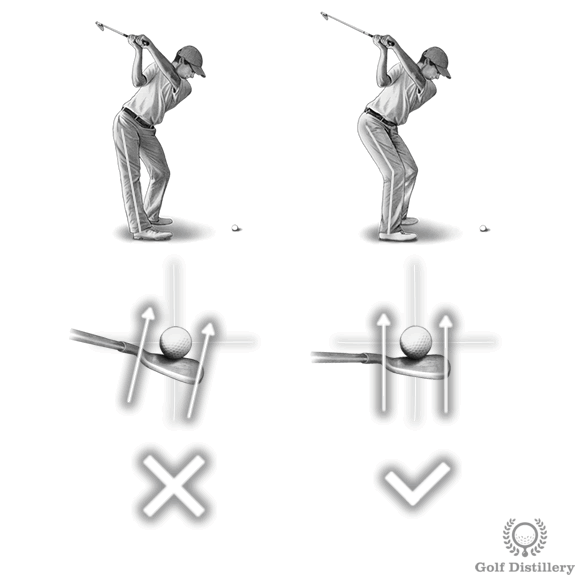
For a push shot, the ball starts right of the target. This means your clubface was pointing right of your target line at the moment of impact. It then flies straight right, which tells us the clubface was also pointing in the same direction as your golf swing path at impact.
So, a push happens because:
- Your clubface is open (pointing right) relative to your target.
- Your swing path is moving in the same direction as the open clubface (usually from inside to outside the target line).
The key takeaway is that the ball starts where the face points, and curves based on the path relative to the face. In a push, the face points right, and the path is often also right or very close to pointing right.
The Root Causes: Clubface and Path
As we just saw, the push is a direct result of the clubface angle and the swing path at impact. Let’s look closer at these two critical elements.
Open Clubface at Impact: The Main Culprit
The direction the ball starts is primarily set by the clubface angle. If the ball starts right of your target, your clubface was open (pointing right) when it hit the ball.
Why might your clubface be open?
- Your hands don’t turn over enough through impact.
- Your grip is too weak (hands turned too far to the left for a right-handed golfer).
- You are “holding off” or resisting the natural closing of the clubface.
- Your body rotation is off, leaving the clubface open.
Proper clubface control golf is essential for hitting straight shots. An open face is the most direct cause of that initial move to the right.
The Golf Swing Path: Inside Out Trouble
The second part of the puzzle is the golf swing path. This is the direction your club head travels as it swings through the impact zone.
A common path for a push is an inside out swing path. This means the club head comes from inside the target line before impact and moves across the target line to the outside after impact.
When you combine an inside out swing path with a clubface that is open relative to the target, you get a push. If the clubface were square to the path (even an inside-out path), the ball would start right and potentially draw (curve back left). But with an open face relative to the target, and often open relative to the path too, the ball starts and flies right.
Why might you have an inside out swing path?
- Your setup is aimed right.
- You drop the club too far behind you on the downswing.
- You over-rotate your body without the club catching up.
- You stand up or lose your posture through impact (early extension).
Understanding your golf swing path is vital for diagnosing many swing faults, including the push.
Connecting Face and Path for a Push
Let’s make this very clear. To get a push (starts right, goes straight or slightly right):
- Clubface: Points right of the target.
- Path: Is traveling right of the target. The clubface is often pointing very close to the direction the path is going, or even open relative to the path itself.
Imagine aiming your garden hose right of a flower pot (clubface open to target) and sweeping the hose to the right as you spray (inside out path). The water goes right. That’s the simple idea behind the push.
Common Issues Leading to a Push
Now that we know what a push is and the two main forces causing it (open face, rightward path), let’s look at some specific things you might be doing in your setup or swing that create these problems.
Setup Problems
Sometimes, the problem starts before you even take the club back. Your golf setup alignment can be a sneaky cause of pushes.
Golf Setup Alignment: Aiming Right?
This is a very common mistake. You think you are aimed straight at your target, but your feet, hips, and shoulders are actually lined up to the right of where you want the ball to go.
If your body is aimed right, your natural tendency will be to swing the club along your body’s line – which is to the right (an inside out path). If you then present a clubface that is relatively square to that path (but open to the actual target), you will push the ball right.
It’s easy to misalign. The target is far away. You might aim your feet correctly but have your shoulders open or closed.
Ball Position Issues
Where you place the ball in your stance can also affect your swing path and clubface.
- Ball too far back (towards your right foot): This encourages you to hit the ball before the clubface has a chance to fully close or while the swing path is still moving out to the right. This makes an open face and inside out path more likely.
Grip and Body Position
Your grip sets the stage for clubface control.
- Weak Grip: If your hands are rotated too far to the left on the grip (for a right-handed player), it’s harder for your hands and forearms to rotate naturally through impact to square the clubface. This often results in an open face.
Your body’s position at address matters too.
- Standing too far away: This can cause you to reach for the ball, changing your posture and encouraging an inside out path and open face.
- Too much weight on your back foot at address: This can hinder your ability to shift weight correctly and rotate through the ball, leading to a struggle to square the face.
Swing Mechanics Flaws
Beyond setup, certain movements during your swing can cause the problematic face and path.
The Inside Out Swing Path Explained
We’ve mentioned this path, but let’s be clearer. This path occurs when your club head approaches the ball from inside the target line and moves outside the target line after impact.
Think of it like this: the club head travels in a loop. If the loop finishes moving out past the target line as it hits the ball, that’s an inside out path.
Why does this happen?
- Dropping the club too far inside on the downswing: Instead of bringing the club down on a more direct line to the ball, it gets stuck behind you.
- Over-rotating the body early: Your hips and shoulders turn too fast or too much on the downswing without the arms and club keeping pace. This leaves the club trailing too far behind and forces an inside-out move to catch up.
- Casting (losing wrist hinge early): Releasing the club too early can send the club head out and down on an inside-out path.
Issues with Rotation
Effective body rotation is key to a good swing. Problems here can lead to a push.
- Lack of lower body rotation: If your hips don’t turn enough towards the target on the downswing, your arms can get stuck. This forces an awkward swing or leads to early extension to create space, both of which can cause an inside out path and an open face.
- Upper body rotating too fast or independently: If your upper body outraces your lower body or your arms, you can “spin out.” This makes it difficult to deliver the club from the correct angle and often leads to an inside out path and poor clubface control.
Casting or Early Extension
These are common terms for specific swing flaws.
- Casting: This is when you lose the angle in your wrists at the top of the downswing or early in the downswing. It’s like casting a fishing line. This releases the club head too early, often sending it out on an inside-out path and making it hard to get the clubface square at impact.
- Early Extension: This means your hips and spine straighten or move closer to the ball on the downswing, losing your original spine angle. This happens because your body is trying to create space or help the arms. Early extension forces an inside out path and makes it very difficult to rotate the clubface correctly. It also leads to a poor golf swing impact position.
Problems at Golf Swing Impact Position
The moment of impact is where everything happens. A poor position here directly causes pushes.
What does a bad impact position look like for a push?
- Hands behind the ball: Instead of your hands being slightly ahead of the ball (lag), they are even with or behind the ball. This prevents the clubface from squaring up and can lead to scooping or flipping, leaving the face open.
- Weight on the back foot: If your weight hasn’t fully shifted to your front foot, you can’t rotate properly, hindering clubface closure and encouraging an inside out path.
- Open clubface: As discussed, the face pointing right is the non-negotiable element of a push start.
- Body standing up (early extension): This throws off your angles and makes it difficult to deliver the club correctly.
Understanding your golf swing impact position is crucial for fixing any shot shape issue, including how to fix a slice or a hook. For a push, focusing on getting your hands slightly ahead and your weight forward is key.
Improper Clubface Control Golf
Even if your path isn’t severely inside out, poor control over the clubface is the main reason the ball starts right.
Weak Grip
We mentioned this under setup, but it’s worth highlighting again. A weak grip is a primary cause of an open clubface at impact. If your left hand (for a righty) is turned too far to the left on the grip (you see fewer than two knuckles), you’ll struggle to square the face naturally. Similarly, if your right hand is too far underneath the grip, it can block the face from closing.
Lack of Forearm Rotation
Through the impact zone, your forearms should naturally rotate or “pronate” to close the clubface. If you restrict this movement, either consciously (“holding off”) or because of poor mechanics earlier in the swing, the clubface stays open.
Open Face During Swing
Sometimes the face is open throughout the swing, not just at impact.
- Too little wrist hinge or release: You need to hinge and unhinge your wrists correctly to control the clubface angle.
- Cupped wrist at the top of the swing: If your lead wrist is bent backward at the top, the clubface is likely open. This makes it hard to square it up by impact.
- Clubface fanned open on the backswing: Taking the club away improperly, rolling your wrists too early, can open the face early in the swing, making it a fight to close it later.
Improving your clubface control golf is arguably the most direct way to stop the ball from starting right.
Steps to Fix Your Push Shot
Okay, we know what a push is and the common causes. Now, let’s get to the solutions. Fixing a push often involves addressing both the clubface and the swing path. Sometimes a small adjustment in one area can fix the other.
Check Your Setup First
Always start with the basics. Many swing problems are caused by a poor setup.
Correct Golf Grip Check
This is foundational. A good grip helps you control the clubface.
- Left Hand (Righty Golfer): Place the club in the base of your fingers. Cover the thumb with the palm pad. You should see 2 to 3 knuckles when looking down. The “V” formed by your thumb and forefinger should point roughly towards your right shoulder.
- Right Hand (Righty Golfer): Place the club more in the fingers. Your right palm pad should cover the left thumb. The “V” formed by your thumb and forefinger should point roughly towards your right shoulder or slightly right of it.
- Pressure: Hold the club firmly enough not to let it slip, but light enough that you could wave it back and forth freely. Too tight a grip restricts forearm rotation.
Experiment with making your grip slightly stronger (turning hands slightly more to the right for a righty) if your current grip is weak. This can help the clubface close naturally.
Alignment Drill
Since aiming right is a common push cause, check your alignment.
- The Club on the Ground Drill: Before hitting a shot, lay a golf club on the ground pointing directly at your target. Stand behind it to check. Then, step into your stance, setting your feet parallel to the club. This helps you feel what correct alignment towards your target looks like. Use intermediate targets: Pick a spot a few feet in front of your ball on your target line and align your clubface to that first. Then build your stance parallel to that line.
Consistent golf setup alignment is vital. Make this check part of your routine.
Ball Position Adjustment
Review where the ball is in your stance.
- Iron Shots: Ball typically slightly forward of center.
- Driver Shots: Ball typically off the heel of your front foot.
If you are pushing irons, try moving the ball slightly forward (towards your left foot). For drivers, ensure it’s forward enough. This gives the club more time to release and square up before impact.
Adjusting Your Swing Path
If your alignment is good but you still have an inside out swing path, you need to work on the path itself.
Fixing the Inside Out Path
The goal is to make your path more neutral or even slightly outside-in if your push is severe.
- Feel the “Out-to-In” or “Straight Through”: Instead of feeling like you’re swinging out to right field, try to feel like you’re swinging more towards the target line or even slightly across it from left to right after impact. This thought can help correct an extreme inside-out path.
- Focus on Arm and Body Sync: Make sure your arms aren’t dropping too far behind you. Work on keeping your arms and body connected so they move together.
Drills for Path Correction (Golf Swing Drills)
- The Alignment Stick Drill (Path): Place an alignment stick or another club on the ground a few inches inside and parallel to your target line (where you want your club to swing). Practice swings or hit balls, trying to avoid hitting the stick on your downswing and through-swing. This encourages a straighter or slightly less inside path. Be careful not to hit the stick with the club head.
- Gate Drill: Place two objects (like headcovers or alignment sticks) on the ground, forming a narrow “gate” just wider than your club head, right around where the ball sits. One object is slightly outside the target line and slightly ahead of the ball, the other is slightly inside the target line and slightly behind the ball. Your goal is to swing the club head through this gate without hitting either object. This helps refine your path.
Improving Clubface Control
Getting the clubface square at impact is non-negotiable to stop the ball from starting right.
Strengthening Your Grip
If your grip is weak, try strengthening it. For a righty, turn your left hand slightly clockwise on the grip (seeing more knuckles). Turn your right hand slightly counter-clockwise. Make small adjustments and see how it feels. A stronger grip makes it easier for the hands to release and square the face naturally.
Drills for Face Closing
- L-to-L Drill: Take practice swings or hit short shots where you swing back only until your lead arm is parallel to the ground and the shaft is vertical (“L” shape). On the downswing, swing through to a finish where your trail arm is parallel to the ground and the shaft is vertical (“L” shape), with the clubface pointing towards the sky. This drill emphasizes forearm rotation and helps you feel the clubface closing through impact.
- The “Feel the Face” Drill (Clubface Control Golf): Simply hold the club in front of you and practice rotating your forearms to open and close the clubface. Get a sense of this motion. Then, incorporate it into slow-motion swings. As you swing through where the ball would be, feel your forearms rotating to square the face.
- Exaggerated Release Drill: Hit shots focusing specifically on letting your hands and forearms rotate naturally through impact. Feel the toe of the club passing the heel. This might initially cause hooks, but it helps break the habit of “holding off” the face.
Feeling the Clubface
Many golfers are unaware of where the clubface is pointing during the swing.
- Visual Checks: At the top of your backswing, check if the clubface is parallel to your lead forearm (square), pointing towards the sky (closed), or pointing towards the ground (open). An open face at the top makes squaring it at impact harder.
- Swinging with Awareness: During practice swings, pay attention to the sound the club makes as it moves through the air (whoosh). The strongest “whoosh” should happen just after where the ball would be, indicating maximum club head speed and often a more released, square face.
Reaching a Better Impact Position
Improving your golf swing impact position is the culmination of many fixes.
Drills for Impact (Golf Swing Drills)
- Impact Bag Drill (Golf Swing Impact Position): Get an impact bag or a sturdy cushion. Set up as if hitting a ball, but place the bag where the ball would be. Swing down and hit the bag, holding the position at impact. Check your position: Are your hands ahead of the bag? Is your weight forward? Is your lead wrist flat? Hold the position and feel it. This drill helps you learn to deliver the club correctly.
- Stop Drill: Take practice swings and stop the club right at where you would hit the ball. Check your hands (ahead of the club head), weight (on the front foot), and posture. Repeat until this feels natural.
Weight Shift and Rotation
Ensuring proper weight shift and body rotation helps you get into a powerful, square impact position.
- Feel the Pressure: Focus on feeling your weight shift from your back foot to your front foot on the downswing. Finish your swing with most of your weight on your front side, your belt buckle facing the target.
- Connect the Turn: Work on turning your hips and shoulders together through impact, rather than spinning out your upper body or leaving your lower body passive.
Here’s a table summarizing common causes and their fixes:
| Cause | Symptom | Fix | Key Drill/Check |
|---|---|---|---|
| Setup | |||
| Poor Alignment | Aiming right | Ensure shoulders/hips are parallel to target line | Alignment Stick Drill (Setup) |
| Ball Too Far Back | Hitting ball early on path/release | Move ball slightly forward in stance | Check Ball Position |
| Weak Grip | Difficulty squaring face | Strengthen grip (more knuckles showing) | Grip Check |
| Swing Path | |||
| Inside Out Swing Path | Club approaches from inside target line | Work on swinging “through” the target or slightly outside-in feeling | Alignment Stick Drill (Path), Gate Drill |
| Early Extension/Casting | Losing posture, club head out/down early | Maintain spine angle, delay club release, improve sequencing | Impact Bag Drill, Stop Drill, L-to-L Drill |
| Clubface Control | |||
| Open Clubface at Impact | Face points right at contact | Improve forearm rotation, strengthen grip, release hands better | L-to-L Drill, Feel the Face Drill, Grip Check |
| Holding Off Release | Stopping hands/forearms through impact | Allow hands/forearms to rotate naturally, feel toe pass heel | Exaggerated Release Drill |
| Open Face During Swing | Face open at top or in transition | Check wrist position at top, ensure face stays square or slightly closed | Visual Check at Top |
| Impact Position | |||
| Hands Behind Ball | Scooping, losing power, open face | Get hands ahead of ball at impact | Impact Bag Drill, Stop Drill |
| Weight on Back Foot | Difficulty rotating, inconsistent strike | Shift weight to front foot on downswing | Feel the Pressure Drill, Practice Swings |
Effective Golf Swing Drills to Stop the Push
Drills are key to making changes. They help you isolate movements and get the right feel. Here are some focused on fixing the push.
The Alignment Stick Drill (Path & Alignment)
- Purpose: Helps correct alignment and swing path.
- How to do it:
- Lay one alignment stick on the ground pointing exactly at your target. Stand behind it to verify your aim.
- Lay a second alignment stick on the ground about 4-6 inches inside and parallel to the first stick. This is your target path line.
- Set up to hit a ball placed between the sticks, ensuring your feet are parallel to the path stick.
- Take practice swings or hit balls, focusing on swinging the club between the two sticks. Your goal is to bring the club down along the inner stick and send it out towards the outer stick (your target line).
- Be careful: If you hit the inner stick, your path is too far inside. If you hit the outer stick on the follow-through side, your path might be too far outside, but for a push fix, hitting the inner stick on the downswing is the key problem to avoid.
Gate Drill (Path Control)
- Purpose: Narrows the swing path in the impact zone.
- How to do it:
- Set up to a ball. Place one headcover or object about a club head width outside the target line and slightly ahead of the ball.
- Place a second headcover or object about a club head width inside the target line and slightly behind the ball.
- You’ve created a narrow “gate” around the ball.
- Take practice swings or hit balls, focusing on swinging the club head through the gate without hitting the objects. This forces your path to be straighter through impact.
Feel the Face Drill (Clubface Control Golf)
- Purpose: Improves your awareness and control of the clubface angle.
- How to do it:
- Stand without a ball. Hold the club out in front of you at waist height.
- Practice rotating your wrists and forearms to open and close the clubface. See how it feels.
- Next, take slow practice swings, focusing on feeling the clubface throughout the motion. At the top, where is it pointing? On the way down? Through impact?
- As you swing through the impact zone, consciously feel your forearms rotating to close the clubface so it’s square (pointing towards the target) as it hits the imaginary ball.
- Practice hitting short shots (pitching or chipping) focusing solely on this forearm rotation to square the face.
L-to-L Drill (Swing Shape and Path)
- Purpose: Promotes proper wrist hinge, forearm rotation, and encourages a less inside-out path and square face.
- How to do it:
- Take a swing back only until your lead arm is parallel to the ground and the club shaft is pointing straight up, forming an “L” shape with your arm and the shaft. Check that your clubface is parallel to your forearm or slightly closed.
- From here, swing through to the finish, ending when your trail arm is parallel to the ground and the shaft is pointing straight up, forming another “L” shape. At the finish, the toe of the club head should be pointing towards the sky, indicating the face has released and closed.
- Hit balls with this L-to-L motion. Focus on the feeling of the forearm rotation and the clubface closing through impact. This helps prevent “holding off” the release.
Impact Bag Drill (Golf Swing Impact Position)
- Purpose: Helps you feel and achieve the correct impact position.
- How to do it:
- Place an impact bag or a sturdy cushion where the ball would normally be.
- Set up to hit it as you would a normal shot.
- Swing down and into the bag, stopping the swing as you make contact.
- Hold this position for a few seconds and check:
- Are your hands ahead of the bag?
- Is your weight shifted onto your front foot?
- Is your lead wrist flat?
- Is your body rotated towards the target?
- Repeat this drill, feeling the correct sequence and position at impact. This teaches you to deliver the club and your body correctly, reducing the likelihood of early extension or flipping, which cause pushes.
Putting It All Together
Fixing a push takes practice and patience. Don’t expect overnight results.
Practice Makes Perfect
Dedicate practice time specifically to the drills mentioned. Don’t just hit balls aimlessly. Have a plan. Focus on one or two key areas (like grip and clubface control, or alignment and path) at a time.
Start slow. Make practice swings without a ball, feeling the new movements. Then hit shots at half speed, focusing on the feels. Gradually increase speed as you get more comfortable.
Record your swing if possible. Seeing what you’re doing is incredibly helpful for making changes. Compare your setup and swing positions to pictures or videos of good golfers.
Don’t Try to Fix Everything at Once
Trying to change your grip, alignment, path, clubface, and impact position all at once is overwhelming. You won’t improve.
Start with the simplest things first:
- Check your grip: Is it weak? Make a small adjustment.
- Check your alignment: Are you aimed right? Use sticks to check and correct.
- Check your ball position: Is it too far back? Move it forward slightly.
Often, fixing one of these setup issues can significantly improve your swing path and make it easier to square the clubface.
If setup is good, then focus on either the swing path or the clubface control. Pick the one you think is the bigger issue based on your swing or consultation with a pro. Use the specific drills for that area. Once you see improvement there, you can move to the next area or combine the fixes.
Compare Push vs. Fix Golf Slice
A push is the opposite of a pull (starts left, goes straight) and different from a slice (starts right, curves right).
- Push: Open face to target, path right of target (often inside-out).
- Slice: Open face relative to path, path often outside-in or straight.
Understanding these distinctions (golf ball flight laws) helps you diagnose your miss and apply the right fix. The drills for fixing a push are often different from drills to fix golf slice. If you start hooking the ball while trying to fix your push, it means you’ve likely overcorrected the clubface rotation (now too closed relative to path/target). If you start pulling the ball, you’ve likely overcorrected your path (too outside-in) while potentially still having an open face.
It’s a process of balancing path and face.
Frequently Asked Questions (FAQ)
-
Q: Can a weak grip cause a push?
- A: Yes, absolutely. A weak grip makes it much harder to rotate your forearms naturally through impact to square the clubface. This often results in an open clubface, which is a primary cause of the ball starting right in a push. Strengthening your grip is often one of the first things to try.
-
Q: Is an inside out swing path always bad?
- A: No, not necessarily. Many good players have a slightly inside out swing path. The problem with an inside out path comes when it’s combined with a clubface that is open relative to the target. A slight inside out path paired with a clubface that is slightly closed relative to the path can create a powerful draw shot. It’s the combination of path and face that causes the push.
-
Q: How do I know if my clubface is open at impact?
- A: The most direct sign is the initial direction of the ball flight. If the ball consistently starts right of your target (for a right-handed golfer), your clubface was open at impact relative to that target line. Video analysis of your swing, especially slow-motion video looking at the impact position, can also clearly show the angle of the clubface as it hits the ball.
-
Q: How is a push different from a slice?
- A: Both pushes and slices often result in the ball ending up right of the target, but they fly differently and have different causes related to the golf ball flight laws.
- Push: Ball starts right of the target and flies straight or slightly right. Caused by a clubface that is open to the target AND a swing path that is also right of the target (often inside-out), where the face is pointed close to the path direction.
- Slice: Ball starts right of the target and curves significantly further right. Caused by a clubface that is open relative to the swing path, even if the path is neutral or slightly outside-in. The open clubface creates sidespin that makes the ball curve right.
- A: Both pushes and slices often result in the ball ending up right of the target, but they fly differently and have different causes related to the golf ball flight laws.
Conclusion
Dealing with a push can be frustrating, but it’s a solvable problem. By focusing on the fundamental golf ball flight laws – specifically, the relationship between your golf swing path and clubface control golf at impact – you can make real progress.
Start by checking your golf setup alignment, ball position, and correct golf grip. These simple fixes can often make a big difference. Then, work on addressing the root mechanical causes: a problematic inside out swing path or poor clubface control golf through impact. Use the recommended golf swing drills, practice regularly, and be patient with yourself. Improving your golf swing impact position is the ultimate goal.
Remember, don’t try to fix everything at once. Pick one area, work on it with specific drills, and build on your progress. With focused effort, you can turn that push into a straight shot or even a slight draw. Good luck on the range!