
So, how do golf rangefinders work? Simply put, a golf rangefinder uses a laser beam to measure the exact distance from where you are standing to a target, like the flagstick or a bunker. It sends out a quick pulse of light, waits for it to bounce back, and then calculates the distance based on how long that trip took. This helps golfers pick the right club for their shot.
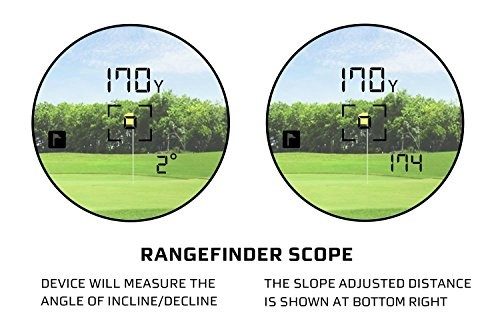
Image Source: www.golfsidekick.com
Grasping the Core Principle: How Lasers Measure Distance
Think of it like shouting in a canyon. You shout, the sound goes out, hits a rock wall, and comes back as an echo. The time it takes for the echo to return tells you how far away the wall is. Golf rangefinders do the same thing, but they use laser light instead of sound.
This method is called the “time of flight” principle. It is the main way laser rangefinders work.
Here are the simple steps:
- The rangefinder has a small laser. It sends out a very short, fast pulse of light.
- This pulse travels through the air at the speed of light. Light travels incredibly fast.
- The laser pulse hits your target. This could be a flag, a tree, or a mound.
- Some of the light energy bounces back. It travels back towards the rangefinder.
- The rangefinder has a sensor. This sensor waits for the light to come back.
- The rangefinder measures the tiny amount of time the light took for the round trip. This is from when it left to when it returned.
- A computer inside the rangefinder does a simple math problem. It uses the time measured and the speed of light.
- It calculates the total distance the light traveled (out and back).
- Then, it divides that total distance by two. This gives you the distance from the rangefinder to the target.
- The rangefinder shows you this distance. It is usually shown in yards or meters.
This entire process happens very, very quickly. It takes only a fraction of a second. That is why you get the distance reading almost instantly when you use the rangefinder.
This is the basic rangefinder working principle. It uses laser rangefinder technology to help with golf distance measurement. You are measuring yardage golf has become much easier because of this method.
The speed of light is about 186,000 miles per second. Or about 300,000 kilometers per second. It is truly amazing that a small device can measure the time it takes for light to travel a few hundred yards. This short time is measured in nanoseconds. A nanosecond is one billionth of a second!
Here is the basic math formula:
Distance = (Speed of Light * Time of Flight) / 2
The time of flight is the total time the light traveled (out and back). Dividing by 2 gives the one-way distance to the target. This is how laser rangefinders measure distance with great speed.
Inside the Device: The Key Parts
A golf rangefinder may look simple from the outside. But inside, several important parts work together. These parts make the measuring process happen fast and accurately.
Here are the main components you would find:
- Laser Emitter: This is a small part that creates the laser pulse. It sends the light beam out towards the target.
- Receiver or Detector: This part waits for the laser light to return. It is a sensor that can detect the faint light pulse that bounces back from the target.
- Optical System: This includes lenses and mirrors. It helps you see the target clearly. It also helps collect the returned laser light and direct it to the receiver. Grasping the Optical System helps understand how light is managed.
- Processing Unit: This is like the rangefinder’s brain. It is a small computer chip. It measures the time between sending and receiving the pulse. Then it does the math to figure out the distance.
- Display: This is where you see the distance reading. It is often inside the view scope. Or it might be a small screen on the outside of the device.
The laser used in golf rangefinders is usually a specific type. It is often an infrared laser. These lasers are chosen because they are safe for eyes (Class 1 laser). This means you can look through the eyepiece without harming your eyes. This is a very important safety feature. The laser is pulsed. We will talk more about that next.
The optical system in rangefinders is key for a clear view. It uses lenses, much like a small telescope. This lets you zoom in on your target. A clearer view makes it easier to aim the laser exactly where you want it to go. It also helps the receiver pick up the faint light signal coming back.
Deciphering the Pulse: Why Lasers Pulse
Your golf rangefinder uses a pulsed laser golf rangefinder design. This means it sends out very short bursts of laser light. It does not send out a continuous beam. There are good reasons for this design.
- Saving Power: Sending short pulses uses less battery power than a continuous beam. This helps your rangefinder battery last longer.
- Better Detection: It is easier for the receiver to detect a short, strong pulse returning. It is like listening for a quick tap instead of a steady hum. The receiver knows exactly when the pulse left and is listening intently for its return.
- Ignoring Background Noise: There is a lot of other light around. Sunlight is very bright. By sending a strong, quick pulse and listening for its specific return signal, the rangefinder can ignore most of the other light noise. It helps it focus only on the light that bounced off your target.
- Eye Safety: Using low-power, short pulses is key for making the device eye-safe. Class 1 lasers are safe even if someone were to look directly into the beam. The energy in each pulse is very low.
So, the pulsed laser golf rangefinder design is not just a detail. It is a crucial part of how these devices work safely and effectively on the golf course.
Fathoming Accuracy: Getting the Right Number
One of the main reasons golfers use rangefinders is for accuracy. They want to know the distance exactly. Rangefinder accuracy in golf is very good, but it can be affected by a few things.
Most good golf rangefinders are accurate to within plus or minus 1 yard. Many can even be accurate to within plus or minus 0.5 yards. This level of precision is more than enough for golf. Knowing you have 155 yards instead of guessing between 150 and 160 yards makes a big difference in club choice.
What makes a rangefinder accurate?
- Fast and Accurate Timing: The rangefinder must measure the time of flight very precisely. Any tiny error in timing means a larger error in distance. The electronics inside are designed to be extremely fast and accurate at measuring these tiny time periods (nanoseconds).
- Strong Return Signal: The laser pulse needs to hit the target and bounce back strongly enough for the receiver to detect it. Targets like flagsticks with reflectors are ideal. Trees and rocks also work well. Distant targets might send back a weaker signal.
- Beam Divergence: The laser beam is not a perfectly thin line. It spreads out a little as it travels. This spread is called beam divergence. A smaller beam divergence means the beam is tighter. A tighter beam is less likely to hit things around your target, which helps accuracy.
- Atmospheric Conditions: Thick fog or heavy rain can sometimes scatter the laser light. This can make it harder for the signal to return. In very bad weather, the rangefinder might struggle to get a reading. However, most rangefinders work fine in light rain or mist.
- Hand Shake: If your hands are shaky, it can be hard to hold the rangefinder steady on a small target like a flagstick, especially at long distances. Many rangefinders have features to help with this, like image stabilization or pin-locking technology.
Rangefinder accuracy in golf is generally excellent under normal playing conditions. The technology is designed to give you a reliable number quickly.
Targeting on the Course: How to Use It
Using a golf rangefinder on the course is usually very simple. But there are some techniques to get the best results. This is all about targeting with golf rangefinder.
Here are the basic steps:
- Look Through the Eyepiece: Hold the rangefinder to your eye, like small binoculars.
- Find Your Target: Look through the scope to find what you want to measure the distance to. This is usually the flagstick, but it could also be a bunker edge, the front of the green, or a tree.
- Center the Aiming Point: Most rangefinders have an aiming point in the center of the view. It might be a crosshair, a circle, or a square. Place this aiming point directly on your target.
- Press the Button: Push the measure button, usually on the top of the device.
- Wait for the Reading: Keep the aiming point on the target. The rangefinder sends the laser pulse and calculates the distance. The distance will appear on the display almost instantly.
Targeting with golf rangefinder requires a steady hand, especially for distant targets. Some features help make targeting easier.
- PinSeeker or Flagstick Lock: Many golf rangefinders have a special mode to help target the flag. Often, the rangefinder will detect multiple objects (the flag and the trees behind it). This mode is smart enough to identify the closest object that looks like a flagstick. It will then ‘lock’ onto the flag and give you its distance, ignoring things behind it. Some models vibrate or give a JOLT when they lock onto the flag. This gives you confidence you have the right target.
- Scan Mode: This lets you press and hold the measure button while moving the rangefinder across different targets. The distance updates continuously. This is useful for scanning the front and back of a green, or getting distances to multiple hazards quickly.
- Magnification: Rangefinders usually have 6x or 7x magnification. This makes distant targets appear closer and larger. This makes targeting easier.
Measuring yardage golf with a rangefinder is faster and more accurate than using sprinklers or yardage books alone. It gives you the exact number for your lie and pin position on that day.
Exploring Features: Beyond Basic Distance
Modern golf rangefinders come with many different features. These features add function and make them easier to use. Knowing these golf rangefinder features helps you choose the right one.
Here are some common features you will find:
-
Slope Measurement: This is a very popular feature. It measures the change in elevation between you and the target. If the target is uphill, the actual playing distance is longer than the straight-line distance. If the target is downhill, the playing distance is shorter. The rangefinder calculates this adjusted distance. It gives you a “slope-adjusted” distance.
- Tournament Note: Rule 4.3a of the Rules of Golf allows using distance-measuring devices. However, if a device has a slope function, that function must be turned off if you are playing in a competition where using slope is not allowed. Many rangefinders have a switch or setting to disable the slope function.
-
Vibration or JOLT Technology: As mentioned before, this feature gives a short vibration when the rangefinder locks onto the flagstick. It is a tactile confirmation that you have targeted the correct object and not something behind it.
- Magnification: Typical magnification is 6x or 7x. Higher magnification makes targets appear larger, which helps with targeting, especially for players with vision issues.
- Display Type: Some rangefinders use LCD displays (black numbers). Others use brighter LED or OLED displays (red or green numbers). Brighter displays can be easier to see in low light conditions or against dark backgrounds like trees.
- Water Resistance: Golfers play in all sorts of weather. Many rangefinders are built to be water-resistant or even waterproof. This protects the internal electronics from rain and moisture.
- Built-in Mounts: Some rangefinders have a built-in magnetic strip. This lets you attach the rangefinder to the metal frame of a golf cart or to a magnetic strap on your bag. It keeps the device handy.
- Battery Life Indicator: Shows you how much power is left in the battery. Most golf rangefinders use standard batteries (like CR2). Battery life is usually quite long, often lasting for many rounds.
These golf rangefinder features add value and help golfers get the most out of their device. Choosing which features you need depends on how you play and where you play.
Comparing Rangefinders: A Look at Specs
When looking at different golf rangefinders, you will see some specs listed. Knowing what these mean helps you compare models.
| Specification | What it Means | Why it Matters |
|---|---|---|
| Magnification | How much the image is zoomed in (e.g., 6x, 7x) | Higher number makes targets look bigger, easier to aim. |
| Range (Max) | The furthest distance the device can measure. | Needs to be long enough for golf (often 400+ yards to flag). |
| Accuracy | How close the measured distance is to the real one. | Lower number (e.g., +/- 0.5 yd) is better. |
| Display Type | LCD (black) vs. LED/OLED (colored, often red). | Colored displays are usually brighter, easier to see in low light. |
| Slope Function | Can measure and adjust for elevation changes. | Useful for practice, need to be switchable for competition. |
| Pin-Lock Feature | Helps target the flagstick and ignore background. | Makes it easier to get a quick, correct reading on the flag. |
| Vibration/JOLT | Physical feedback when flag is locked. | Gives confidence you have the right target. |
| Water Resistance | How well it handles rain and moisture. | Important for playing golf in different weather. |
| Battery Type | What kind of battery it uses (e.g., CR2, rechargeable). | CR2 is common, rechargeable is convenient. |
Understanding these specs helps you figure out which rangefinder has the best golf rangefinder features for your game.
Caring for Your Rangefinder
Taking care of your rangefinder helps it last longer and perform well.
- Clean the Lenses: Just like eyeglasses, the lenses can get dirty. Use a soft lens cloth (like the one for camera lenses or glasses) to gently wipe the front and back lenses. Avoid using harsh chemicals or rough materials. Dirty lenses can make it harder for the laser to work correctly.
- Store Properly: Keep your rangefinder in its case when you are not using it. Store it in a cool, dry place. Avoid leaving it in hot cars for long periods.
- Check the Battery: Make sure the battery is charged or has enough power before your round. Replace the battery when it gets low. Some rangefinders have a battery indicator.
- Protect from Drops: While some are rugged, dropping your rangefinder can damage the sensitive internal parts, especially the optics or laser emitter. Use the included case or consider a protective skin.
Simple care helps ensure your device keeps measuring yardage golf accurately round after round.
The Edge a Rangefinder Gives You
Using a golf rangefinder offers clear benefits to golfers of all skill levels.
- Better Club Selection: Knowing the exact distance helps you choose the right club with confidence. This leads to more greens in regulation and closer shots to the pin.
- Increased Confidence: When you know the exact distance, you can commit fully to your shot. This reduces doubt and can improve your swing.
- Improved Practice: On the driving range, you can measure distances to targets to truly understand how far you hit each club.
- Faster Pace of Play: Getting a quick, accurate distance reading is faster than walking to sprinkler heads or searching for markers. This helps keep the game moving.
- Course Management: You can measure distances to hazards, doglegs, or lay-up spots. This helps you plan your way around the course more effectively.
These benefits come directly from the precise golf distance measurement capability that laser rangefinder technology provides.
FAQ: Common Questions About Golf Rangefinders
Here are some answers to questions people often ask about how golf rangefinders work.
Q: Can I use my golf rangefinder in the rain?
A: Many golf rangefinders are built to be water-resistant. This means they can handle light rain or mist. If it is raining heavily, you might have trouble getting a reading because the water droplets can block or scatter the laser beam. Check your rangefinder’s specifications for its water resistance rating (like IPX standards).
Q: Are golf rangefinders allowed in tournaments?
A: Yes, generally they are. Rule 4.3a of the Rules of Golf allows the use of distance measuring devices. However, if the device has a feature that measures other conditions (like slope, wind speed, or temperature), those features must be turned off if the competition committee does not allow them. Slope is the most common feature that needs to be disabled for many tournaments.
Q: Do I need to aim exactly at the bottom of the flagstick?
A: No, you just need to aim anywhere on the flagstick itself. The rangefinder measures the distance to where the laser hits the target. If you aim at the middle or top of the flag, you will still get the distance to the flagstick’s location. Features like PinSeeker help lock onto the flag specifically.
Q: How far can golf rangefinders measure?
A: This varies by model. Most golf rangefinders can easily measure to the flagstick up to 400-500 yards. They can often measure to larger targets like trees or hills up to 800-1000 yards or more. For golf, the distance to the flag is the most important number, and all golf-specific rangefinders can handle typical golf shots.
Q: How long does the battery last in a rangefinder?
A: Battery life is usually very good. Many models that use standard CR2 batteries can last for hundreds, if not thousands, of measurements. This means a single battery can last for many rounds of golf. Rechargeable models have varying battery life, but are generally designed to last for multiple rounds before needing a charge.
Q: What is the difference between a golf rangefinder and a hunting rangefinder?
A: The core technology (laser time of flight) is the same. However, golf rangefinders often have golf-specific features like PinSeeker/Flagstick Lock and Slope calculation. Hunting rangefinders might have features related to ballistics or measuring distance to animals in different terrain. Golf rangefinders are also usually Class 1 eye-safe lasers, which is critical for devices often used looking towards other people on a golf course.
Q: Can the laser beam from a rangefinder hurt my eyes?
A: Almost all golf rangefinders use Class 1 lasers. These lasers are considered eye-safe under normal use conditions. The power output is very low, and the pulses are extremely short. It is highly unlikely they would cause eye damage. Always check the device specifications to confirm it is a Class 1 laser product.
In Simple Terms
A golf rangefinder is a smart tool. It shoots a tiny light pulse. It times the echo of the light. It uses that time to tell you how far away your target is. This helps you pick the right club and play better golf. It uses pulsed laser golf rangefinder technology. It is precise for golf distance measurement. It makes measuring yardage golf simple and fast. Knowing how these devices work helps you appreciate the technology in your hands. And it helps you use it better on the course for targeting with golf rangefinder precision.