
The Ultimate Guide: How Much Horsepower Does A Golf Cart Have?
A golf cart usually has between 3 to 6 horsepower (HP). Some stronger models can go up to 10-15 HP, especially those made for heavy work or rough terrain. This power level is enough for most golf cart tasks. This guide will help you grasp what makes a golf cart powerful. We will look at different types of carts and what makes them go.
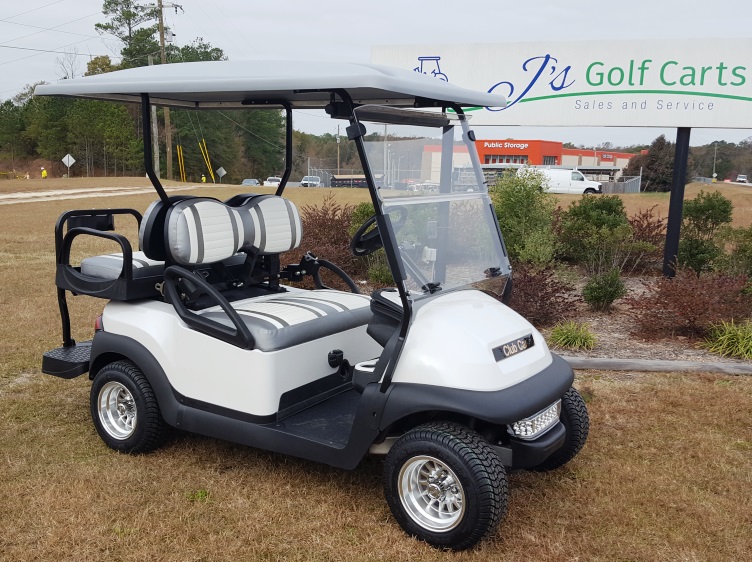
Image Source: jsgolfcarts.com
Grasping Golf Cart Power: The Basics
Golf carts are handy. People use them for golf, sure. But they also use them in neighborhoods, on farms, and at big events. The power a golf cart has matters a lot. It changes how fast it goes. It changes how well it climbs hills. It also changes how much weight it can carry.
Most people think of horsepower (HP) when they talk about power. But for golf carts, other things matter too. Torque is very important. Kilowatts (kW) also tell us about power, especially for electric carts. Let’s break down what gives a golf cart its zing.
Electric Carts vs. Gas Carts: Power Sources
Golf carts come in two main types. They are electric carts and gas carts. Each type gets its power in a different way. This means their power output is measured differently. It also affects how they feel when you drive them.
Electric Golf Carts:
Electric carts run on batteries. These batteries power an electric motor. They are quiet and do not make smoke. They are often good for short trips. They are also good for places where noise is a problem. Their power feels instant.
Gas Golf Carts:
Gas carts use a small engine. This engine is like the one in a lawnmower. It burns gasoline. Gas carts are louder. They need gas refills. They are often better for longer rides. They are also good for carrying heavier loads.
Fathoming Horsepower (HP)
What is horsepower? It is a way to measure power. One horsepower is the power needed to lift 550 pounds one foot in one second. For a vehicle, it tells you how much work the engine or motor can do. More HP often means higher top speed. It also means more raw power.
For golf carts, HP numbers seem small. A car might have 100 HP or more. But golf carts are light. They do not need a lot of power to move. That 3 to 6 HP range is often plenty.
Deciphering Electric Golf Cart Power
Electric golf carts get their power from an electric motor. The motor runs on power from big batteries. Several things tell us about an electric golf cart’s power.
Electric Golf Cart Motor Size
The size of the electric motor matters. A bigger motor can make more power. Motors are measured in watts or kilowatts. They are also measured by their voltage. Common golf cart motors are 36-volt or 48-volt. Some heavy-duty carts use 72-volt systems. Higher voltage often means more power.
The motor’s size also relates to its build. A motor with more copper windings can handle more current. This means it can make more power without getting too hot. This affects the overall golf cart power output.
Golf Cart Kilowatt Rating
Kilowatts (kW) are another way to measure power. One kilowatt is 1,000 watts. This is the standard unit for electric power. You can turn kilowatts into horsepower. One horsepower is roughly equal to 0.746 kilowatts. So, if a motor has a 5 kW rating, it is about 6.7 HP.
| Kilowatts (kW) | Horsepower (HP) (Approx.) |
|---|---|
| 3 kW | 4.0 HP |
| 4 kW | 5.4 HP |
| 5 kW | 6.7 HP |
| 7 kW | 9.4 HP |
| 10 kW | 13.4 HP |
This table helps you see the link. A higher golf cart kilowatt rating means more power. This translates to better speed and climbing ability.
Battery Voltage and Amperage
The batteries are the power source.
* Voltage: This is the electrical “pressure.” Common golf cart voltages are 36V, 48V, and 72V. More volts usually mean more potential power. It allows the motor to spin faster.
* Amperage (Current): This is the flow of electricity. A controller manages how much current goes to the motor. A higher current flow means more power is delivered.
* Battery Capacity (Amp-hours): This tells you how much energy the batteries can store. More amp-hours mean a longer driving range. It does not directly mean more power, but it lets the cart run for longer at its power level.
A well-matched system of batteries and motor is key. You need enough voltage and current for good golf cart power output.
Pondering Gas Golf Cart Power
Gas golf carts use small internal combustion engines. These engines burn fuel to create power. Their power is measured a bit differently than electric carts.
Gas Golf Cart Engine Specs
Gas golf cart engines are measured in cubic centimeters (cc). This is a measure of the engine’s size. A larger cc engine can usually make more power. Most gas golf cart engines are single-cylinder. They range from about 250cc to 400cc.
| Engine Size (cc) | Horsepower (HP) (Approx.) |
|---|---|
| 250cc | 8 – 10 HP |
| 300cc | 10 – 12 HP |
| 400cc | 12 – 15 HP |
This gives you an idea of the gas golf cart engine specs. The actual HP can vary. It depends on the engine’s design. It also depends on how it is tuned.
Golf Cart Engine Capacity
The engine capacity is its total displacement. This is the volume of all the engine’s cylinders. For golf carts, this is usually given in cubic centimeters (cc). A larger engine capacity often means more power. It also tends to mean more torque. More torque helps when climbing hills. It also helps when pulling heavy things. The engine capacity directly affects the golf cart engine capacity for work.
Typical Golf Cart HP Range
Most standard golf carts are not built for speed. They are built for getting around easily.
* Standard Electric Carts: These often have motors that put out 3 to 5 HP. This is for flat ground and light use.
* Standard Gas Carts: These tend to have engines with 8 to 12 HP. They usually feel stronger on hills. They also carry weight better.
For heavy-duty or custom carts, the power can be higher. Some strong utility carts can have 15 HP or more. Some lifted carts get even more power. This helps them handle rough terrain. This is the typical golf cart HP range.
Golf Cart Performance Metrics Beyond HP
Horsepower is just one part of the story. Other things also tell us how a golf cart performs.
Golf Cart Torque Rating
What is torque? It is twisting force. Think of turning a wrench. The force you use is torque. For a golf cart, torque is the force that makes the wheels turn. It is what gets the cart moving. It helps it climb hills. It also helps it carry heavy loads.
- Electric Carts: Electric motors make instant torque. This means they feel quick off the line. They climb hills well from a stop.
- Gas Carts: Gas engines need to rev up to make peak torque. They might feel a bit slower at first. But they can sustain power for longer.
A high golf cart torque rating means good pulling power. It means good hill climbing. It also means good acceleration.
Horsepower vs Torque Golf Cart
Horsepower and torque work together.
* Horsepower is about overall work done. It relates to top speed.
* Torque is about initial push and pulling power. It relates to acceleration and hill climbing.
Imagine two golf carts.
* Cart A has high HP but low torque. It might be fast on flat ground once it gets going. But it will be slow off the start. It will struggle on hills.
* Cart B has low HP but high torque. It will be quick off the start. It will climb hills easily. But its top speed might not be as high.
For a golf cart, torque is often more important than pure HP. This is because golf carts often start and stop. They often go up small slopes. They also carry varying loads. So, horsepower vs torque golf cart considerations favor torque for typical use.
Golf Cart Speed Capabilities
The horsepower and torque directly affect golf cart speed capabilities.
* Standard Carts: Most golf carts are set to go about 12-15 mph. This is for safety. This is also fine for golf courses.
* Neighborhood Electric Vehicles (NEVs): Some street-legal golf carts go up to 25 mph. They need more power to do this.
* Custom Carts: Heavily modified carts can go faster. They might reach 30 mph or even more. This needs much more power. It also needs upgraded parts.
Speed is not just about HP. It also depends on the gear ratio. This is how the motor’s spin translates to wheel spin. Tires also play a role. Bigger tires can mean higher top speed. But they also need more power to turn.
Acceleration and Hill Climbing
A golf cart’s power also affects its acceleration. This is how fast it gets up to speed. High torque helps with quick starts. It makes the cart feel responsive.
Hill climbing is also a big test of power. A cart with enough torque can climb steep hills without slowing down much. A weak cart will struggle. It might even stop. This is why golf cart performance metrics include these aspects.
Factors Influencing Golf Cart Power Output
Many things can change how much power a golf cart actually puts out.
* Weight: More weight in the cart means the motor or engine has to work harder. This uses up more of its power.
* Terrain: Driving uphill or on rough ground takes more power than on flat, smooth paths.
* Maintenance: A well-maintained cart runs better. For gas carts, this means clean air filters and good spark plugs. For electric carts, it means healthy batteries. Poor maintenance lowers golf cart power output.
* Tires: Low tire pressure makes the cart work harder. Knobby, off-road tires also create more drag. This needs more power to overcome.
* Controller (Electric Carts): The controller is like the brain of an electric cart. It manages power flow. An old or small controller can limit power.
* Wiring (Electric Carts): Old or thin wires can lose power. This means less power gets to the motor.
Why Does HP Matter for a Golf Cart?
The amount of horsepower matters based on how you use your golf cart.
For Golf Course Use:
If you just play golf, 3-5 HP is fine. You are on mostly flat ground. You carry a few people and clubs. Speed limits on courses are low. This power level is perfect.
For Neighborhood Driving:
If you use your cart in a neighborhood, you might want more power. You might go up small hills. You might carry groceries. A cart with 8-10 HP (gas) or a strong 48V electric system (5-7 kW) is better. This gives you more zip. It also handles small hills well.
For Utility or Work Use:
For work on a farm or construction site, you need real power. You might pull a trailer. You might carry heavy tools. Here, 10-15 HP (gas) or a high-kW electric cart (7-10 kW+) is best. High golf cart torque rating is very important here. This lets the cart do tough jobs easily.
For Lifted or Custom Carts:
Lifted carts have bigger tires. They are often used off-road. These carts need more power to turn those big tires. They also need more power for off-road trails. Upgraded motors and controllers are a must. Many custom carts aim for the upper end of the golf cart HP range.
Improving Golf Cart Power
You can make a golf cart more powerful. This often means upgrading parts.
Upgrading Electric Golf Carts:
- Better Motor: A stronger electric golf cart motor size directly boosts HP and torque.
- Bigger Controller: A higher-amperage controller sends more power to the motor. This makes the cart faster and stronger.
- Battery Upgrade: Moving from 36V to 48V or even 72V increases overall power. Newer lithium batteries can also give more consistent power. They also last longer.
Upgrading Gas Golf Carts:
- Engine Tuning: Like cars, gas golf cart engines can be tuned. This means adjusting fuel and air for more power.
- Clutch Upgrade: A better clutch can get more power to the wheels.
- Exhaust System: A less restrictive exhaust can help the engine “breathe” better. This can add a little power.
- Engine Swap: For serious power, some people put a bigger engine in their cart. This changes the entire golf cart engine capacity.
Other Upgrades for Both Types:
- Gearing: Changing the gears can give more torque for climbing. Or it can give more speed for flat ground.
- Tire Choice: Lighter tires need less power to move. Road tires roll easier than knobby tires.
Tables: A Quick Look at Golf Cart Power
Here are some helpful tables to summarize typical power and performance.
Table 1: Typical Golf Cart Horsepower (HP) Range by Type
| Cart Type | Typical HP Range (Approx.) |
|---|---|
| Standard Electric (36V) | 3 – 4 HP |
| Standard Electric (48V) | 4 – 6 HP |
| Standard Gas | 8 – 12 HP |
| Heavy-Duty/Utility Gas | 12 – 15 HP |
| Custom/High-Performance | 15 HP+ (can vary widely) |
This table provides a good overview of the typical golf cart HP range.
Table 2: Golf Cart Performance Metrics Overview
| Metric | What it Means | Impact on Cart Performance |
|---|---|---|
| Horsepower (HP) | Overall power output | Higher top speed potential; more work done over time. |
| Torque | Twisting force to move wheels | Better acceleration; stronger hill climbing; easier carrying of heavy loads. |
| Speed | How fast the cart can go | Varies from 12 mph (standard) to 30+ mph (modified). |
| Acceleration | How quickly the cart reaches desired speed | Quicker starts; feels more responsive. |
| Hill Climbing | Ability to move uphill | Stronger carts climb steeper hills without losing speed. |
| Range | How far the cart can go on one charge/tank | Longer trips possible; less frequent refueling/recharging. |
These golf cart performance metrics show how power translates to real-world use.
Concluding Thoughts
So, how much horsepower does a golf cart have? Most have between 3 to 6 HP. But this simple number does not tell the full story. Electric carts feel different than gas carts. Torque is a huge factor. It dictates how well a cart handles loads and climbs hills. The golf cart kilowatt rating is also important for electric models. The golf cart engine capacity matters for gas models.
Whether you need a basic cart for the greens or a powerhouse for work, knowing these details helps. It lets you pick the right cart for your needs. It also helps you make smart upgrades. A well-chosen or well-tuned golf cart can truly be a versatile machine.
Frequently Asked Questions (FAQ)
Q1: Can I make my golf cart faster with more horsepower?
A1: Yes, more horsepower usually means more speed. But other things matter too. Gearing, tire size, and the cart’s weight also play a role. For electric carts, a stronger motor and controller help a lot. For gas carts, engine tuning and upgrades can boost speed.
Q2: Which is better for hill climbing, electric or gas golf carts?
A2: Both can climb hills well with enough power. Electric carts often feel stronger on hills from a stop. This is because electric motors deliver instant torque. Gas carts can also be very strong on hills. This is true if they have a good engine with high torque.
Q3: How much HP do I need for a lifted golf cart?
A3: Lifted golf carts need more horsepower and torque. This is because they have bigger, heavier tires. These tires create more drag. You will want a cart with at least 8-10 HP. Even better is 12 HP or more. Upgraded electric motors (6 kW+) or strong gas engines (300cc+) are ideal.
Q4: Does the battery type affect golf cart horsepower for electric carts?
A4: Battery type does not directly change the motor’s horsepower rating. But it affects how well that power is delivered. Lithium batteries provide more consistent power. They also hold voltage better under load. This can make the cart feel stronger. Lead-acid batteries might lose power as they drain.
Q5: What is the typical top speed for a golf cart?
A5: Standard golf carts usually have a top speed of 12-15 miles per hour (mph). This is often controlled by a limiter. Some street-legal Neighborhood Electric Vehicles (NEVs) can go up to 25 mph. Highly modified carts can go even faster.