
Are you wondering what are the signs of a bad golf cart battery? Golf cart batteries are vital for power. When they start to fail, you will notice problems right away. Spotting a bad battery early can save you time and hassle. This guide helps you find out if your golf cart batteries are bad by showing you common signs and simple tests you can do.
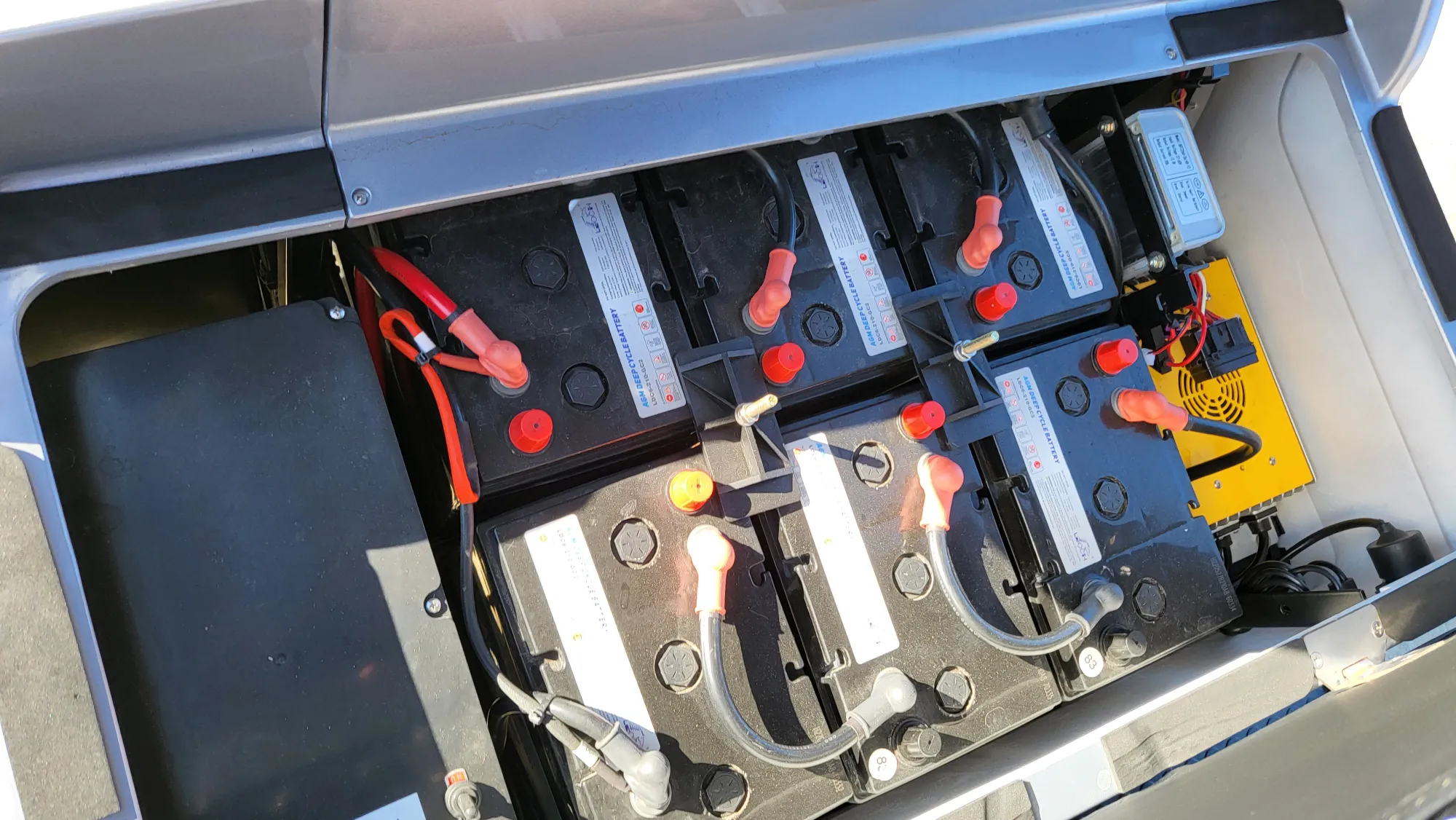
Image Source: hartvillegolfcarts.com
Common Signs Your Golf Cart Batteries Are Failing
Golf cart batteries don’t just stop working all at once. They usually show signs over time. Knowing these signals helps you figure out what’s going on. Here are the typical Signs of bad golf cart battery:
Performance Issues
These are the most common ways you’ll notice batteries are getting weak.
- Slow Speed or Weak Acceleration: Does your cart feel sluggish? Does it take a long time to get up to speed? This can be a key sign. Healthy batteries give quick power. Dying batteries struggle to provide enough juice.
- Reduced Range or Runtime: You used to go for a long time on a full charge. Now the cart dies much faster. This means the batteries can’t hold as much energy as they used to. This is a major Golf cart battery symptom.
- Quickly Losing Charge: You charge the cart fully, but after a short drive, the battery meter drops fast. Or maybe the cart seems to lose charge just sitting there. This means the Golf cart battery won’t hold charge like it should. It’s a clear sign of internal problems.
- Difficulty Climbing Hills: Hills take more power. If your cart slows way down or struggles badly on slopes it used to handle easily, the batteries might be weak. They can’t give the needed burst of power.
- Uneven Charge Across Batteries: If your cart has a set of batteries (like 6 or 8), they should work together. If one or more batteries are weaker than the others, the whole pack suffers. This can cause strange performance and uneven charging.
Visible Signs
Sometimes, you can see problems just by looking at the batteries.
- Corrosion on Battery Terminals: White or greenish crusty stuff on the battery posts or cable clamps is corrosion. A little bit might be normal over time, but heavy Corrosion on golf cart battery terminals blocks the flow of power. It can make a good battery seem bad. However, too much corrosion can also be caused by a failing battery venting gas.
- Swollen or Cracked Battery Cases: Battery cases should be square and solid. If a battery looks puffy, rounded on the sides, or has cracks, it’s likely damaged inside. This can happen from overcharging or getting too hot. It’s a serious sign.
- Leaking Battery Acid: If you see wet spots or a gooey substance on top of or around a battery, it could be leaking acid. This is dangerous and means the battery is failing or damaged.
- Unusual Smell: A strong smell, often like rotten eggs or sulfur, can come from batteries. This is usually caused by off-gassing, which happens during charging. While some gassing is normal, a very strong smell, especially when not charging, or signs of swelling point to a serious internal problem, like overcharging or a short.
Getting Started: Safety First!
Before you touch your batteries, you MUST think about safety. Golf cart batteries hold a lot of power, even when they seem dead. The acid inside is also dangerous.
- Wear safety glasses or goggles to protect your eyes from acid splashes.
- Wear acid-resistant gloves to protect your skin.
- Wear old clothes that you don’t mind if they get damaged by acid.
- Do not wear metal jewelry (rings, watches, necklaces) that could touch the battery terminals and cause a short circuit.
- Work in a well-aired place. Batteries can give off hydrogen gas when charging, which can explode if there’s a spark.
- Have baking soda and water ready. This mixture can neutralize battery acid if you spill it.
- Disconnect the main battery pack negative cable before doing any work or testing, unless the test specifically requires the pack to be connected (like a load test).
- Use tools with insulated handles if possible. Be very careful not to touch the positive (+) and negative (-) terminals of a battery or the pack at the same time with a metal tool. This will cause a dangerous short circuit.
How to Test Your Golf Cart Batteries
Seeing signs is helpful, but testing gives you real numbers. Tests help confirm if a battery is truly bad or if something else is wrong. Here’s how to test your batteries. This is part of Troubleshooting golf cart battery problems.
Visual Check (Again)
Even before you grab tools, do a careful visual check.
* Look at all battery cases. Are they clean? Are there cracks, bulges, or leaks?
* Check the battery terminals and cable ends. Is there Corrosion on golf cart battery terminals? Clean any heavy corrosion before testing.
* Check the battery cables themselves. Are they cracked, frayed, or damaged? Bad cables can act like bad batteries.
* If you have batteries that need water (most golf cart batteries do), check the water levels. The water (electrolyte) should be above the plates inside the battery. If levels are low, add distilled water after charging (unless the plates are exposed before charging, then add just enough to cover them). Low water levels can make a good battery perform poorly.
Golf Cart Battery Voltage Test
This is one of the most common and easiest tests. It tells you the battery’s charge level and can show if a battery is weak. You will need a voltmeter or a multimeter (which includes a voltmeter). This is how to do a Testing golf cart battery with voltmeter.
Testing Individual Batteries
You need to check each battery in the pack separately. Golf carts often use 36V, 48V, or even 72V systems, made up of 6V or 8V batteries.
- Set up your voltmeter: Turn the dial to DC Voltage (V= or DCV). Choose a range higher than the battery’s voltage (e.g., 20V range for 6V or 8V batteries).
- Locate terminals: Find the positive (+) and negative (-) terminals on one battery. They are marked.
- Connect the meter: Touch the red probe of the voltmeter to the positive (+) terminal. Touch the black probe to the negative (-) terminal of the same battery.
- Read the voltage: The meter screen will show a number. Write down this number for each battery.
- Wait and retest (Optional but Good): After you’ve done all batteries, wait a few hours or even overnight (with the charger off and the cart not used). Test the voltage of each battery again. Healthy batteries hold their charge. A battery whose voltage drops a lot just sitting there is likely bad (Golf cart battery won’t hold charge).
What the Voltage Numbers Mean (Approximate, Fully Charged, Rested Voltage)
This table shows typical voltages for batteries after being fully charged and resting for several hours (voltage drops slightly after charging finishes).
| Battery Type | Fully Charged (Rested) Voltage | Likely Needs Charging | Likely Bad/Weak |
|---|---|---|---|
| 6-Volt | 6.3 – 6.4V | Below 6.0V | Below 5.8V |
| 8-Volt | 8.4 – 8.5V | Below 8.0V | Below 7.8V |
| 12-Volt | 12.6 – 12.8V | Below 12.0V | Below 11.8V |
Note: These are resting voltages. Voltage will be higher right off the charger.
If one battery’s voltage is much lower than the others (more than 0.2V – 0.5V difference), it’s a strong sign that battery is the weak link. This difference gets bigger as the batteries discharge.
Testing the Full Battery Pack Voltage
You can also test the total voltage of the whole pack.
- Set up your voltmeter: Turn the dial to DC Voltage. Choose a range higher than the pack’s total voltage (e.g., 50V or 100V range for 36V or 48V packs).
- Locate pack terminals: Find the main positive (+) terminal (where the thick cable goes to the controller/solenoid) and the main negative (-) terminal (where the other thick cable goes to the frame/controller). Be very careful!
- Connect the meter: Touch the red probe to the main positive terminal. Touch the black probe to the main negative terminal.
- Read the total voltage: This gives you the total Golf cart battery voltage test result for the whole pack. Compare this to the expected voltage for your system (e.g., around 38.2V – 38.4V for a fully charged 36V pack, or 50.9V – 51.2V for a fully charged 48V pack, after resting).
A low total pack voltage, even after charging, could mean the whole pack is aging. But often, a low total is caused by just one or two weak batteries pulling the others down. That’s why testing individual batteries is so important.
Specific Gravity Golf Cart Battery Test (Battery Acid Test)
This test is more detailed than a voltage test. It measures the density of the electrolyte (the acid/water mix) inside each battery cell. This density tells you how much sulfuric acid is in the water, which tells you the state of charge of that specific cell. You need a tool called a hydrometer for the Golf cart battery acid test.
- Safety First: Wear all your safety gear.
- Check Water Levels: Make sure the electrolyte level is high enough to draw up into the hydrometer. Add distilled water if needed, but ideally, do this test when water levels are correct.
- Using the Hydrometer:
- Squeeze the bulb on the hydrometer.
- Put the tube end into one cell of the battery.
- Slowly let go of the bulb. This draws electrolyte into the glass tube.
- The float inside the tube will rise. Read the number level with the surface of the liquid. This is the Specific gravity golf cart battery reading for that cell.
- Write down the reading.
- Squeeze the bulb to put the electrolyte back into the cell. Do NOT let it drip elsewhere.
- Repeat for every single cell in every battery in your pack. A 6V battery has 3 cells, an 8V has 4, and a 12V has 6. This takes time but is very useful.
- Clean Up: After testing, rinse the hydrometer well with clean water.
What Specific Gravity Readings Mean (Fully Charged, 80°F)
Specific gravity readings change with temperature. The numbers below are for electrolyte at 80°F (27°C). You might need to adjust if the temperature is very different (some hydrometers have charts for this).
| Specific Gravity | State of Charge | Meaning |
|---|---|---|
| 1.265 or Higher | 100% | Full Charge |
| 1.225 – 1.265 | 75% | Good Charge |
| 1.190 – 1.225 | 50% | Needs Charging |
| 1.150 – 1.190 | 25% | Critically Low Charge |
| 1.110 or Lower | Discharged | Very Low, Needs Charging NOW |
Interpreting Specific Gravity Results
- Low Reading in One Cell: If one cell in a battery has a much lower specific gravity reading than the others (more than 0.050 difference), that cell is likely dead or dying. This means the whole battery needs replacing.
- Low Readings Across a Battery: If all cells in one battery have low readings compared to the others in the pack, that battery is weak.
- Low Readings Across the Pack: If all batteries show uniformly low specific gravity after a full charge, the whole pack might be old and nearing the end of its life, or the charger isn’t working right.
- High Readings (Rare): Too high readings could mean someone added acid instead of distilled water, which is bad.
The specific gravity test is great for finding a single bad cell or battery that a voltage test might miss if you only test the whole battery’s voltage and not its individual cells’ internal balance.
Golf Cart Battery Load Test
A load test puts a high demand on the battery, like when you press the pedal hard to go fast or climb a hill. This shows how well the battery performs under stress. A weak battery’s voltage will drop a lot under load.
This test usually requires a special tool called a load tester, or it can be done by measuring voltage while actually driving the cart under load (like going uphill).
- Using a Load Tester: A specific battery load tester is connected to the battery. It applies a heavy draw (like driving the cart). You watch the voltage meter on the tester. A good battery’s voltage will drop, but stay above a certain point (check the load tester instructions or battery specs). A bad battery’s voltage will drop sharply or fall below the limit very quickly. This is a key Golf cart battery load test.
- Testing While Driving: Connect your voltmeter set to DC voltage across the main battery pack terminals. Have a helper watch the meter while you drive the cart, especially going uphill or pressing the pedal hard. Note how low the total voltage drops. Compare this drop to what’s normal for your cart (this requires knowing what’s ‘normal’, which you might only know with experience or comparing to a new pack). A very large voltage drop under a normal load suggests weak batteries.
Load testing is very effective at identifying batteries that show good voltage when resting but fail when asked to do actual work.
Deciphering What Your Tests Tell You
Now you have readings from voltage tests, specific gravity tests, and maybe load tests. How do you put it together?
- One Battery is Way Off: If one battery has much lower resting voltage, much lower specific gravity across all its cells, or shows a big voltage drop during a load test compared to the others, that battery is likely the problem. In a golf cart pack, it’s best practice to replace all batteries when one goes bad. Putting a new battery with old ones makes the new one work harder and fail faster.
- One Cell is Way Off: If a specific gravity test shows one cell in a battery is significantly lower than the others in the same battery, that cell is bad. The whole battery needs replacing.
- All Batteries Are Weak: If all batteries show lower-than-expected resting voltage after charging, consistently lower specific gravity readings, and the whole pack voltage drops significantly under load, the entire battery pack is likely old and needs replacing. This is common after 5-7 years of use, sometimes sooner depending on care.
- Voltage is OK, but Performance is Bad: If resting voltage looks okay, but the cart still runs poorly, check specific gravity. A battery might have decent voltage but low capacity (can’t hold much charge), which specific gravity can reveal. Also, re-check connections and cables for corrosion or damage – bad connections mimic bad batteries.
Troubleshooting Golf Cart Battery Problems
Sometimes, poor performance isn’t due to a truly “bad” battery, but something you can fix. This is part of Troubleshooting golf cart battery problems.
- Clean Connections: If you saw corrosion, clean it off the terminals and cable ends thoroughly. Use a battery terminal brush and a mix of baking soda and water. Rinse with clean water and dry completely. Tighten connections firmly, but don’t overtighten. Apply a small amount of anti-corrosion grease.
- Check Water Levels: Low water is a very common cause of poor performance. Make sure the water level is just above the plates in every cell. Only use distilled water. Never use tap water.
- Check the Charger: Is your charger working correctly? A faulty charger might not be fully charging the batteries. Check the charger’s lights and manual. Sometimes the charger is the problem, not the batteries.
- Check Cables: Look closely at all the thick cables connecting the batteries. Are they cracked, melted, or loose? Damaged cables can cause resistance and loss of power.
- Equalize Charge (If Applicable): Some chargers have an “equalize” setting. This is a controlled overcharge done rarely (maybe once a month or every few months) to help balance the charge among cells and batteries. Only do this if your charger has the feature and you follow its instructions carefully. It can sometimes help batteries that are slightly out of balance, but won’t fix a truly dead battery or cell.
Golf Cart Battery Symptoms: A Quick Review
To quickly recap the main Golf cart battery symptoms that tell you something is wrong:
- Cart runs slower than before.
- Cart doesn’t go as far on a charge.
- Battery meter drops quickly.
- Struggling on hills.
- Batteries look swollen, cracked, or are leaking.
- Heavy corrosion on terminals.
- Strong, unusual smell.
- One or more batteries have much lower voltage than the others after charging.
- Specific gravity is low, especially in one cell or one battery.
- Voltage drops severely during use (load test).
When It’s Time to Replace
If you’ve done the tests, cleaned the terminals, checked water levels, and the batteries still show signs of being weak (low voltage, low specific gravity, poor performance), they are likely at the end of their life.
- Age: Most golf cart batteries last 5-7 years with good care. If yours are older than this, they are probably due for replacement.
- Failed Tests: Consistently low voltage or specific gravity readings after proper charging mean the batteries can no longer store enough energy.
- Physical Damage: Swelling, cracking, or leaking batteries are dangerous and must be replaced immediately.
- One Bad Apple: If one battery is clearly bad (low voltage, dead cell), you should replace the whole set. It might seem costly, but it’s cheaper in the long run than replacing batteries one by one as the old ones drag down the new ones.
Replacing your golf cart batteries is a significant cost, but new batteries will bring back your cart’s speed, range, and power.
Caring for Your Batteries to Help Them Last
To get the most life out of new or healthy batteries, follow these tips:
- Charge Regularly: Charge batteries after every use, even short trips. Don’t wait until they are fully discharged.
- Avoid Deep Discharges: Try not to run the batteries completely dead. This is hard on them.
- Check Water Levels: For non-sealed batteries, check the water level often (like once a month during heavy use). Add distilled water after charging, unless plates are exposed before charging.
- Keep Them Clean: Clean off dirt and corrosion regularly.
- Proper Storage: If storing the cart for a long time, charge the batteries fully, clean them, check water levels, and either use a maintainer charger or check voltage monthly and charge as needed. Store in a cool, dry place if possible.
- Use the Right Charger: Make sure you use a charger meant for your battery type and voltage system.
Good care helps prevent many of the problems and symptoms discussed above and extends the life of your battery pack.
FAQ Section
Here are some common questions about golf cart batteries.
How long do golf cart batteries usually last?
With proper care, most deep-cycle golf cart batteries last about 5 to 7 years. Factors like how often you use the cart, how you charge them, and climate can affect their lifespan.
Can I replace just one battery in my golf cart?
It is generally not recommended to replace just one battery. When one battery fails, the others are usually close behind. Putting a new battery with older, weaker ones will cause the new battery to work harder, shortening its life and not greatly improving the pack’s overall performance. It’s best to replace the entire matched set.
Why do my golf cart batteries smell like rotten eggs?
A rotten egg or sulfur smell usually means the batteries are overcharging or have a damaged cell that is off-gassing excessively. This is a sign of a problem with the batteries or the charger. Check your charger and inspect the batteries for swelling or heat.
What causes corrosion on battery terminals?
Corrosion is often caused by hydrogen gas being released from the battery electrolyte during charging. This gas reacts with the metal terminals and air. Overcharging can increase gassing and corrosion. Dirty or loose connections can also make it worse. Keeping terminals clean and tight helps, as does ensuring proper charging.
Do I need to add water to my golf cart batteries?
If you have standard flooded lead-acid batteries, yes, you need to add distilled water periodically. The water level should be just above the plates inside each cell. Check your battery type – some are sealed and maintenance-free.
How often should I check my golf cart battery water levels?
During periods of regular use, check water levels about once a month. If you use the cart very heavily, you might check more often. During storage, check before storing and maybe monthly if storing long-term.
Can a bad charger make batteries seem bad?
Yes, absolutely. An old or faulty charger can fail to fully charge the batteries, undercharge them, or even overcharge and damage them. If your batteries are not performing well, test your charger to make sure it is working correctly.
My batteries test okay, but the cart still runs poorly. What else could be wrong?
If batteries test well (good voltage, specific gravity, load test) and connections are clean and tight, the problem is likely elsewhere in the cart’s electrical system. This could include the charger, cables, controller, solenoid, or motor. In this case, it might be best to have a qualified golf cart technician look at it.
Figuring out if your golf cart battery is bad involves looking for clear signs and doing specific tests. By following these steps, you can accurately find the problem and decide if you need to replace batteries or fix something else. Keeping up with basic battery care will help you avoid many issues in the first place.