
In golf, players must follow specific rules about their equipment. A key rule is how many clubs a player can carry during a round. The clear answer is that a golfer cannot have more than 14 clubs in their bag during a round under the rules of golf set by the USGA and R&A. This is the maximum golf clubs allowed.
This limit is not just a number; it is a fundamental rule, Rule 4.1b, that shapes strategy and requires golfers to carefully pick the tools they will use on the course. Knowing this rule is vital for every golfer, from weekend players to top professionals. Carrying an illegal number of golf clubs can lead to penalties. Let’s look closer at this limit, why it exists, and what makes up a standard golf set.
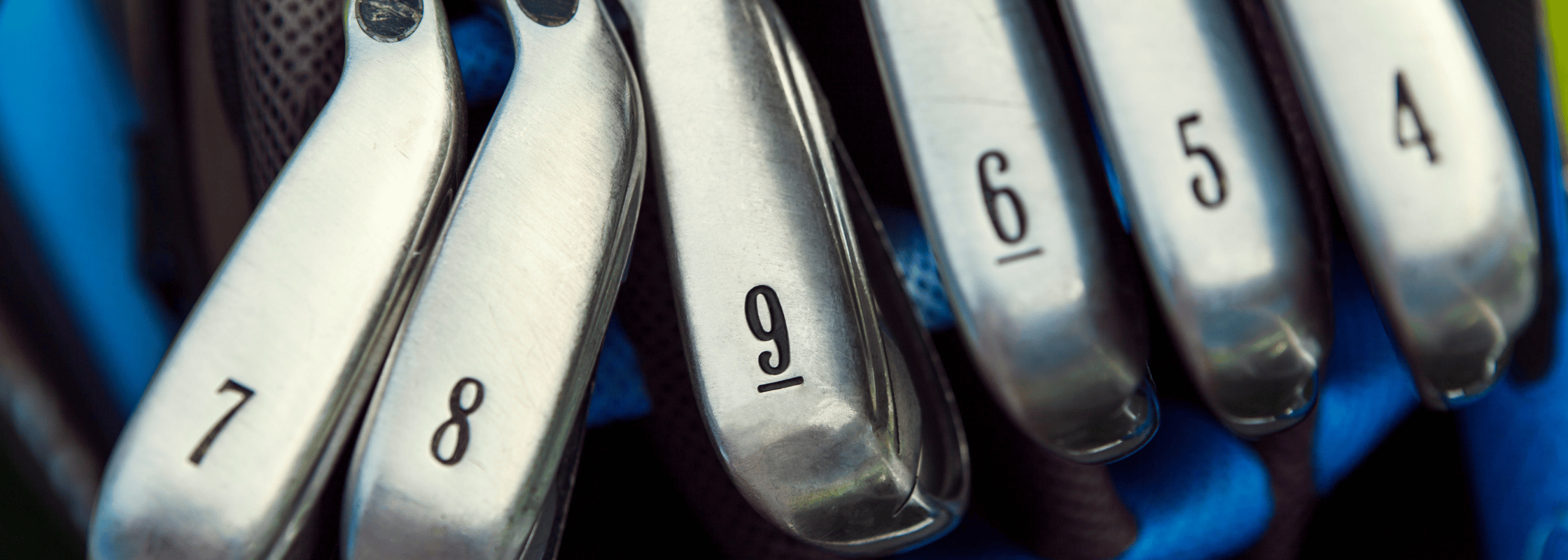
Image Source: ucarecdn.com
The Governing Rule: The 14-Club Cap
The rules of golf are looked after by two main bodies: the United States Golf Association (USGA) and The Royal and Ancient Golf Club of St Andrews (R&A). These two groups work together to write and update the rules that are played around the world. When we talk about USGA golf rules clubs, we are talking about the standards they set for equipment, including the number of clubs.
Who Sets the Rules?
The USGA and R&A write and keep the rules of golf. They make sure the game is fair and stays true to its traditions. Equipment rules are a big part of this. They decide what kind of clubs, balls, and other gear players can use. This includes the golf club limit.
Deciphering Rule 4.1b
Rule 4.1b is simple but very important. It states: “A player must not start a round with more than 14 clubs or carry more than 14 clubs during the round.” This rule counts every club in your bag. If you start with fewer than 14, you can add clubs during the round. You can add clubs up to the limit of 14. However, you cannot add clubs if doing so would mean using a club another player is using. You also cannot borrow a club another player is using.
Why Just 14?
The limit of 14 clubs has been around for a long time. It was set in 1938. Before that, some pros would carry many more clubs, sometimes over 20. The limit was put in place to keep the game fair and test a player’s skill. With only 14 clubs, golfers must think carefully about their shots. They need to be able to hit different types of shots with each club. This makes players rely more on their ability and less on having a club for every single distance or situation. The golf club limit pushes players to get creative and master different swings.
What Happens With Too Many Clubs?
Breaking the 14-club rule is serious. It is against the rules to have an illegal number of golf clubs.
The Penalty
The penalty depends on whether you are playing stroke play or match play.
- Match Play: If you find you have too many clubs during a match, you get a penalty at the end of the hole where you found the mistake. The penalty is subtracting one hole from your score for each hole where you had the extra club. But there is a limit. The most you can lose is two holes in the whole match. Once you find the extra club, you must make it out of play right away. You do this by telling your opponent and clearly showing which club or clubs are now out of play (e.g., turning the club upside down in the bag).
- Stroke Play: In stroke play, the penalty is two penalty strokes for each hole where you had the extra club. Again, there is a limit. The most penalty strokes you can get is four strokes in total for the round. This means two strokes for the first hole you played with the extra club, and two strokes for the second hole. After that, even if you play more holes with too many clubs, you do not get more penalty strokes. Like in match play, you must make the extra club out of play as soon as you discover it. You do this by telling your playing partners and making the club clearly out of play.
It is important to count your clubs before you start a round to avoid this penalty.
Catching the Error
What if you start with 14 clubs but accidentally pick up another player’s club? Or what if someone puts an extra club in your bag without you knowing? The rule says you cannot have more than 14 clubs for any reason during the round. If you find an extra club that you did not mean to take, you must make it out of play right away. You do not get a penalty if you did not cause the extra club to be there and you make it out of play as soon as you notice it. But if you put it there yourself, or knew it was there and played a hole, the penalty applies.
Decoding a Standard Golf Set
While you can have up to 14 clubs, most golfers use a standard set of clubs that includes a mix of different types. A standard golf set is designed to give you clubs for different distances and shots. It typically includes woods, irons, wedges, and a putter. These are the main components of a golf set.
Essential Components of a Golf Set
A full set of golf clubs usually has these main types:
- Woods: Used for hitting the ball long distances.
- Irons: Used for shots from the fairway or rough, for middle distances.
- Wedges: Used for shorter shots, getting onto the green, or getting out of sand traps.
- Putter: Used for hitting the ball on the green into the hole.
Common Club Counts in a Full Set
To reach the 14-club limit, golfers pick a mix of these clubs. There isn’t one exact full set of golf clubs that everyone uses, but here is a common way players fill their bag:
- Driver (1)
- Fairway Woods (usually 1 or 2)
- Hybrids (usually 0 to 2)
- Irons (a set, often 7 to 9 irons)
- Wedges (usually 3 or 4)
- Putter (1)
Adding these up gets you close to 14. For example, 1 driver + 2 fairway woods + 8 irons (3-PW) + 3 wedges (GW, SW, LW) + 1 putter = 15 clubs. In this case, the golfer would need to remove one club to get down to 14. They might choose to remove the 3-iron or one of the wedges depending on their game. This shows how players build their set to match the 14-club maximum golf clubs.
The Standard 14: What’s Often Included
Here is a table showing a typical setup for a standard golf set adding up to 14 clubs:
| Club Type | Number of Clubs | Typical Club Numbers/Lofts | Main Use |
|---|---|---|---|
| Driver | 1 | 1 (Low Loft, e.g., 9-12°) | Longest shots, usually from the tee |
| Fairway Woods | 2 | 3-wood, 5-wood | Long shots from tee or fairway |
| Hybrids | 1 | e.g., 4-Hybrid | Easier to hit than long irons |
| Irons | 7 | 5, 6, 7, 8, 9, PW, AW | Mid-range shots, approach shots |
| Wedges | 2 | Sand Wedge (SW), Lob Wedge (LW) | Short shots, sand shots, high shots |
| Putter | 1 | – | Rolling the ball on the green |
| Total Clubs | 14 |
Note: This is just one example. A player might carry a 3-iron instead of a hybrid, or an extra wedge instead of a fairway wood.
The number of clubs in golf bag that you choose depends on your skill, the course you play, and what feels best to you.
A Closer Look at Types of Golf Clubs Included
To build your 14-club set, you need to know what each type of club does. Here’s a quick look at the types of golf clubs included in most full sets.
Drivers: The Long Ball
The driver is the club with the biggest head and longest shaft. It has the least amount of loft (the angle of the clubface). This design helps you hit the ball the farthest. Drivers are almost always used for the first shot on par 4s and par 5s, hitting from the tee box. The goal is maximum distance.
Fairway Woods: Versatility from the Tee or Fairway
Fairway woods have smaller heads than drivers and more loft. Common fairway woods are 3-wood, 5-wood, and 7-wood. They are great for hitting long shots from the fairway, especially on long par 4s or par 5s where you need more distance on your second shot. They can also be used from the tee on tighter holes where accuracy is more important than maximum distance.
Hybrids: Bridging the Gap
Hybrids are a mix of irons and fairway woods. They have a head shape similar to a small wood but are sized more like an iron. They are designed to be easier to hit than long irons (like a 3-iron or 4-iron). Hybrids usually hit the ball higher and land softer than long irons. Many golfers replace their long irons with hybrids because they offer more forgiveness. A hybrid counts as one club towards your 14.
Irons: The Workhorses
Irons are used for a wide range of shots. They are numbered from 1 to 9, and then pitching wedge (PW). Lower numbers (like 3, 4, 5) are “long irons” and hit the ball lower and farther. Higher numbers (like 7, 8, 9) are “short irons” and hit the ball higher and shorter. Irons are key for hitting approach shots to the green from different distances. A standard iron set often runs from 5-iron through pitching wedge.
Wedges: Precision and Control
Wedges are irons with high lofts. They are used for shorter shots, often around the green or from sand traps. The most common wedges are:
- Pitching Wedge (PW): Often part of an iron set, used for shots typically from 100-130 yards or for chip shots.
- Gap Wedge (GW) or Attack Wedge (AW): Has more loft than a PW, used for shots shorter than a PW but longer than a sand wedge (e.g., 80-100 yards).
- Sand Wedge (SW): Has high loft and bounce (design on the bottom of the club) to help hit the ball out of sand traps. Also used for short pitch shots.
- Lob Wedge (LW): Has the highest loft, used for very short shots that need to go high and land softly, or to get over obstacles.
Most golfers carry 3 or 4 wedges to cover different short-game needs.
Putters: On the Green
The putter is used for hitting the ball on the putting green. Its job is to roll the ball smoothly into the hole. Players spend a lot of time choosing a putter that feels right to them, as it is used on every hole (at least once!). The putter is always counted as one of the 14 clubs.
Crafting Your Ideal 14-Club Lineup
Choosing which 14 clubs to put in your bag is a personal process. It depends on your skills, the types of shots you like to hit, and the courses you usually play.
Balancing Distance Gaps
A key idea is to make sure you have clubs that cover all the distances you need, with fairly equal gaps between them. For example, if your 7-iron goes 150 yards and your 6-iron goes 165 yards, you have a 15-yard gap. You want your other irons and woods to have similar gaps. This lets you pick the right club for almost any distance. Carrying too many clubs with similar lofts means you might lack a club for a different distance.
Considering Course Layout
The course you are playing can affect your club choice. If a course has many long par 3s or par 5s, you might want an extra fairway wood or hybrid. If it has many short par 4s and tricky greens, you might want an extra wedge with a specific loft or bounce. Players often swap out one or two clubs based on the course.
Personal Skill and Preference
Some golfers are better with hybrids than long irons. Some prefer carrying four wedges instead of a 5-wood. Your personal strengths and weaknesses should guide your choices. The goal is to have 14 clubs that give you the most confidence for the shots you face most often.
Loft Gapping
Checking the loft of each club helps ensure even distance gaps. Golf pros or club fitters can measure the lofts and check the distances you hit each club. They can help you figure out if you have big gaps that need filling with a different club, or if you have clubs that go about the same distance.
Starting Out: Beginner Golf Set Clubs
New golfers do not need a full 14-club set right away. In fact, many starter sets, or beginner golf set clubs, come with fewer clubs.
What Comes in a Beginner Set?
A typical beginner golf set clubs might include:
- Driver
- Fairway Wood (like a 5-wood)
- A few irons (e.g., 6, 8, PW)
- Sand Wedge
- Putter
This might only be 7 to 10 clubs total.
Why Fewer Clubs for New Players?
There are good reasons beginner sets have fewer clubs:
- Simplicity: Learning golf is hard enough. Using fewer clubs makes it simpler. New players can focus on learning the basic swing with a few clubs instead of being confused by many choices.
- Cost: Beginner sets with fewer clubs cost less money. This is good for people just starting out who are not sure if they will stick with the game.
- Learning: With fewer clubs, new golfers learn to hit different types of shots with the same club. For example, they might learn to hit their 8-iron farther or shorter by changing their swing. This builds important skills.
Transitioning to a Full Set
As beginners get better, they can add more clubs to their bag. They might buy more irons to fill in gaps (like a 7-iron or 9-iron). They might add a hybrid or another fairway wood. They can also get more wedges as they work on their short game. Slowly building up to a full set of 14 clubs is a natural path as a golfer improves.
Managing the Number of Clubs in Your Golf Bag
To avoid penalties, you need to be careful about the number of clubs in golf bag.
Pre-Round Check
Before you start your round, always count your clubs. This takes only a moment and can save you penalty strokes. Pull them all out or count them carefully in the bag. Make sure the number is 14 or less.
During the Round
What if you are on the course and realize you have more than 14 clubs? You must make the extra club(s) out of play right away. This means you cannot use them for the rest of the round. You need to tell your playing partners (in stroke play) or your opponent (in match play) which club(s) are out of play. You could turn them upside down in the bag or lay them on the ground next to the bag. You cannot use them, or even hold them to judge a shot, for the rest of the round. If you found the error yourself and make the club out of play before playing another shot, you might avoid further penalties depending on how you got the extra club (as noted in the penalty section).
Shared Bags
Each player must have their own set of clubs. The rules do not allow players to share clubs from a single bag. Even if you stay under the 14-club limit, you cannot play a shot with a club taken from another player’s bag. This is covered by Rule 4.1c. You can share a bag (like one person carrying the bag), but not the clubs inside it for hitting shots during the round.
Grasping the History of the Club Limit
The idea of limiting the number of clubs wasn’t always part of golf. The rule changed a long time ago.
When 14 Became the Magic Number
Before 1938, there was no limit on how many clubs a golfer could use. Some players, especially professionals, would carry very large numbers of clubs. They would have clubs for every possible distance and shot type. This made golf very expensive and perhaps put too much focus on having specialized equipment rather than skill. In 1938, the USGA and R&A decided to set a limit. They chose 14 clubs as the maximum. This became a standard rule around the world.
Impact on the Game
Setting the limit to 14 clubs changed golf strategy. Players could no longer rely on having a club for every single yard. They had to learn to hit shots with less-than-perfect clubs or adjust their swings to get different distances or trajectories from the same club. This put more value on shot-making skills and club selection strategy before the round even starts. It made the game more about the golfer’s ability than about having a massive collection of clubs.
Strategic Choices Within the Limit
The 14-club limit means every club in your bag is important. Players must think hard about which clubs will help them the most on a given day or course.
The Caddie’s Role
A caddie’s job is more than just carrying the bag. They help the golfer decide which 14 clubs to bring. They also help the golfer choose the right club for each shot during the round. A good caddie knows the player’s game and the course well. They can suggest which clubs to include in the set based on expected conditions like wind or firm ground.
Club Selection Philosophy
Some players prefer to carry more wedges for a better short game. Others might favour having more woods or hybrids for long courses. Some like having a mix of hybrids and long irons. There is no single “right” answer. The best set is the one that fits your game and gives you confidence. It is about finding the best combination of clubs to cover the distances you need while staying within the 14-club limit.
Impact on Innovation
The 14-club limit also affects how golf clubs are made. Manufacturers design clubs to be versatile. For example, a well-designed 7-iron should be able to hit a standard shot, a punch shot under trees, or a high soft shot. Because players have limited spots in their bag, clubs need to perform well in different situations.
Ensuring Compliance
Making sure you have the right number of clubs is your job as a golfer.
Counting is Key
Get in the habit of counting your clubs before you leave for the course and right before you start your round. This simple check prevents accidental rule breaks.
Don’t Borrow Clubs During the Round
Remember Rule 4.1c: you cannot use a club being used by anyone else playing on the course, whether or not they are your partner. This stops players from getting around the 14-club limit by sharing clubs. The only time you can play a shot with another player’s club is if they are not playing in the competition or if you did not agree to play together in any way (e.g., you are just practising together). But in a competition, do not use another player’s club.
Frequently Asked Questions (FAQ)
Here are some common questions about the number of golf clubs allowed.
Q: Is it okay to play with fewer than 14 clubs?
A: Yes, absolutely. The rule sets a maximum of 14 clubs. You can play with any number of clubs up to that limit. Many beginners play with fewer than 14 clubs.
Q: Can I replace a broken club during a round?
A: Under Rule 4.1b(3), if a club is damaged during the round, you are generally not allowed to replace it. You must finish the round with the damaged club or with fewer clubs. The only exception is if the club was damaged by an outside influence or by someone other than you or your caddie. In that specific case, you may replace the club.
Q: Does the putter count towards the 14 clubs?
A: Yes, every club you carry in your bag counts towards the 14-club limit, including your putter.
Q: What if a club breaks and I still have 14 clubs?
A: If a club breaks during the round and you already had 14 clubs, you must continue with the 13 working clubs you have left. You cannot replace the broken club unless it was damaged by an outside influence or someone other than you.
Q: Do junior players have the same club limit?
A: Yes, under the standard Rules of Golf, the 14-club limit applies to all players, regardless of age or skill level, in competitions where the Rules of Golf apply. However, some junior events or beginner leagues might have local rules that allow younger players to carry fewer clubs, or provide sets with fewer clubs, but the main rule is 14.
Knowing the 14-club rule is a basic part of playing golf. It adds a layer of strategy and skill to the game. It forces golfers to think about their bag setup and make smart choices on the course with the clubs they have. So, count your clubs, know their purpose, and enjoy the challenge the limit brings!