
What if you could unlock a world of giggles, learning, and developmental leaps with just a few well-chosen toys? For parents and caregivers of 18-month-olds, this magical stage is brimming with newfound independence and curiosity. But navigating the toy aisle can feel like a minefield. You want toys that are fun, safe, and actually help your little one grow, but the sheer volume of choices can be overwhelming. It’s easy to feel lost, wondering what truly sparks joy and fosters important skills at this precise moment in their development.
This is where we come in. We understand the desire to provide enriching experiences for your busy toddler. By the end of this post, you’ll walk away with a clear understanding of what makes a great 18-month toy. We’ll break down the key developmental areas these toys support, offer practical advice for selecting the best options, and even share some of our top picks that are sure to become instant favorites. Get ready to discover toys that not only entertain but also empower your little explorer.
Top 18 Month Toys Recommendations

- Meet learning friends Turtle, Tiger and Monkey who will introduce more than 100 age-appropriate words chosen by learning experts
- Word categories include: pets, animals, food, mealtime, colors, activities, opposites, outside and more
- Touching the words on the pages plays the words, sound effects and fun facts; hear the Learning Friends theme song and My Favorite Word by pressing the light-up star button
- Words, songs and instructions can be heard in both English and Spanish for a full bilingual experience
- Intended for ages 18+ months; requires 2 AA batteries; batteries included for demo purposes only; new batteries recommended for regular use. Product Dimensions: 9.4" wide x 9.2" height x 1.9" depth

- The No. 1 Global Jr. Building Set (Excludes China): for preschoolers ages 1+ to build big fun
- Perfect Fit for Little Hands: Easy to grip, stack and pull apart, our blocks are designed for little hands
- First Blocks in Home: Features 60 blocks in 10 shapes and 9 vibrant colors
- Creative Learning Play: Big blocks help to develop creativity, imagination and fine motor skills
- Grow with MEGA BLOKS: Combine our building toys to level the stacking fun


- Toddler Montessori Learning Toys: This educational talking flash card features 224 colorful illustrations and sounds. It includes animals, vehicles, food, fruits, and vegetables etc. Kids can expand their vocabulary and enhance cognitive skills while playing
- Speech Therapy and Sensory Toys: Talking flashcards are a valuable tool for children. The sound-image combo helps them learn and interact in a Montessori style, making it ideal for speech therapy
- Easy to Use: Simply turn on the switch, insert a card into the reader, and hear content in a standard American accent. The reader makes real animal sounds and has a repeat button. Adjust volume with a 5-level control. It’s user-friendly for young children
- Rechargeable and Durable: The talking flash cards has a rechargeable battery and USB cable, lasting up to 4 hours on a single charge. It features an auto-off function to save power. Screen-free, it helps reduce screen time and protects toddlers’ eyesight
- Good for 1-5 Years: It is an educational device for preschoolers and can also be a travel partner for long drives or road trips. If you are looking for fun and educational device for your kids, this toddler learning flash cards is a good choice

- Push the handle to roll the bulldozer across the floor and watch it pop balls out of the chimney into the bucket
- Press the buttons to learn colors, numbers, phrases and music
- Roll the bulldozer and trigger motion sensors to listen to fun tunes and songs on the move stimulating attention and coordination
- Grab the chunky handle to encourage motor skill development
- Assorted Color Balls. New batteries recommended for regular use
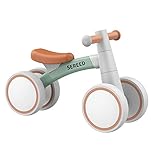
- GROW IN FUN: Recommended ages for 12-24 months. The infant balance bike is the best birthday gift for toddlers to learn walking and riding. It helps to develop babies' balance, steering, coordination, and gain confidence at an early age.
- SAFELY RIDE: No pedal and fully widened closed wheel to avoid clamping baby's feet. 135 ° turning limit and gravity steering without leaving the ground to prevent the baby from turning over.
- STURDY & COMFORTABLE DESIGN: The mini balance bike equips sturdy aluminum alloy frame, non-slip TPU handle, and a softly supportive seat.The mini balance bike wheels are non-slip, wear-resistant and non-destructive floor, and baby can ride indoors or outdoors.
- PERFECT GIFT FOR BABIES: This baby balance bike is made of high-quality material. This ensures that they are safe for any baby. Safe design can be assured as gift for 1 year old boys and girls.
- EASY TO CARRY: With only 1.6kg (3.6 pounds) of weight, both you and your children can easily carry it around to play. Increased the children’s interest, no need to worry about the children giving up because they can’t move it without your help.

- Interactive electronic farm playset with 45+ songs, sounds, and phrases for toddler-friendly storytelling fun!
- 3 Smart Stages learning levels grow along with your child & teach counting, opposites, animal sounds, and colors with fresh songs, sounds & phrases
- Multiple play points: Press the barn door button or drop figures through the hayloft for songs, sounds and phrases. Turn on the barn light, “hatch” the chicks, and “pop” the corn in the spinning silo
- Playset comes with 1 farmer figure, 4 animal figures & 2 food play pieces, all sized for small hands to grasp & move, helping to strengthen fine motor skills
- Helps foster fine motor skills and encourages imaginative storytelling play for toddlers and preschool kids ages 1 to 5 years old

- INTERACTIVE LANGUAGE FUN: Dive into the world of Chuckle & Roar's Pop It! Book, where vibrant colors and sensory delights meet bilingual learning. Engage kids ages 1+ in playful, educational fun that sparks language skills and creativity
- BILINGUAL COLOR ADVENTURE: Explore a rainbow of colors while honing language skills in both English and Spanish. Each page encourages popping, learning, and laughing in this engaging activity book for toddlers
- SENSORY PLAY DELIGHT: Combining the tactile excitement of pop its with educational content, this toy is a sensory adventure. Perfect for little hands and curious minds, it's a bustling busy book for kids
- DURABLE DESIGN FOR PLAY: Sturdy, colorful, and ready for action, this activity book is built for endless fun. Its robust plastic design ensures it stands up to all enthusiastic popping
- LEARN AND GIGGLE: Encourages fine motor skills, language development, and color recognition through dynamic, screen-free play. Ideal for family game nights and playdates, it's a joy to explore for kids ages 1-4+

- Dinosaur toy recognizes the eight brightly colored food pieces as you feed him; provides fun responses as he eats each piece
- Baby learning toy dinosaur introduces colors, food, shapes and counting; play in either counting or meal mode
- Early learning center with 130+ songs, melodies, sounds and phrases; kids can answer Dino's questions with the correct food pieces
- 5 shape buttons teach shapes and numbers or rotate the spinning disc to play sing-along songs; pull toy interacts as it is pulled or pushed along
- Baby toy comes with volume control and auto shut-off and is for toddlers 1 to 3 years old; 2 AA batteries are included for demo, use new batteries for regular use
Choosing the Best Toys for Your 18-Month-Old: A Parent’s Guide
Eighteen months is a magical age! Your little one is becoming more mobile, curious, and independent. They’re learning so much, and toys play a big role in their development. Finding the right toys can help them explore, learn, and have tons of fun. This guide will help you pick the perfect playthings for your 18-month-old.
1. Key Features to Look For
When you’re shopping for toys for an 18-month-old, keep these important features in mind.
Developmental Benefits
- Motor Skills: Toys that help build fine motor skills (like stacking blocks or putting shapes into holes) and gross motor skills (like push cars or ride-on toys) are great.
- Cognitive Skills: Look for toys that encourage problem-solving, like simple puzzles or shape sorters.
- Language Development: Books with bright pictures and simple words help them learn new vocabulary. Toys that make sounds or have buttons can also be engaging.
- Imaginative Play: Dolls, stuffed animals, and play kitchens help them act out what they see around them.
Safety First
- No Small Parts: Ensure there are no tiny pieces that could be a choking hazard.
- Non-Toxic Materials: The toys should be made from safe, non-toxic materials.
- Durable Construction: Toys should be sturdy enough to withstand rough play.
Engagement and Fun
- Bright Colors and Textures: Visually stimulating toys capture a baby’s attention.
- Interactive Elements: Buttons, sounds, and moving parts make playtime more exciting.
- Open-Ended Play: Toys that can be used in many different ways encourage creativity.
2. Important Materials
The materials used in a toy can tell you a lot about its quality and safety.
Wood
- Pros: Wood is a natural, durable, and often eco-friendly choice. It feels good to touch and can last for years. Many wooden toys are also beautifully crafted.
- Cons: Some wooden toys can be heavy. Make sure they are finished with non-toxic paints or sealants.
Plastic
- Pros: Plastic toys are often lightweight, easy to clean, and can be molded into many shapes. They are also typically less expensive.
- Cons: Not all plastics are created equal. Look for BPA-free and phthalate-free plastics. Some plastics can break easily, creating sharp edges.
Fabric and Plush
- Pros: Soft toys are comforting and great for cuddles. They are also good for developing fine motor skills through squeezing and manipulating.
- Cons: Fabric toys can be harder to clean. Ensure they are made with durable stitching and child-safe stuffing.
3. Factors That Improve or Reduce Quality
Several things can make a toy better or worse.
Improving Quality
- Thoughtful Design: Toys designed with a child’s development in mind offer more learning opportunities.
- Durability: A well-made toy will stand up to your child’s play and last longer. This means fewer replacements and less waste.
- Safety Standards: Toys that meet recognized safety standards give parents peace of mind.
Reducing Quality
- Cheaply Made: Toys that break easily or have parts that fall off are not only frustrating but also dangerous.
- Limited Play Value: Toys that only do one thing can quickly become boring.
- Toxic Materials: Using harmful chemicals in toys is a major quality and safety concern.
4. User Experience and Use Cases
How a child interacts with a toy and how it fits into their daily routine matters.
User Experience
- Ease of Use: An 18-month-old needs toys they can manipulate easily. Buttons should be easy to press, and pieces should fit together without too much struggle.
- Engagement: Does the toy hold your child’s attention? Do they return to play with it often?
- Cleanliness: Can the toy be easily wiped down or washed? This is important for hygiene.
Use Cases
- Quiet Playtime: Books and simple puzzles are perfect for calm moments.
- Active Play: Push toys and ride-ons encourage movement and exploration.
- Social Play: Toys that can be shared, like blocks or play kitchens, help children learn to interact with others.
- Learning Through Play: Shape sorters, stacking rings, and early building blocks teach important concepts in a fun way.
10 FAQs About 18-Month-Old Toys
Q1: What are the most important developmental skills for 18-month-old toys to target?
A1: The most important skills are fine and gross motor skills, problem-solving, language development, and imaginative play.
Q2: Are wooden toys safer than plastic toys for this age group?
A2: Both can be safe. Look for non-toxic finishes on wood and BPA-free, phthalate-free plastics. Durability and lack of small parts are key for both.
Q3: How can I tell if a toy is safe for an 18-month-old?
A3: Check for no small parts, rounded edges, and sturdy construction. Look for age recommendations and safety certifications.
Q4: My child loves stacking things. What kind of toys would be good for this?
A4: Stacking rings, soft blocks, and nesting cups are excellent for developing stacking skills and hand-eye coordination.
Q5: What are some good toys for encouraging walking and balance?
A5: Push walkers, ride-on toys (without pedals), and sturdy balls are great for gross motor development.
Q6: Are electronic toys suitable for 18-month-olds?
A6: Some simple electronic toys can be beneficial for language and cause-and-effect learning. However, balance them with non-electronic, open-ended toys.
Q7: How important is it for toys to be “educational”?
A7: All play is educational for babies! Focus on toys that naturally encourage learning through exploration and interaction, rather than overtly “educational” ones.
Q8: My child puts everything in their mouth. How do I ensure toys are safe for mouthing?
A8: Choose toys made from non-toxic, food-grade materials. Ensure they are durable and won’t splinter or break into small pieces.
Q9: What are some good “quiet time” toys for an 18-month-old?
A9: Board books with sturdy pages, simple knob puzzles, and soft stuffed animals are ideal for quiet play.
Q10: How many toys does an 18-month-old really need?
A10: Quality over quantity is key. A few well-chosen, age-appropriate toys that offer various play opportunities are better than a large collection of less engaging ones.